







Article Outline
Start your personalized GLP-1 program


Fake GLP-1 Drugs: How to Spot Them and Stay Safe
Finding out your weight-loss medication might be fake is stressful, especially after you’ve paid for it or even started using it. Most fake GLP-1 drugs come from sellers that skip the prescription step. A few minutes of checks can expose many of them, ideally before your first dose.
The risk is real online. In an August 2024 study in JAMA Network Open, researchers searched for semaglutide sold without a prescription. Of the 317 online pharmacy sites they found, 134 were illegal operations.
This guide explains why fake GLP-1 drugs spread, the checks that catch them, the health risks, how counterfeit differs from compounded, and the safest ways to get a real one.
Why Fake GLP-1 Drugs Are Flooding the Market
Fake GLP-1 drugs spread because demand for semaglutide was higher than supply for about three years. The semaglutide shortage began in 2022 and lasted until the FDA declared it resolved on February 21, 2025. In 2024, a month’s Ozempic® pen could cost more than $1,000 in the U.S., according to Reuters.
Reports of fakes rose at the same time. The World Health Organization (WHO) says it has seen more reports of falsified semaglutide in every region since 2022. In June 2024, WHO issued its first official alert, covering three fake Ozempic® batches found in Brazil, the United Kingdom, and the United States.
The FDA seized thousands of counterfeit Ozempic® 1 mg units in December 2023, several hundred in April 2025, and dozens more in December 2025. The December 2023 and December 2025 fakes were in the legitimate U.S. drug supply chain, so a fake can reach a real pharmacy shelf. The checks below are worth doing even when you buy from a pharmacy you trust.
How to Spot a Fake GLP-1
Knowing how to spot fake semaglutide, or any fake GLP-1, takes four checks. No single check proves a product is real, because counterfeiters copy genuine lot numbers and packaging.
- Who sold it: A licensed clinician reviewed your health history, and the pharmacy on your label appears in your state board of pharmacy’s license lookup.
- What the box says: The lot and serial numbers match on the box and pen and don’t appear in any FDA or WHO counterfeit alert.
- What the device looks like: The pen stays the same length when you dial a dose, the label sits flat, and the product arrived cold.
- What you paid: Without insurance, a brand-name pen costs close to the manufacturer’s self-pay price, and you paid by card with an itemized receipt.
The simplest safeguard is buying only through a licensed U.S. clinician or pharmacy that requires a prescription.
Check Where You Bought It
Start with the seller, because a pharmacy’s license is the one thing you can verify before you pay. The FDA urges retail pharmacies to buy Ozempic® only through Novo Nordisk’s authorized distributors, and an unlicensed website or social media account is not one of them.
The FDA lists these warning signs for online and telehealth sellers:
- no screening and prescription by a licensed doctor before your medication ships
- no licensed doctor available to answer questions after delivery
- a claim that the product is the same as an FDA-approved drug
When you order semaglutide online, the seller should name the pharmacy that fills your prescription before you pay. If it's a compounding pharmacy for semaglutide, ask which state licensed it and check that license yourself.
Inspect the Packaging, Lot, and Serial Numbers
Compare your lot (batch) and serial numbers against published alerts, because the FDA and WHO list the exact numbers found on confirmed fakes. You'll find the lot number on the carton and on the pen label.
A real lot number doesn’t prove a pen is real. Counterfeiters reuse genuine lot numbers, so the serial number and label layout matter as much as the lot. The FDA notes that PAR1229 pens supplied through the Novo Nordisk Patient Assistance Program are authentic.
Check the printed materials too. WHO says falsified cartons may have spelling mistakes on the front, and the FDA confirmed counterfeit cartons, pen labels, and patient leaflets in the December 2023 seizure.
Look at the Pen or Vial Itself
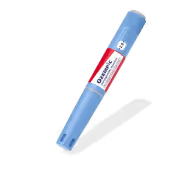
A genuine Ozempic® pen should not get longer when you set your dose. WHO says falsified pens may have a dose scale that extends out of the pen and a poor-quality label that doesn’t stick well.
Most Ozempic® cartons hold one pen, according to the Ozempic® label. The 0.25 mg or 0.5 mg pen carton has six NovoFine® Plus needles, and the 1 mg and 2 mg pen cartons have four. For any other brand, compare your pen against the photos in its Medication Guide or on the manufacturer’s website, because device designs differ.
Vials call for different checks. The Ozempic® label lists pens and single-dose prefilled syringes, and Novo Nordisk also sells Ozempic® and Wegovy® as tablets. Neither brand is listed as a vial, so a vial carrying either name is a warning sign.
The FDA also flags labels with spelling errors or an incorrect pharmacy address. It warns against any vial marked “for research purposes” or “not for human consumption.”
Watch for Price and Payment Red Flags
An unusually low price is one of the clearest warning signs. The FDA lists “deep discounts or prices that seem too good to be true” among its warning signs for telehealth sellers.
As of November 2026, Novo Nordisk’s self-pay pharmacy service, Novocare® home delivery, charges $349 a month for an Ozempic® 0.25 mg, 0.5 mg, or 1 mg pen. The 2 mg pen costs $499 a month. Until December 31, 2026, new patients pay $199 a month for their first two fills of the 0.25 mg or 0.5 mg pen.
The payment method a seller asks for is also a warning sign. In the JAMA Network Open test buys, illegal sellers accepted Bitcoin and other cryptocurrency, Zelle, Cash App, Venmo, and bank transfers, and confirmed orders over email and WhatsApp.
Pay by credit card through a seller that sends an itemized receipt, so you have a record and a way to dispute the charge. If cost is what's pushing you toward unknown sellers, compare the legitimate routes to the cheapest semaglutide first.
Real Dangers of Fake GLP-1 Drugs
A fake GLP-1 can harm you through what’s inside it, how it was made, and the care it skips. Even a fake that contains some semaglutide comes with no clinician to check your health history, set your dose, or adjust treatment when side effects start.
Wrong Ingredient or Wrong Dose
The biggest risk is a pen that doesn’t contain what the label says. The FDA warns that counterfeit GLP-1 drugs can hold the wrong ingredient, too much or too little, or none at all.
Some fakes contain insulin. A German state laboratory, CVUA Karlsruhe, found insulin glulisine, a fast-acting insulin, in suspected Ozempic® pens, according to its report. Several people in Austria who used them were hospitalized with low blood sugar.
Fakes that do contain semaglutide still carry dosing risk. Samples in the 2024 JAMA Network Open study were only 7%-14% pure, yet they held 29%-39% more semaglutide than their labels stated. That means each injection could deliver up to 39% more drug than you intended.
Contamination and Infection Risk
Contamination matters more with an injection than a pill, because the product goes straight under your skin. WHO says falsified Ozempic® may be contaminated with harmful substances and that injecting it could be life-threatening.
The FDA found that the needles packed with the December 2023 counterfeits were fake too. Their sterility couldn't be confirmed, which raises your risk of infection at the injection site.
Researchers in the JAMA Network Open study also measured elevated endotoxin in one sample. Endotoxins are toxins released from bacterial cell walls, so the result pointed to possible contamination even though no live bacteria grew. If you've injected a product you now doubt, tell a healthcare provider, even if you feel fine.
What Poison Centers and Buyers Are Reporting
Poison center data shows how often GLP-1 use goes wrong, though it doesn’t separate fakes from genuine products. America’s Poison Centers managed 22,966 GLP-1-related exposure cases from 2019 to 2025. Calls about injectable weight-loss drugs rose nearly 1,500% since 2019.
Counterfeit pens have also been found outside the U.S. In April 2026, Haryana’s drug regulator seized counterfeit Mounjaro® pens in Gurugram, India, and Eli Lilly said it didn’t make them.
In a Reddit thread about the seizure, one user said he had bought a pen from the same batch at a pharmacy, with a bill and a prescription. He said he had already taken a dose, and other users asked how to check their own pens.
Counterfeit vs. Compounded GLP-1: They Are Not the Same
A counterfeit GLP-1 is an illegal product made to pass as a brand-name drug, and no one can confirm what's in it. A compounded GLP-1 is prepared by a licensed pharmacy for one patient on a prescription, under conditions set by federal law. The difference matters because avoiding fakes shouldn't mean avoiding licensed care.
Sources: The FDA Compounding Q&A and the FDA concerns with unapproved GLP-1 drugs, accessed November 2026.
Compounded semaglutide also isn’t the same as Ozempic®, and compound semaglutide vs. Ozempic® covers the differences. Judge a compounded option by the care around it: a licensed clinician’s review, a licensed pharmacy, clear dosing instructions, and follow-up support.
Ivy Rx is one prescription-based option. Like all compounded medications, Ivy Rx’s compounded GLP-1 injections are not reviewed by the FDA for safety, effectiveness, or quality before they are sold.
Ways to Get a Legitimate GLP-1 Safely
A legitimate GLP-1 comes from two things a counterfeit seller can't offer: a real clinical review and a pharmacy you can verify. Ivy Rx follows this path for its compounded GLP-1 injections. You complete an online questionnaire, a clinician reviews it the same day, and approved prescriptions ship in temperature-controlled packaging.
Get a Prescription After a Real Clinical Review
A real prescription starts with a clinician reviewing your health history, because GLP-1 medications aren’t safe for everyone. The Ozempic® label says not to use it if you or a family member has had medullary thyroid carcinoma, a type of thyroid cancer. It also rules out people with multiple endocrine neoplasia syndrome type 2 (MEN 2), an endocrine condition.
The same label asks you to tell your clinician about pancreas problems, diabetes-related vision problems, or planned surgery, and to stop Ozempic® two months before a planned pregnancy. A seller that never asks about these things isn’t evaluating you.
So expect questions about your weight history, medical conditions, and current medications before anything is prescribed. The same review applies whether you're seeking an Ozempic® prescription or another GLP-1.
Fill It at a State-Licensed U.S. Pharmacy
Check the pharmacy's license yourself, because a website can claim anything. The FDA's BeSafeRx program links to every state board of pharmacy's license database, and the FDA says not to use an online pharmacy that isn't listed.
A listed pharmacy should also require a valid prescription, give a physical U.S. address and phone number, and have a licensed pharmacist available to answer your questions. These checks apply to every legitimate way to get semaglutide, branded or compounded.
Buy Branded Pens Through Authorized Channels
If you're prescribed a brand-name GLP-1, fill it at a retail or mail-order pharmacy that buys from the manufacturer's authorized distributors. Novo Nordisk also ships Ozempic® and Wegovy® directly to self-paying patients through Novocare® home delivery, which works from your clinician's prescription.
Insurance can help you find a verified source, too. Novo Nordisk notes that some insurers keep lists of approved pharmacies for FDA-approved medicines.
If you're paying without coverage, compare the legitimate ways to get a GLP-1 without insurance before trusting an unknown discount.
Know What a Compounded Prescription Should Include
A compounded GLP-1 from a licensed pharmacy should arrive with details a counterfeit seller rarely provides. The label should name a dispensing pharmacy you can verify, and your instructions should state your dose in the units your syringe uses.
The FDA has received reports of adverse events, some requiring hospitalization, that may be related to dosing errors with compounded semaglutide, including patients measuring incorrect doses. Before your first injection, ask your clinician or pharmacist to confirm your dose in both milligrams and syringe units, and never convert it yourself.
For multi-dose vials, the FDA recommends throwing the vial away 28 days after first use, even if the medication remains. Use a new sterile needle and syringe for every dose, because reused needles can contaminate the medication.
Common Mistakes That Lead to Buying Fake GLP-1
Each buying decision below raises your chance of receiving a fake GLP-1, and each one has a simple fix.
1. Ordering through a social media post or private message. Illegal drug sellers have long advertised on social media. So, Google, Bing, Snapchat, and others now require drug ads to come from verified sites, according to the National Association of Boards of Pharmacy (NABP).
The fix: Order only through a pharmacy website you can verify, never a message thread.
2. Buying abroad or across the border. Reuters found fake Ozempic® carrying at least 18 different batch numbers in 14 countries from the start of 2023, so a foreign pharmacy counter is not a guarantee.
The fix: fill your prescription at a state-licensed U.S. pharmacy, and know that bringing prescription drugs across the border can break U.S. law.
3. Trusting a site that says “no prescription needed.” Semaglutide is prescription-only in the U.S., so there’s no legal over-the-counter semaglutide. Illegal sites in the JAMA Network Open study still advertised lines like “No Rx required.”
The fix: Treat any seller that skips the prescription as unlicensed.
4. Paying a surprise "customs fee" to release an order. In the same study, three of six sellers never shipped anything and then demanded $650-$1,200 more to clear customs, requests that customs agencies confirmed were fraudulent.
The fix: Stop paying, contact your card issuer, and report the seller.
5. Throwing away or using a suspect product instead of reporting it. A pen you're unsure about can help regulators trace the seller.
The fix: Don’t inject it, and keep the box and pen. Report it to the FDA’s MedWatch program at 1-800-FDA-1088, then report the seller to the FDA as suspected criminal activity.
6. Trusting a “Canadian pharmacy” label. Some illegal online pharmacies pretend to be based in Canada to make their drugs seem safer, according to NABP.
The fix: Check the site with NABP’s Safe Site Search tool, whatever country it claims to be in.
Get Safe, Legitimate GLP-1 With Ivy Rx
The safest GLP-1 comes with a known prescriber, a licensed pharmacy you can verify, and someone to answer your questions after it arrives.
Ivy Rx’s Compounded GLP-1 Injections include clinician-reviewed care, a state-licensed pharmacy, and potency, sterility, and endotoxin testing. Ivy Rx medication is made in the USA, and you need no insurance or lab work.
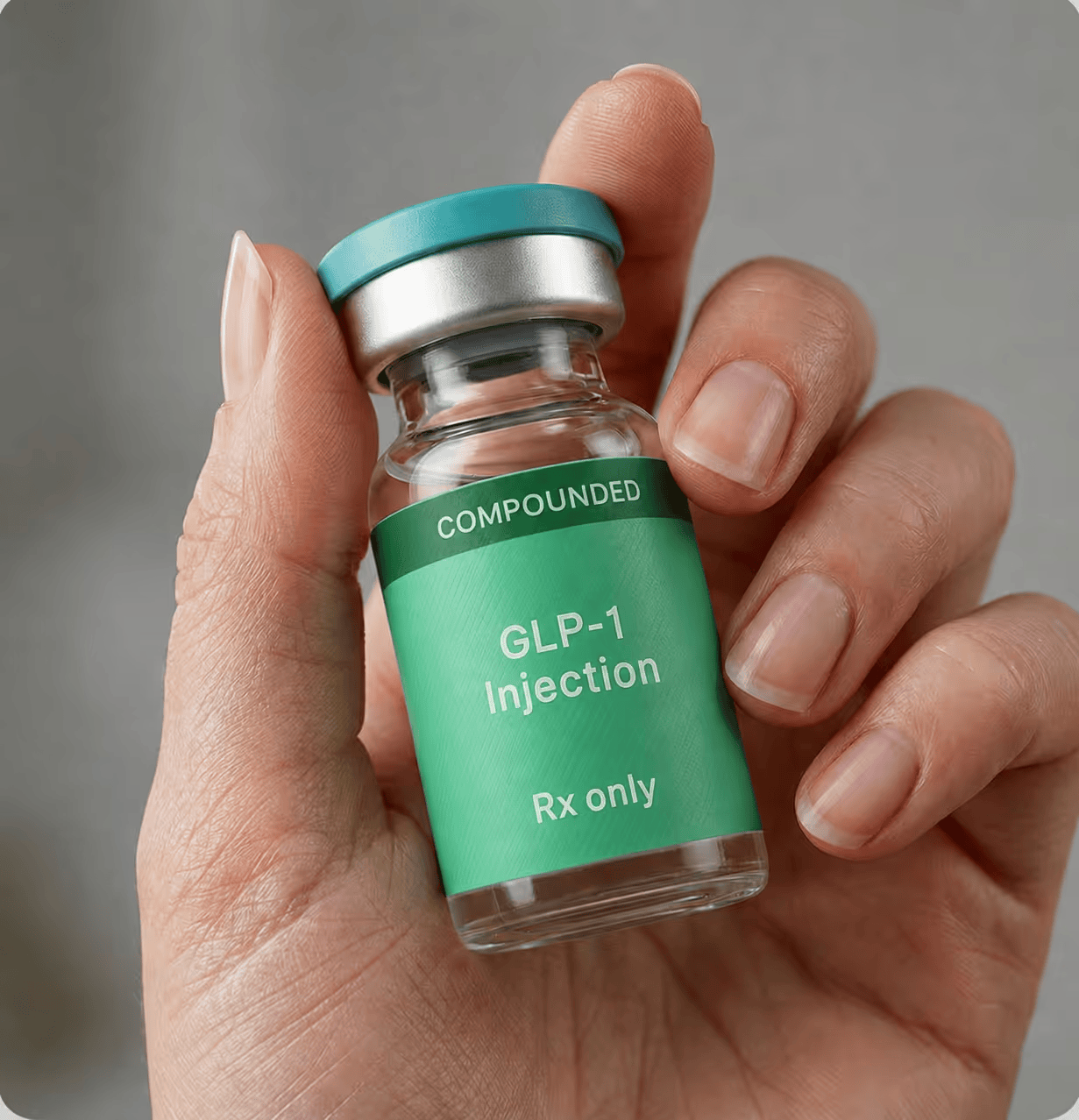
The Rate Lock Guarantee keeps your price the same at every prescribed dose titration. Start your assessment for Compounded GLP-1 Injections today.
FAQs
What Is a Fake GLP-1?
It’s a product sold as a GLP-1 medicine that the named maker didn’t produce. Fakes go beyond semaglutide: UK regulators confirmed fake Saxenda® (liraglutide) pens that contained insulin.
Is Compounded Semaglutide the Same as Counterfeit Semaglutide?
No. Compounded semaglutide is legally prepared by a licensed pharmacy for a prescription, while counterfeit semaglutide is illegal. The FDA has found fraudulent “compounded” labels naming pharmacies that don’t exist, so look yours up.
How Do I Know If My Ozempic® or Semaglutide Is Real?
Ask the source. Novo Nordisk Customer Care (1-800-727-6500) can answer questions about an Ozempic® pen. For compounded semaglutide, call the pharmacy named on your label.
What Happens If You Take Fake Semaglutide?
It depends on what’s inside. If it contains insulin, the UK’s medicines regulator, the MHRA, advises getting urgent medical help for low blood sugar signs like dizziness, sweating, or blurred vision. Bring the product with you.
Where Can I Buy Real GLP-1 Safely?
Only from a licensed pharmacy that fills a valid prescription. Check any pharmacy website with NABP’s Safe Site Search tool. NABP’s Buy Safely page says nearly 95% of the more than 25,000 sites it reviewed were out of compliance.


Ivy RX patients
Members of Ivy RX branded medications were paid for their testimonials.
- U.S. Food and Drug Administration. FDA warns consumers not to use counterfeit Ozempic (semaglutide) found in the U.S. drug supply chain, updated December 5, 2025. https://www.fda.gov/drugs/drug-alerts-and-statements/fda-warns-consumers-not-use-counterfeit-ozempic-semaglutide-found-us-drug-supply-chain
- U.S. Food and Drug Administration. FDA's concerns with unapproved GLP-1 drugs used for weight loss, updated October 1, 2026. https://www.fda.gov/drugs/drug-alerts-and-statements/fdas-concerns-unapproved-glp-1-drugs-used-weight-loss
- U.S. Food and Drug Administration. FDA clarifies policies for compounders as the national GLP-1 supply begins to stabilize, updated April 1, 2026. https://www.fda.gov/drugs/drug-alerts-and-statements/fda-clarifies-policies-compounders-national-glp-1-supply-begins-stabilize
- U.S. Food and Drug Administration. Compounding and the FDA: Questions and answers, updated September 16, 2025. https://www.fda.gov/drugs/human-drug-compounding/compounding-and-fda-questions-and-answers
- U.S. Food and Drug Administration. Locate a state-licensed online pharmacy, updated November 13, 2024. https://www.fda.gov/drugs/besaferx-your-source-online-pharmacy-information/locate-state-licensed-online-pharmacy
- U.S. Food and Drug Administration. MedWatch: The FDA safety information and adverse event reporting program, accessed November 10, 2026. https://www.fda.gov/safety/medwatch-fda-safety-information-and-adverse-event-reporting-program
- World Health Organization. Medical Product Alert N°2/2024: Falsified OZEMPIC (semaglutide), June 19, 2024. https://www.who.int/news/item/19-06-2024-medical-product-alert-n-2-2024--falsified-ozempic-(semaglutide)
- World Health Organization. WHO issues warning on falsified medicines used for diabetes treatment and weight loss, June 20, 2024. https://www.who.int/news/item/20-06-2024-who-issues-warning-on-falsified-medicines-used-for-diabetes-treatment-and-weight-loss
- Ashraf AR, Mackey TK, Schmidt J, Kulcsár G, Vida RG, Li J, Fittler A. Safety and Risk Assessment of No-Prescription Online Semaglutide Purchases. JAMA Netw Open. 2024;7(8):e2428280. doi:10.1001/jamanetworkopen.2024.28280. https://pmc.ncbi.nlm.nih.gov/articles/PMC11297364/
- CVUA Karlsruhe (hosted by EDQM). Ozempic®-the diabetes injection that is also used as a “slimming product”: suspected falsification now also confirmed analytically, November 22, 2023. https://www.edqm.eu/documents/52006/275868/Ozempic%C2%AE%20-%20the%20diabetes%20injection%20that%20is%20also%20used%20as%20a%20_slimming%20product_%20Suspected%20falsification%20now%20also%20confirmed%20analytically_EN.pdf
- Medicines and Healthcare products Regulatory Agency. Ozempic (semaglutide) and Saxenda (liraglutide): vigilance required due to potentially harmful falsified products, November 23, 2023. https://www.gov.uk/drug-safety-update/ozempicv-semaglutide-and-saxenda-liraglutide-vigilance-required-due-to-potentially-harmful-falsified-products
- America's Poison Centers. GLP-1, accessed November 10, 2026. https://poisoncenters.org/track/GLP-1
- Novo Nordisk. Counterfeit risks and tips to identify FDA-approved medicines containing semaglutide, accessed November 10, 2026. https://www.novomedlink.com/semaglutide/patient-safety/identifying-authentic-fda-approved-medicines-containing-semaglutide.html
- Novo Nordisk. Novocare home delivery, accessed November 10, 2026. https://www.novocare.com/hcp/delivery.html
- U.S. National Library of Medicine, DailyMed. Ozempic® (semaglutide) injection prescribing information, revised May 2026, updated on DailyMed June1, 2026. https://dailymed.nlm.nih.gov/dailymed/drugInfo.cfm?setid=adec4fd2-6858-4c99-91d4-531f5f2a2d79
- Wingrove P. How fake Ozempic batch numbers help criminal groups spread dangerous drugs. Reuters (republished by BreakingNews.ie), September 5, 2024. https://www.breakingnews.ie/world/how-fake-ozempic-batch-numbers-help-criminal-groups-spread-dangerous-drugs-1669591.html
- National Association of Boards of Pharmacy. Buy safely, accessed November 10, 2026. https://safe.pharmacy/buy-safely/
- Indian Pharma Post. Eli Lilly flags counterfeit Mounjaro products in Gurugram, backs regulatory action, April 30, 2026. https://www.indianpharmapost.com/supply-chain/eli-lilly-flags-counterfeit-mounjaro-products-in-gurugram-backs-regulatory-action-19995
Related
Resources

Is Compounded Semaglutide Safe & FDA Approved? (Safety Guide)
Is compounded semaglutide FDA-approved? Learn about its safety, potential risks, and why it may or may not be right for you.
Best Compounding Pharmacy For Semaglutide In 2026
Looking for the best compounding pharmacy for semaglutide? Compare trusted providers, pricing, safety standards, and availability to find affordable, reliable options for weight loss support.

Over-the-Counter Semaglutide: Availability & Alternatives
Wondering if you can buy semaglutide over the counter? Discover the truth about availability, risks, and the best OTC alternatives for weight loss and diabetes management.