





.avif)


Article Outline
Start your personalized GLP-1 program


How Fast Does Tirzepatide Work for Weight Loss Each Month
Tirzepatide can begin curbing appetite and slowing digestion early in treatment, with weight loss usually developing gradually over weeks and months. Your first month on a starter dose may look very different from your sixth month at a maintenance dose.
So, how fast does tirzepatide work for weight loss? There is no single timeline that applies to everyone. Below, we’ll break down what the evidence shows month by month and explain why a slower start does not necessarily mean treatment is failing.
How Fast Does Tirzepatide Start Working?
Tirzepatide begins working in the body after the first injection, but there is no clinically established day when everyone should notice appetite suppression or weight loss.
After an injection, tirzepatide reaches its highest concentration in the bloodstream in a median of about 24 hours, with a reported range of 8 to 72 hours. With weekly dosing, steady-state levels are reached after about 4 weeks, according to the current Zepbound® label.
That does not mean you should expect a specific amount of weight loss by week 4. The starter dose is intentionally low, and treatment is gradually increased to balance effectiveness with tolerability.
Here’s the early timeline at a glance:
If you are comparing medications, our guide to semaglutide vs tirzepatide for weight loss explains how their results and mechanisms differ. You can also review the tirzepatide dosage chart to understand how treatment progresses.
Tirzepatide Weight Loss Timeline (Month by Month)
Tirzepatide weight loss generally builds as treatment continues and the dose is gradually increased. The first 3 months are better viewed as a ramp-up period than as a deadline for reaching a particular number on the scale.
Clinical trials do not provide a reliable “you should lose X pounds every month” formula. Starting weight, dose, tolerability, individual biology, nutrition, activity, and treatment consistency can all change the pace.
Month 1
The first month is primarily about starting treatment and seeing how your body responds.
For branded Zepbound®, treatment begins at 2.5 mg once weekly for 4 weeks. The current label specifies that 2.5 mg is an initiation dose rather than a maintenance dose for chronic weight management.
You may notice that you feel full sooner, eat smaller portions, or think about food less often. But those experiences are individual. There is no evidence-based rule saying that everyone should feel appetite suppression within a certain number of days.
The same applies to the scale. Some people lose weight during the first month, while others see only a small change.
That is why tirzepatide weight loss in the first month should not be used by itself to judge whether the medication will work long term. The dose is still low, and the medication has only reached steady-state exposure near the end of this period.
Month 2
During the second month, the labeled schedule moves from 2.5 mg to 5 mg once weekly. Further increases, when appropriate, are made in 2.5 mg increments only after at least 4 weeks at the current dose.
This is often when the difference between an initiation phase and ongoing treatment becomes more apparent. Appetite effects may become easier to recognize, and weight may continue trending downward, but there is still a wide range of normal responses.
Do not increase your dose simply because weight loss feels slower than expected. Tirzepatide doses are increased in 2.5 mg increments only after at least 4 weeks at the current dose, and your clinician should consider both your response and side effects before changing treatment.
If nausea, diarrhea, constipation, or other digestive symptoms are significant, remaining at a tolerated dose may be more appropriate than trying to accelerate the schedule.
Month 3
By about 12 weeks, you have enough treatment history to start seeing a clearer pattern, but a slower response can still be compatible with meaningful longer-term weight loss.
A post hoc SURMOUNT-1 analysis divided participants according to whether they had lost at least 5% of their starting weight at week 12. Among the participants included in that analysis, 82% had reached at least 5% weight loss by week 12, while 18% had not.
The slower group still did well over time. By week 72, 90% of those late responders had eventually lost at least 5% of their starting weight. Among late responders who ultimately reached that threshold, the average time to get there was about 24.8 weeks.
That is useful context if you are comparing your progress with dramatic before-and-after stories online. A slower first 3 months does not automatically mean tirzepatide has failed.
What the Clinical Trials Show
The clearest long-term evidence comes from SURMOUNT-1, a 72-week trial involving 2,539 adults with obesity or overweight and at least one weight-related complication, without diabetes.
Participants started tirzepatide at 2.5 mg once weekly and increased the dose by 2.5 mg every 4 weeks until reaching their assigned maintenance dose. They also received lifestyle counseling around nutrition and physical activity.
At week 72, average body-weight changes were:
The results were substantial, but they developed over time. SURMOUNT-1 included up to 20 weeks of dose escalation, so the 72-week outcomes should not be treated as results someone should reproduce in the first few months.
The trial also shows why a single monthly target can be misleading. At 72 weeks, 85% of participants taking 5 mg, 89% taking 10 mg, and 91% taking 15 mg had lost at least 5% of their starting weight. At the higher doses, around half or more lost at least 20%.
Later research adds another useful piece of context: weight reduction was greatest during the first 24 weeks on average, but the time to reach a plateau varied considerably between people. Depending on starting BMI, the median plateau occurred at roughly 24 to 36 weeks.
So rather than asking whether you are matching a fixed number every month, it is more useful to look at your overall trend, appetite response, dose progression, tolerability, and longer-term trajectory with your clinician.
Factors That Affect How Quickly Tirzepatide Works
The pace of weight loss on tirzepatide depends on more than the medication itself. Two people following the same treatment schedule can have very different timelines.
Some of the biggest factors include:
- Dose and titration: Zepbound® starts at 2.5 mg once weekly and increases gradually. Higher maintenance doses produced greater average weight loss in SURMOUNT-1, but dose increases should follow your clinician’s plan rather than be rushed for faster results.
- Individual response: People vary considerably in how quickly they respond. Age, sex, starting weight, metabolic health, and other biological differences can all influence the overall pattern.
- Consistency: Missing doses or frequently changing your routine can make it harder to assess your response accurately.
- Nutrition and activity: Tirzepatide is intended to be used alongside a reduced-calorie diet and increased physical activity. These habits remain part of long-term weight management.
- Tolerability: Nausea, diarrhea, constipation, and other tirzepatide side effects can affect how quickly your clinician increases your dose.
Your goal should not be to reach the highest dose as quickly as possible. The current Zepbound® label specifically recommends considering both treatment response and tolerability when selecting a maintenance dose.
For nutrition guidance, our GLP-1 diet guide explains how to build meals around treatment without relying on extreme restriction.
Signs Tirzepatide Is Working
The scale is useful, but it is not the only way to notice that tirzepatide is affecting your appetite and eating patterns.
Early changes may include:
- Feeling satisfied with smaller portions
- Staying full for longer after meals
- Feeling less hungry between meals
- Having fewer or less intense cravings
- Thinking about food less frequently
- Seeing your weight or waist measurement gradually trend down over time
Some patients describe the reduction in persistent thoughts about eating as quieter “food noise.” That can be a useful way to describe the experience, but it is not a formal clinical measure, and you do not need to experience it for treatment to be working.
Look at trends over several weeks rather than judging treatment from a single weigh-in. Normal changes in hydration, digestion, sodium intake, and other factors can move your weight up or down from one day to the next.
What to Do if Tirzepatide Is Working Slowly
A slow start does not automatically mean tirzepatide is not working. The first months include gradual dose escalation, and the SURMOUNT-1 data show that some people reach meaningful weight-loss milestones later than others.
If progress feels slower than expected:
- Check where you are in titration. If you are still early in treatment, you may not have reached a maintenance dose yet.
- Take the medication consistently. Follow your prescribed schedule rather than changing your dose or injection frequency yourself.
- Review your eating patterns. Tirzepatide can make eating less easier, but food quality, portion size, liquid calories, alcohol, and frequent grazing can still affect your overall energy intake.
- Keep activity realistic and consistent. Regular movement and resistance exercise can support health and help preserve lean mass while you lose weight.
- Speak with your clinician if progress remains slow. They can review your dose, side effects, adherence, other medications, and whether your current treatment still fits your needs.
Do not increase tirzepatide simply to make weight loss happen faster. Zepbound® doses are increased in 2.5 mg steps only after at least 4 weeks at the current dose, and the right maintenance dose depends on both response and tolerability.
With Ivy Rx, you can securely message your care provider through the patient portal if you have questions about your response or prescribed plan. Any dose change should be made with clinician guidance rather than based on someone else’s results online.
How Long Should You Stay on Tirzepatide?
There is no universal point when everyone should stop tirzepatide after reaching a certain weight.
Zepbound® is approved to reduce excess body weight and maintain weight reduction long term, so treatment may continue when it remains appropriate, effective, and well tolerated. Your clinician should periodically review your results, side effects, health goals, and whether continued treatment still makes sense.
The SURMOUNT-4 trial shows why maintenance deserves its own discussion. Participants lost an average of 20.9% of their body weight during the initial 36 weeks of tirzepatide treatment.
Over the following 52 weeks, participants who continued tirzepatide lost another 5.5% on average. Those switched to placebo instead had a mean 14.0% increase in body weight from the point of randomization.
That does not mean everyone who stops tirzepatide will regain the same amount. It does show that obesity treatment often requires a long-term plan rather than assuming medication can always be stopped as soon as a target weight is reached.
If you are considering stopping, reducing, or changing treatment, discuss a maintenance plan with your clinician rather than stopping solely because the scale has plateaued.
Start Your Tirzepatide Plan With Ivy Rx
If you are interested in tirzepatide but unsure where to begin, Ivy Rx starts with an online clinical review of your health information to determine options right for you.
Complete a five-minute online assessment, and a licensed clinician will review your health history, goals, current medications, and treatment eligibility. If appropriate and prescribed, the medication is prepared through a state-licensed pharmacy partner and delivered in temperature-controlled packaging to your door.
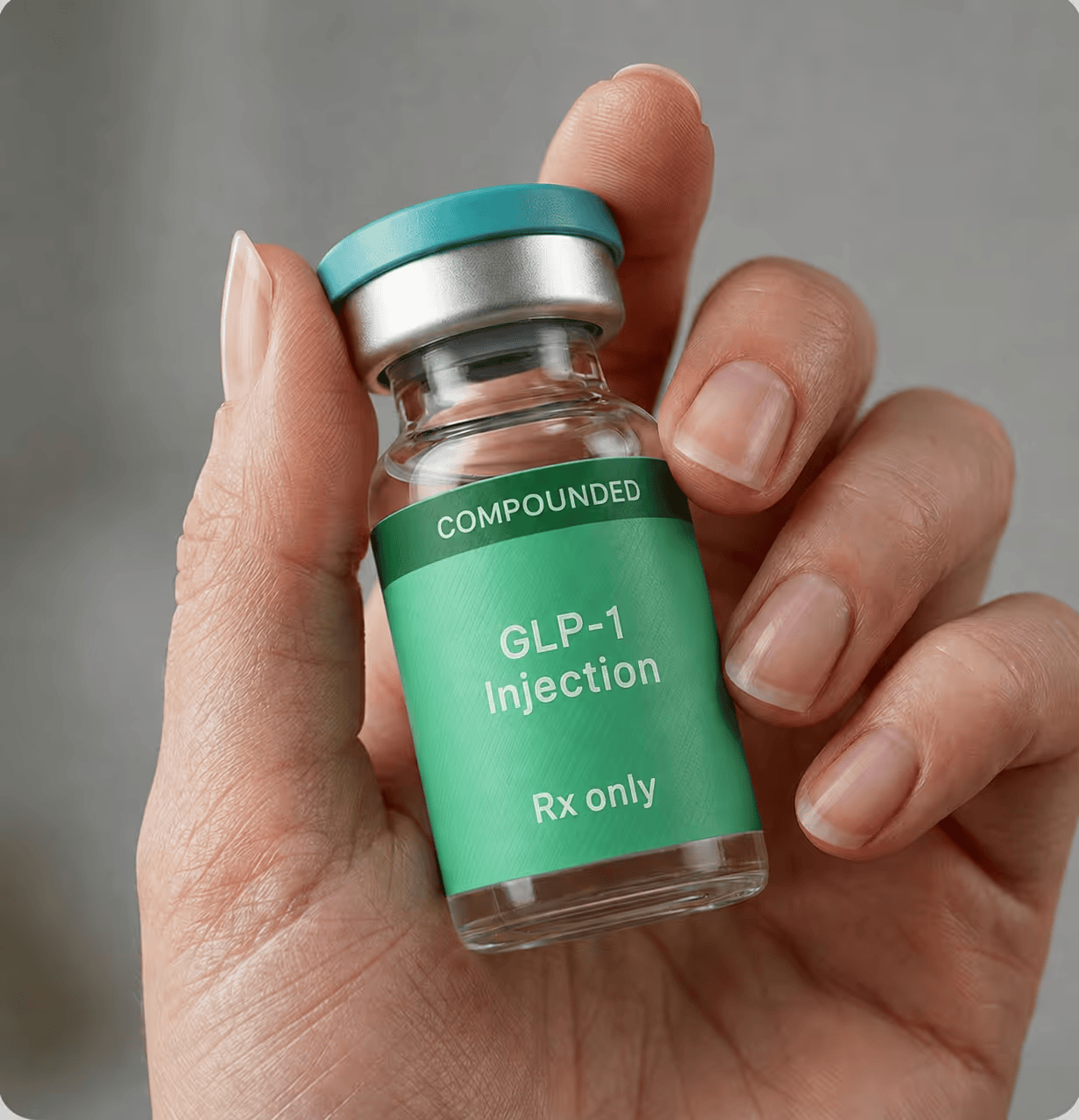
Ivy Rx compounded GLP-1 medications are made in the USA, starting at $77 for four doses per month (as of September 2026), with no insurance required and transparent pricing. Their Rate Lock Guarantee keeps your price the same across prescribed dose increases (titration), plus ongoing compassionate care.
GLP-1 injections are subcutaneous, meaning they go into fatty tissue under the skin, not muscle. This self-administration tutorial video can help you understand the process better.
Explore Compounded GLP-1 Injections today.
FAQs
Does a higher tirzepatide dose always cause faster weight loss?
No. Higher doses produced greater average losses in trials, but individual response and tolerability vary. Your clinician should determine your dose.
What time of day should I take tirzepatide?
Any time. Zepbound® can be injected once weekly at any time of day, with or without meals.
What should I do if I miss a tirzepatide dose?
Take it within 4 days if possible. If more than 4 days have passed, skip it and resume your normal schedule.
Does a weight-loss plateau mean tirzepatide has stopped working?
No. Plateaus are common during longer-term weight loss and can occur even while treatment continues to support weight maintenance.
Can I stop tirzepatide once I reach my goal weight?
Sometimes, but do not decide alone. Your clinician can help determine whether continuing, adjusting, or stopping treatment fits your long-term plan.
Disclaimer: Clinical evidence, product information, pricing, and availability were reviewed in September 2026 and may change. Individual weight-loss results vary. Eligibility, medication selection, dosing, dose changes, and decisions to continue or stop treatment should be reviewed with a licensed clinician.

%25201.avif)

Ivy RX patients
Members of Ivy RX branded medications were paid for their testimonials.
- https://dailymed.nlm.nih.gov/dailymed/fda/fdaDrugXsl.cfm?setid=487cd7e7-434c-4925-99fa-aa80b1cc776b&type=display
- https://www.nejm.org/doi/full/10.1056/NEJMoa2206038
- https://pubmed.ncbi.nlm.nih.gov/40677091/
- https://pmc.ncbi.nlm.nih.gov/articles/PMC12096058/
- https://jamanetwork.com/journals/jama/fullarticle/2812936
Related
Resources
.avif)
Tirzepatide (Zepbound) Dosage Chart: 2026 Dosing Guide
Confused about your Tirzepatide (Zepbound) dosage? Get the exact dosage chart and expert tips to stay on track with your treatment.
.png)
How to Get Tirzepatide for Weight Loss (2026 Guide)
Learn how to get tirzepatide for weight loss, including eligibility requirements, prescription options, insurance coverage, and safe ways to start treatment.

Ozempic to Mounjaro Conversion Chart: How to Switch Safely
Switching from Ozempic to Mounjaro? Use our doctor-reviewed conversion chart to compare doses, manage side effects, and transition safely. Learn more now.