








.avif)



Article Outline
Lose weight with Ozempic


Is Ozempic (Semaglutide) Safe? Benefits & Risks in 2026
Semaglutide is safe for patients under medical supervision, studied in thousands of participants across multiple clinical trials. But it's not risk-free, and it's not for everyone.
This guide covers how semaglutide works, what the clinical evidence says about its safety, the benefits beyond weight loss management, the real risks to be aware of, and who should avoid it entirely.
What Is Ozempic (Semaglutide)?
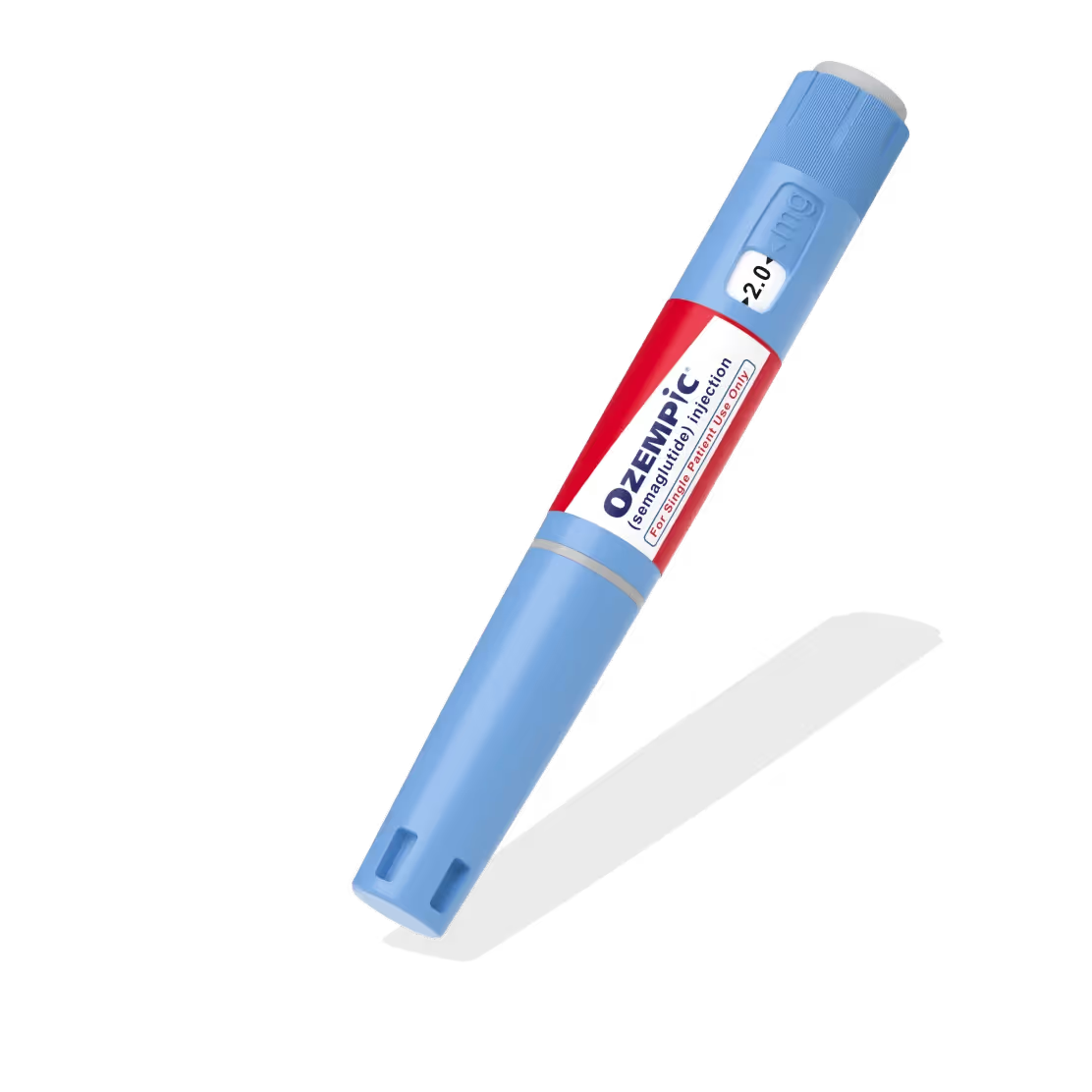
Ozempic is a once-weekly injectable prescription medication made by Novo Nordisk. Its active ingredient is semaglutide, a GLP-1 receptor agonist that mimics a natural gut hormone involved in blood sugar regulation and appetite control.
Because it suppresses appetite and reduces food cravings, it may also be used as a weight-loss medication.
The FDA first approved Ozempic in December 2017 for adults with type 2 diabetes. In 2020, the FDA approved an additional indication for Ozempic to reduce the risk of major cardiovascular events (heart attack, stroke, cardiovascular death) in adults with type 2 diabetes and established heart disease.
How Does Semaglutide in Ozempic Work?
Semaglutide mimics GLP-1 agonists, a natural gut hormone that activates after you eat. It targets several systems at once:
- Reduces hunger signals in the brain.
- Slows digestion so you feel full longer.
- Triggers insulin release when blood sugar rises.
- Lowers glucagon (glycemic control), which is a hormone that pushes stored sugar into your bloodstream.
For people who have struggled with overeating, this effect may feel significant.
Is Ozempic (Semaglutide) Safe to Consume?
Yes, for most adults who qualify to access this medication. Semaglutide’s safety profile is consistent with that of other GLP-1 receptor agonists.
The most common side effects include nausea, diarrhea, vomiting, and constipation. These are mild to moderate side effects, and they may ease as the body adjusts during the dose-escalation period.
Serious adverse events like pancreatitis and gallbladder problems are rare.
In the SELECT trial, serious adverse events were actually lower in the semaglutide group than in the placebo group.
If you're exploring which Ozempic to buy, study our comparison post between compounded semaglutide vs Ozempic or learn more about how to get an Ozempic prescription through a medical evaluation.
Benefits of Using Semaglutide
Semaglutide's benefits extend beyond blood sugar management. Clinical data show meaningful improvements across several other health outcomes.
1. Significant, Sustained Weight Loss
In the STEP 1 trial, participants lost an average of 14.9% of their body weight over 68 weeks. More than half crossed 15%, a threshold that was rarely reached through medication alone before semaglutide. For those early in their semaglutide journey, appetite changes often appear before the scale moves.
2. Improved Blood Sugar Control
Semaglutide may lower A1C meaningfully enough to reduce the long-term risk of nerve damage, kidney disease, and vision loss. In clinical trials, it outperformed several older diabetes treatments on glycemic outcomes, while also producing weight loss that most diabetes medications typically do not.
3. Cardiovascular Risk Reduction
The SELECT trial found that semaglutide reduced heart attacks, strokes, and cardiovascular death by 20% in adults with obesity and heart disease. It was one of the first weight loss medications to demonstrate heart protection in this population. The benefit held regardless of the amount of weight patients lost.
4. Reduced Food Preoccupation
The constant mental loop of planning meals, resisting cravings, and negotiating with yourself may go quiet. Food stops dominating. If you're still hungry on semaglutide, that may signal a need for dose adjustment, not necessarily a failure of the medication.
If you feel the medication has stopped working, it may be a plateau rather than a failure. A structured semaglutide diet plan may help you push through.
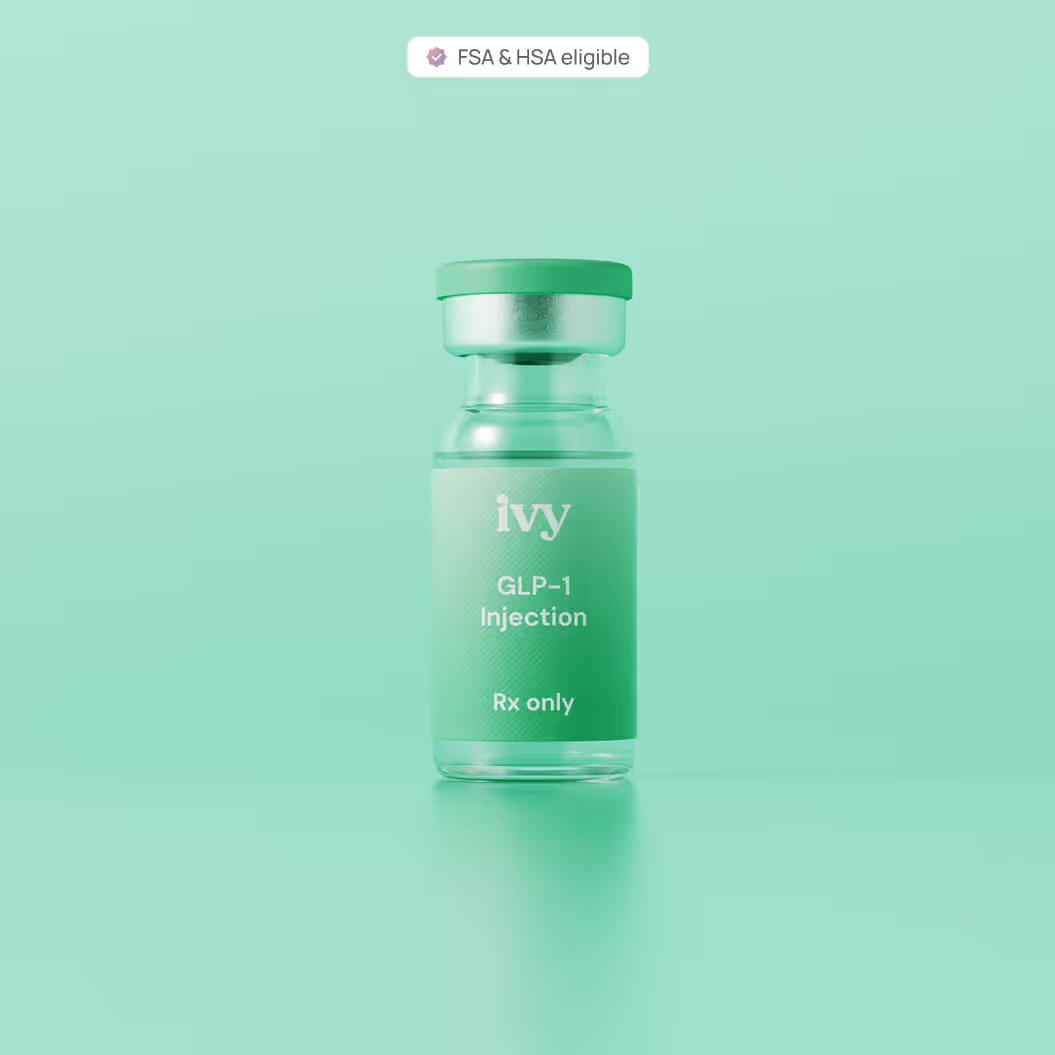
Looking to achieve similar results? IvyRx provides personalized GLP-1 treatment plans tailored to your goals, starting at $175/month.
Common Risks of Semaglutide
Every medication carries risks. Here's what to know.
1. Pancreatitis
Acute pancreatitis has been reported in patients on GLP-1 receptor agonists, though most research shows no significant increased risk compared to placebo.
It remains rare but serious. Severe, persistent abdominal pain radiating to the back warrants immediate medical attention and discontinuation of the medication.
2. Gallbladder Problems
A meta-analysis of 76 randomized controlled trials found that GLP-1 receptor agonists were associated with increased risks of gallstones and cholecystitis at higher doses and with longer treatment duration.
Report sudden right-sided abdominal pain to your provider promptly.
3. Thyroid Tumor Warning
Semaglutide is contraindicated for patients with a personal or family history of medullary Thyroid carcinoma (a type of thyroid cancer).
One study found GLP-1 receptor agonist use for one to three years was associated with a modestly elevated risk of medullary thyroid carcinoma, though earlier studies found no significant link.
4. Acute Kidney Injury
Semaglutide has shown kidney-protective benefits in clinical trials. However, severe GI side effects like vomiting and diarrhea may cause dehydration, which may increase the risk of acute kidney injury. Patients with existing kidney impairment should be monitored closely. Staying hydrated during dose escalation is essential.
Understanding what semaglutide does in your body beyond weight loss, including its effects on digestion, hormones, and metabolism, may help you anticipate and manage side effects.
Who Should NOT Take Ozempic (Semaglutide)
Semaglutide isn't safe for everyone. The following groups should avoid it or use it only under close medical supervision.
- Personal or family history of MTC or MEN 2. Semaglutide is contraindicated for these patients. The FDA boxed warning makes this explicit.
- Previous severe allergic reaction to semaglutide. If you've experienced difficulty breathing, facial or throat swelling, or rapid heartbeat after taking semaglutide or any inactive ingredient in Ozempic, do not take it again.
- Pregnant, breastfeeding, or planning pregnancy. Animal studies showed potential fetal risks. The FDA recommends stopping semaglutide at least two months before a planned pregnancy to allow the drug to fully clear.
- Severe gastrointestinal disease. Patients with gastroparesis or other serious GI conditions should use caution. Semaglutide slows gastric emptying, which may worsen symptoms in people with compromised digestive systems.
Ozempic (Semaglutide) vs. Other GLP-1 Medications: A Safety Comparison
Several GLP-1 receptor agonists are available. Here's how Ozempic's safety profile compares against its alternatives.
Ozempic vs. Wegovy
Wegovy has the same active ingredient as Ozempic. Their safety profiles are essentially identical, too, because both deliver the same dose of semaglutide.
The main difference is that Ozempic maxes out at 2 mg for diabetes, while Wegovy reaches 2.4 mg for weight management.
And higher doses mean slightly more GI side effects during dosage titration.
For a deeper look, see our comparison guide between Wegovy vs Ozempic vs Mounjaro.
Ozempic vs. Mounjaro (Tirzepatide)
Mounjaro is a dual GIP/GLP-1 receptor agonist. In the SURPASS-2 trial, tirzepatide produced greater reductions in A1C and weight than semaglutide 1 mg.
The GI side effect profile is similar, though tirzepatide's GIP activity may provide some anti-nausea benefit. Both carry the same boxed warning for thyroid tumour.
See our full Mounjaro vs Ozempic breakdown for more details.
Ozempic vs. Saxenda (Liraglutide)
Saxenda is an older GLP-1 receptor agonist that requires daily injections.
In head-to-head comparisons (STEP 8), semaglutide 2.4 mg produced roughly double the weight loss of liraglutide 3.0 mg.
Both share similar GI side effects, but semaglutide's once-weekly dosing is more convenient and may improve adherence.
Read more on Saxenda vs Ozempic.
Ozempic vs. Tirzepatide (General)
Tirzepatide, sold as Mounjaro for diabetes and Zepbound for weight loss, targets two receptors instead of one.
The SURMOUNT-5 trial confirmed tirzepatide produced 20.2% average weight loss versus 13.7% for semaglutide over 72 weeks.
Their safety profiles are comparable, with GI events being the most common side effects for both.
See our detailed comparison post between tirzepatide vs Ozempic to learn more.
Factors to Consider Before Taking Ozempic (Semaglutide)
Before starting semaglutide, a few practical considerations may shape your experience and outcomes.
1. Expect a Slow Start
Semaglutide begins at 0.25 mg and escalates over 16 weeks to the target dose. The results you desire will start slowly. Rushing dosage increases GI side effects.
Your provider will guide each step, and the maximum dose of semaglutide isn't always necessary for every patient.
2. Expect a Long-Term Commitment
Semaglutide is not a short-term fix. For most people, treatment is ongoing. And stopping abruptly may trigger increased appetite and fluctuations in blood sugar.
3. Expect to Choose a Delivery Method
Semaglutide comes as a weekly injection (Ozempic/Wegovy) or a daily oral tablet (Rybelsus).
The injectable form has stronger clinical evidence for weight loss. But if needles are a barrier, the oral option exists.
See our detailed comparison between semaglutide pills vs injections for more context.
4. Expect a Medical Evaluation First
A thorough review of your medical history, current prescriptions, and treatment goals is non-negotiable before starting.
The right semaglutide dosage for your body is something only a qualified provider should determine.
Start Your Weight Loss Journey With IvyRx
IvyRx offers personalized GLP-1 injections with a full medical evaluation, ongoing provider support, dosing guidance, and medications delivered to your door. Treatment starts at $175/month.


Ivy RX patients
Members of Ivy RX branded medications were paid for their testimonials.
- Lincoff AM, Brown-Frandsen K, Colhoun HM, Deanfield J, Emerson SS, Esbjerg S, Hardt-Lindberg S, Hovingh GK, Kahn SE, Kushner RF, Lingvay I, Oral TK, Michelsen MM, Plutzky J, Tornøe CW, Ryan DH; SELECT Trial Investigators. Semaglutide and Cardiovascular Outcomes in Obesity without Diabetes. N Engl J Med. 2023 Dec 14;389(24):2221-2232. https://pubmed.ncbi.nlm.nih.gov/37952131/. DOI: 10.1056/NEJMoa2307563.
- Wilding JPH, Batterham RL, Calanna S, Davies M, Van Gaal LF, Lingvay I, McGowan BM, Rosenstock J, Tran MTD, Wadden TA, Wharton S, Yokote K, Zeuthen N, Kushner RF; STEP 1 Study Group. Once-Weekly Semaglutide in Adults with Overweight or Obesity. N Engl J Med. 2021 Mar 18;384(11):989-1002. https://pubmed.ncbi.nlm.nih.gov/33567185/. DOI: 10.1056/NEJMoa2032183.
- Frías JP, Davies MJ, Rosenstock J, Pérez Manghi FC, Fernández Landó L, Bergman BK, Liu B, Cui X, Brown K; SURPASS-2 Investigators. Tirzepatide versus Semaglutide Once Weekly in Patients with Type 2 Diabetes. N Engl J Med. 2021 Aug 5;385(6):503-515. https://pubmed.ncbi.nlm.nih.gov/34170647/. DOI: 10.1056/NEJMoa2107519.
- https://www.accessdata.fda.gov/drugsatfda_docs/label/2025/209637s025lbl.pdf. Accessed 20th March, 2026.
Related
Resources

What Does Semaglutide Do To Your Body?
Semaglutide is a drug similar to the endogenous GLP-1 peptide secreted from the intestinal L-cells. GLP-1 is released from the intestine and exh...
%2520(1).avif)
Is Compounded Semaglutide Safe & FDA Approved? (Safety Guide)
Is compounded semaglutide FDA-approved? Learn about its safety, potential risks, and why it may or may not be right for you.
.avif)
Semaglutide Weight Loss Reviews: Pros, Cons & Results
Semaglutide weight loss reviews and get a clear understanding of its pros and cons. See if it’s the right choice for your weight loss goals