





.avif)


Article Outline
Start your personalized GLP-1 program


Microdosing Tirzepatide 101: Risks, Safety & Alternatives
Tirzepatide microdosing refers to using doses lower than those evaluated in clinical trials.
While the approach may seem appealing for reducing side effects or cost, these lower doses have not been studied for safety or effectiveness.
This article explains what microdosing typically involves, why licensed providers do not recommend unsupervised use, and what a medically supervised low-dose alternative looks like.
What Is Microdosing Tirzepatide?
Tirzepatide microdosing means using doses smaller than the minimum studied in clinical trials, typically under 2.5mg per week.
Some people start at 0.5mg or lower, self-administer weekly or more frequently, and adjust based on how they feel.
The practice is similar to microdosing GLP-1, but there are no clinical trials to validate this.
Tirzepatide Microdosing vs. Medically Supervised Dosing
The doses people use when microdosing tirzepatide fall entirely outside the studied range.
Why Microdosing Tirzepatide Is Not Recommended
1. No Clinical Data for the Doses Being Used
There's no established rate of weight loss to expect, no known side effect profile at low doses, and no guidance on how long to stay at a given dose before adjusting.
The SURMOUNT-1 trial started participants at 2.5mg and moved up from there. Anything below that threshold has not been studied in a controlled setting.
2. Unpredictable Pharmacokinetics at Low Doses
Microdosing tirzepatide may not produce the same effects or side effect profile seen at 2.5 mg and higher. Because doses below 2.5 mg have not been studied, there is no clinical data to predict how your body will respond.
3. Risk of Suboptimal Results and Side Effect Confusion
Because these doses lack clinical benchmarks, it can be difficult to tell whether symptoms are expected, require adjustment, or signal another issue.
For a detailed breakdown of known tirzepatide reactions, the tirzepatide side effects guide covers what to watch for at studied doses.
Potential Risks of Microdosing Tirzepatide
- Gastrointestinal side effects without structured titration: Standard GLP-1 protocols increase doses gradually to reduce nausea and vomiting. Without a defined schedule, symptoms may appear without clear guidance on how to adjust safely.
- Blood sugar variability: Tirzepatide influences insulin and glucagon activity. Inconsistent or irregular dosing may lead to unpredictable glucose responses, especially in people with insulin resistance or prediabetes.
- Inconsistent weight loss: Some people report early appetite suppression that fades over time. Without a clinical framework, it can be difficult to know whether the dose should change.
- Product sourcing concerns: Tirzepatide obtained from research-use or unverified suppliers may not meet pharmaceutical standards for dosing accuracy or sterility. Licensed pharmacy programs are designed to maintain those safeguards.
A safety note: if you're considering any tirzepatide microdosing schedule, read through the GLP-1 microdosing schedule resource first to understand what a monitored low-dose approach actually looks like.
Safer Alternatives Under Medical Guidance
The following alternatives yield more predictive results.
Both are legitimate and use subcutaneous injections given into the fat layer of the skin, not muscle, making them easy and painless to self-administer at home. Neither requires going outside a medical program to achieve.
1. Supervised Microdose GLP-1 Programs
Unlike the DIY microdosing approach, licensed telehealth providers offer personalized GLP-1 injections at low starting doses, with structured titration, ongoing monitoring, and dosing adjustments tailored to your response.
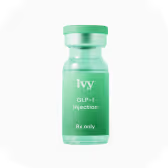
That's what the microdose GLP-1 injections program at Ivy Rx delivers. For just $155, you can access this therapy.
The difference from DIY microdosing is clinical oversight. Your dose is set by a licensed provider, not by forum recommendations or hearsay.
Read our guide on the 13 potential benefits of GLP-1 microdosing to manage your expectations and learn what’s possible.
2. Personalized GLP-1 Injections at a Manageable Starting Dose
Some patients are better suited to a standard GLP-1 program that begins at a low dose and adjusts based on tolerance.
IvyRx's personalized GLP-1 injections start at $175 per month and include medical evaluation, pharmacy fulfillment, and provider support.
Our comparison guide on switching from semaglutide to tirzepatide might be worth reading before making a decision.
Who May Benefit from GLP-1 Therapy Instead
Supervised GLP-1 therapy tends to suit people who:
- Are interested in metabolic support but want a clinician monitoring their progress.
- Are sensitive to medication side effects and need a conservative titration schedule
- Have been denied coverage for brand-name options and need an affordable, legal path to treatment.
- Have researched biohacking approaches to GLP-1s and want something with actual clinical backing.
If you’re navigating cost barriers, our guide to getting GLP-1 without insurance breaks down the options available to you.
Who Should Avoid Microdosing Tirzepatide
Some people face compounded risk when self-administering tirzepatide outside a medical program.
- Anyone sourcing tirzepatide from research-use or unverified suppliers, where dosing accuracy and sterility are not guaranteed.
- People with uncontrolled diabetes or cardiovascular risk factors, for whom blood sugar variability carries serious consequences.
- Anyone adjusting doses based on online protocols rather than clinical response, where there's no safety net if something goes wrong.
- Anyone expecting consistent, measurable weight loss outcomes without a structured titration plan.
Legal and Safety Considerations
Tirzepatide is a prescription-only medication. A licensed clinician should review your medical history and current medications before it’s prescribed.
Here are key facts to understand:
- In the United States, tirzepatide for patient use is dispensed through licensed channels with a valid prescription.
- Products labeled “research use only” are not intended for human use and unlike medications dispensed through licensed compounding pharmacies, which maintain pharmaceutical-grade standards, may not follow the same manufacturing standards as approved medications.
- A licensed pharmacy fills GLP-1 prescriptions only when issued by a qualified prescriber, whether the evaluation happens via telehealth or in person.
- Ivy Rx arranges an online evaluation with a licensed medical professional; if approved, a prescription may be issued and filled through a partner pharmacy.
For context on how tirzepatide compares to other GLP-1 medications under a clinical framework, the tirzepatide vs Ozempic guide is a useful reference. We’d also like you to see our breakdown on retatrutide vs tirzepatide to discover other novel options.
What Users Are Saying
On GLP-1 forums and sub-reddit threads, tirzepatide microdosing reports are mixed.
Some users describe reduced nausea compared to standard dosing. Others report no appetite suppression at low doses, then overcorrect and experience strong side effects after increasing the dose.
A recurring theme is the difficulty of adjusting without any clinical reference point.
What's consistent across these comments and reviews is that users are self-medicating their doses without a provider which carries real clinical risk.
It’s important to note that this is not an advisable move for anyone on GLP-1 medications, semaglutide, or tirzepatide.
Individual variation in GLP-1 receptor sensitivity is real, and it's one of the core reasons these drugs require personalized dosing under supervision.
Take the Next Step Safely with IvyRx
Tirzepatide microdosing can feel appealing for understandable reasons: fewer side effects, greater control, and lower perceived cost. However, without clinical data supporting the doses people use, it may mean accepting uncertainties that a supervised program is designed to reduce.
IvyRx provides low-dose, medically supervised GLP-1 therapy starting at $179 per month, with no insurance required. A licensed provider reviews your medical history and determines a starting dose based on your individual profile.
Your medication is dispensed through a regulated pharmacy, and if adjustments are needed, your care team is available to guide you.
That's what a safe, clinically grounded path to the same goals looks like.
Start with personalized GLP-1 injections or explore the microdose GLP-1 program to find the right fit.

%25201.avif)

Ivy RX patients
Members of Ivy RX branded medications were paid for their testimonials.
Related
Resources
.avif)
Microdosing Semaglutide 101: How it Works, Benefits & Risks
Microdosing semaglutide explained: understand effects, benefits, and precautions, plus how telehealth platforms like IvyRx support safe access.

13 Benefits of Microdosing GLP-1 (Is it Really Better?)
Curious about microdosing GLP-1? Learn what it is, potential benefits, how it works, and if smaller, personalized doses can improve results and reduce side effects.

Does Microdosing GLP-1 Work? What the Evidence Shows (2026)
Does microdosing GLP-1 actually work for weight loss or appetite control? Learn what patients experience, what evidence exists, and key limitations.