







.avif)



Article Outline
Start your personalized GLP-1 program


What Ozempic Does to Your Brain: Personality, Hunger & More
Ozempic changes how your brain regulates hunger, fullness, and food motivation. It activates GLP-1 receptors in key brain regions, including the hypothalamus and brainstem, dialing down appetite signals and easing the constant pull to keep eating.
These effects explain why Ozempic supports weight loss. But they also bring up quieter, more personal questions about mood, motivation, and mental clarity.
This guide explains how Ozempic works in the brain, what research shows about its effects on mental health, and what to monitor as your body adjusts to treatment.
What is Ozempic?
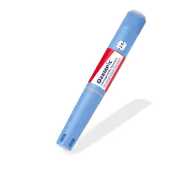
Ozempic is an injectable medication that contains semaglutide. It works as a GLP-1 receptor agonist, helping regulate blood sugar by increasing insulin release and reducing appetite.
In people with type 2 diabetes and established heart disease, it is also prescribed to lower the risk of major cardiovascular events.
Ozempic works through four mechanisms:
- Increases insulin when blood sugar rises.
- Reduces appetite through brain signaling.
- Slows digestion and delays stomach emptying.
- Delivered weekly as a subcutaneous injection (into fat, not muscle).
What Does Ozempic Do to Your Brain?
Reduces hunger signals in the hypothalamus
Ozempic acts on the hypothalamus, the part of the brain that regulates hunger and fullness.
Within the hypothalamus, two key regions respond to this medication: the dorsomedial hypothalamus and the arcuate nucleus.
These regions determine when you feel hungry and when you have eaten enough.
Ozempic activates GLP-1–responsive neurons in these areas, increasing satiety signals and decreasing hunger signals.
Quiets "food noise" and constant cravings
Ozempic reduces intrusive food thoughts, often described as “food noise.” This refers to the constant mental chatter about what to eat, when to eat, and how much to eat.
Brain imaging studies confirm this. People on GLP-1 medications show less activity in appetite regions when viewing food images.
Alters the reward system's response to food
Ozempic targets your mesolimbic reward system, which produces pleasure and motivation.
It activates GLP-1 receptors in the nucleus accumbens and ventral tegmental area, regions that release dopamine.
This reduces the food's reward value, making your eating less gratifying. Sweets lose appeal. Junk food becomes less tempting. And eating triggers less dopamine release in pleasure centers.
Improves satiety signaling from the gut to the brain
Your gut and brain communicate through the vagus nerve. After eating, your intestines release GLP-1, signaling the brainstem that you've consumed enough.
Ozempic enhances these natural satiety signals while also slowing gastric emptying. So the food in your stomach stays longer.
Read our guide to learn how semaglutide works in your body.
May reduce cravings for addictive substances
GLP-1 medications influence reward pathways involved in addiction. Some studies report reduced nicotine use among people taking semaglutide, and early trials are exploring its role in alcohol use disorder.
A 2024 study found a 28% lower risk of nicotine misuse in Ozempic users compared with other diabetes medications. Brain imaging also showed reduced activity in craving-related regions when participants were exposed to alcohol cues.
This does not mean Ozempic treats addiction. It highlights how the medication can alter motivation and reward processing beyond food alone.
Ready to explore GLP-1 options with medical supervision? Start your weight loss journey with affordable, personalized care.
What Are The Potential Mental Health Side Effects of Ozempic?
Some studies show no increased mental health risk with Ozempic. But some users may report mood changes during medication.
"Ozempic personality" is anecdotal, not proven
“Ozempic personality” is a term circulating online that describes mood changes, like emotional flatness, reduced enthusiasm, or subtle shifts in motivation, reported by some people taking GLP-1 medications.
It is not a medical diagnosis.
These reports largely come from social media and personal anecdotes, not controlled clinical trials. In real-world practice, clinicians rarely observe persistent mood changes related to Ozempic use.
An Oxford-led analysis of more than 100 million patient records found no increased risk of depression, anxiety, or psychiatric disorders in people taking semaglutide compared with other diabetes medications.
Mood changes may relate to rapid weight loss
Some users feel calmer as food anxiety decreases. Others struggle without their familiar stress management tool.
Weight loss itself affects mood regardless of method. Hormonal shifts during calorie restriction, changes in eating patterns, and the loss of food as a source of emotional comfort all contribute.
Brain fog is not a documented side effect
Clinical studies don't confirm that brain fog is a direct effect of Ozempic. But the reported cognitive dulling may stem from indirect causes like:
- Poor sleep quality.
- Low blood sugar episodes.
- Fatigue from GI side effects.
- Dehydration from nausea or vomiting.
- Reduced calorie intake affects energy.
What Are Some Weight Loss Treatments Similar to Ozempic?
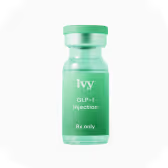
Personalized GLP-1 injections (semaglutide)
Personalized GLP-1 injections use the same active ingredient as brand-name Ozempic at a significantly lower cost. Reputable pharmacies prepare these under medical supervision.
They deliver the same appetite-suppressing and weight loss effects, with dosing adjusted by your provider based on your response and tolerance.
Ivy RX offers personalized GLP-1 injections starting at $175 per month, with ongoing oversight throughout treatment to balance affordability with professional care.
Tirzepatide (Mounjaro/Zepbound)
Tirzepatide is a dual GIP/GLP-1 receptor agonist that activates two hormone pathways.
Clinical trials show tirzapatide promotes greater weight loss, up to 21%, and body weight compared to semaglutide.
The medication works similarly on appetite centers while adding metabolic benefits through GIP activation.
See our detailed comparison guide on tirzepatide vs Ozempic or learn how to switch from Ozempic to Mounjaro.
Liraglutide (Saxenda/Victoza)
Liraglutide is an earlier GLP-1 medication that requires daily injections rather than weekly dosing. Weight loss tends to be more modest, averaging about 5–10% of body weight.
This finding suggests possible neuroprotective effects, though more research is needed, and results cannot be generalized to all GLP-1 medications.
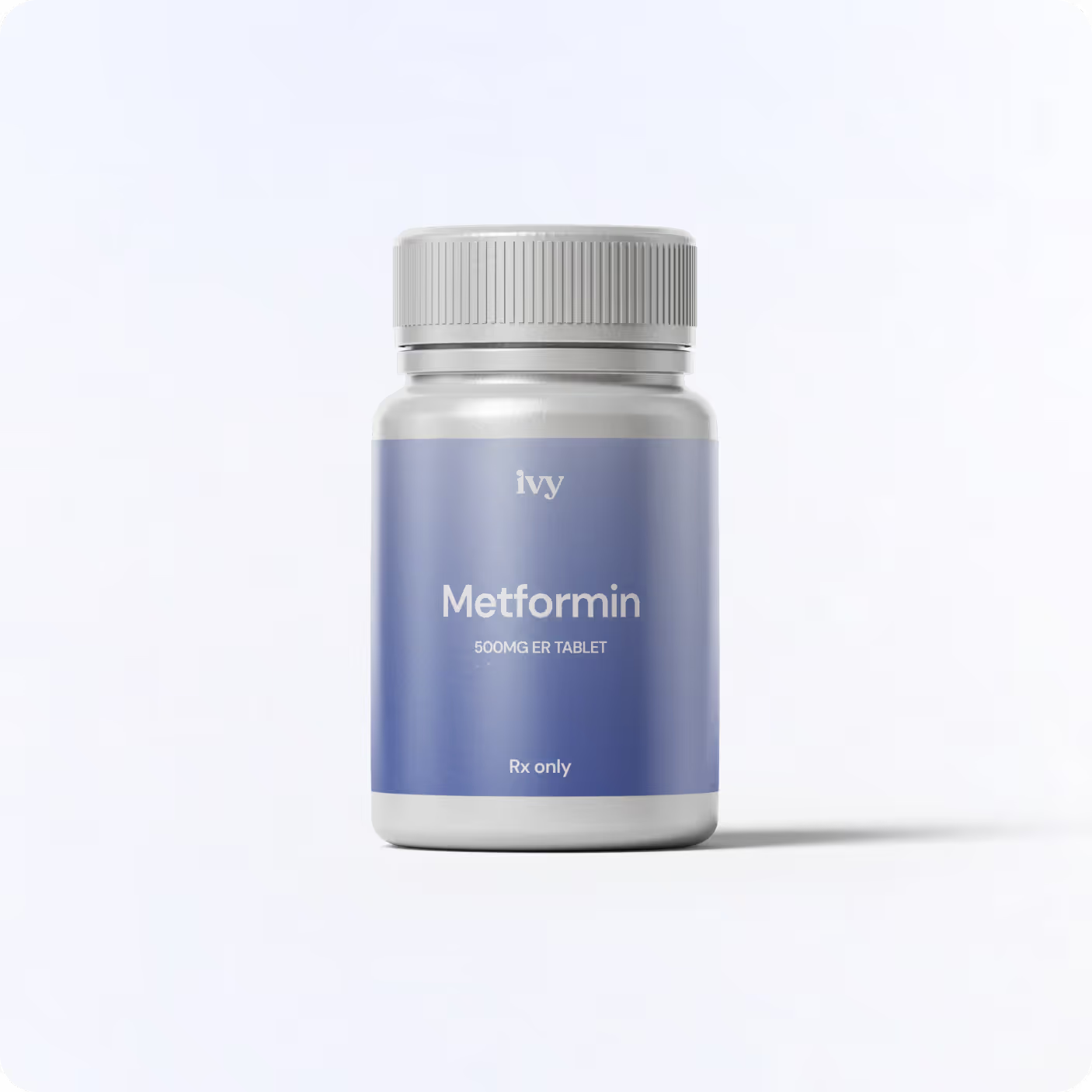
Metformin
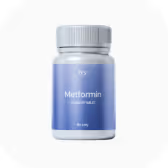
Metformin is an oral diabetes medication working differently from GLP-1s. It improves insulin sensitivity and causes modest weight loss.
For those hesitant about injections or wanting a gentler option, metformin provides an accessible entry.
Weight-loss effects are less dramatic than those of GLP-1 medications. Compare options at metformin vs Ozempic.
Microdose GLP-1 injections
Microdose GLP-1 injections start at lower doses than those used in standard protocols. This reduces the side effects you may experience from taking GLP-1 therapies.
And the gradual escalation allows comfortable body adjustment. Many patients find improved tolerability without sacrificing results.

Understanding GLP-1 vs Ozempic clarifies that Ozempic is one brand within a larger medication class. For comprehensive options, explore alternatives to Ozempic.
Discover which GLP-1 medication suits your needs through Ivy RX's personalized approach.
What Is the Correct Dosage for Semaglutides Like Ozempic?
The dosage depends on your treatment goal: diabetes management or weight loss.
Weight Loss
Ozempic isn’t FDA-approved for weight loss. Doctors and other health providers may prescribe Ozempic off-label for weight management.
The typical weight loss protocol escalates gradually:
- Weeks 1-4: 0.25 mg weekly.
- Weeks 5-8: 0.5 mg weekly.
- Weeks 9-12: 1 mg weekly.
- Maintenance: 1-2.4 mg weekly.
Gradual increases reduce nausea and vomiting. Your provider adjusts based on tolerance and progress.
Review our detailed Ozempic weight-loss results plan to set realistic expectations for your Ozempic treatment.
Diabetes
Ozempic is FDA-approved for type 2 diabetes. It focuses on blood sugar control rather than maximizing weight loss.
Standard protocol:
- Weeks 1-4: 0.25 mg weekly.
- Week 5+: 0.5 mg weekly.
- If needed: 1 mg weekly after 4+ weeks.
Most patients achieve adequate glucose control at 0.5 or 1 mg weekly. Your doctor monitors A1C levels and adjusts accordingly.
Understanding the principles of semaglutide dosing clarifies expectations at each treatment stage.
Factors Influencing Ozempic Dosage
Body weight and composition
Body size and composition shape how much medication you need. Some people require higher doses to achieve the same level of appetite control, while others respond well to lower doses.
Telehealth providers, like Ivy Rx, balance effectiveness with comfort by adjusting to identify the lowest effective dose that delivers results without unnecessary side effects.
Tolerance and side effects
Gastrointestinal side effects like nausea, vomiting, diarrhea, and constipation are dose-dependent. But other severe symptoms may require slower escalation or temporary dose reduction.
Staying at lower doses longer allows your body to adapt.
If you're not losing weight on semaglutide despite following our dosing guides, you should consult a medical provider to identify the root cause.
Concurrent medications and health conditions
Certain conditions require dose adjustments. Kidney disease, gastroparesis, or other digestive disorders may limit how much you can tolerate.
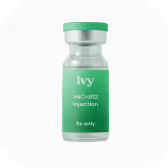
Some patients benefit from compounded semaglutide with B12 to support energy during weight loss. Your provider designs protocols accounting for your complete health picture.
Explore Whether Ozempic Is a Safe Option for You With Ivy RX
Ivy RX provides affordable personalized GLP-1 injections with ongoing medical supervision. Starting at $175 per month, you receive:
- Medications delivered to your door.
- Complete medical evaluation before starting treatment.
- Customized dosing based on your response and goals.
- And regular provider check-ins to monitor progress and side effects.

%25201.avif)

Ivy RX patients
Members of Ivy RX branded medications were paid for their testimonials.
- Liselotte van Bloemendaal, Richard G. IJzerman, Jennifer S. ten Kulve, Frederik Barkhof, Robert J. Konrad, Madeleine L. Drent, Dick J. Veltman, Michaela Diamant; GLP-1 Receptor Activation Modulates Appetite- and Reward-Related Brain Areas in Humans. Diabetes 1 December 2014; 63 (12): 4186–4196. https://doi.org/10.2337/db14-0849.
- Wadden TA, Brown GK, Egebjerg C, et al. Psychiatric Safety of Semaglutide for Weight Management in People Without Known Major Psychopathology: Post Hoc Analysis of the STEP 1, 2, 3, and 5 Trials. JAMA Intern Med. 2024;184(11):1290–1300. https://jamanetwork.com/journals/jamainternalmedicine/fullarticle/2823084.
- De Giorgi R, Koychev I, Adler AI, Cowen PJ, Harmer CJ, Harrison PJ, Taquet M. 12-month neurological and psychiatric outcomes of semaglutide use for type 2 diabetes: a propensity-score matched cohort study. EClinicalMedicine. 2024 Jul 10;74:102726. https://pmc.ncbi.nlm.nih.gov/articles/PMC11701436/. doi: 10.1016/j.eclinm.2024.102726.
- Jastreboff AM, Aronne LJ, Ahmad NN, Wharton S, Connery L, Alves B, Kiyosue A, Zhang S, Liu B, Bunck MC, Stefanski A; SURMOUNT-1 Investigators. Tirzepatide Once Weekly for the Treatment of Obesity. N Engl J Med. 2022 Jul 21;387(3):205-216. https://pubmed.ncbi.nlm.nih.gov/35658024/. DOI: 10.1056/NEJMoa2206038.
- Pi-Sunyer X, Astrup A, Fujioka K, Greenway F, Halpern A, Krempf M, Lau DC, le Roux CW, Violante Ortiz R, Jensen CB, Wilding JP; SCALE Obesity and Prediabetes NN8022-1839 Study Group. A Randomized, Controlled Trial of 3.0 mg of Liraglutide in Weight Management. N Engl J Med. 2015 Jul 2;373(1):11-22. https://pubmed.ncbi.nlm.nih.gov/26132939/. DOI: 10.1056/NEJMoa1411892.
Related
Resources

What Does Semaglutide Do To Your Body?
Semaglutide is a drug similar to the endogenous GLP-1 peptide secreted from the intestinal L-cells. GLP-1 is released from the intestine and exh...
%2520(5).png)
Is Ozempic (Semaglutide) Safe? Benefits & Risks in 2026
Want to know if Ozempic (Semaglutide) is safe for weight loss? Understand how semaglutide works, benefits & common side effects.

Transform Your Health Journey with Ozempic: Benefits and Side Effects Explained
If you've been on the lookout for an effective way to shed those extra pounds, or if you’re a medical professional seeking the latest treatments...