





.avif)


Article Outline
Lose weight with Glutathione Injection


Glutathione Injections Benefits, Risks & Side Effects (2026)
Glutathione injections are popular with people who want brighter skin, more energy, and stronger antioxidant defenses. Glutathione is widely used as an antioxidant and skin lightening agent, especially in Singapore, Thailand, Malaysia, and Indonesia.
Research supports some of that interest. Controlled trials show glutathione can raise the body's stores, lower oxidative stress, support immune cell activity, and modestly even out skin tone. The research is still growing, results vary, and injections are not FDA-approved, so clinician guidance matters.
This guide explains glutathione injection benefits, what the research supports, injectable versus oral forms, dosing, side effects, FDA status, cost, and how to get injections safely.
What Is Glutathione, and How Do Injections Work?
Glutathione is a tripeptide, which is a small molecule made of three amino acids: cysteine, glutamate, and glycine. Researchers describe it as the most abundant antioxidant the body makes on its own.
Glutathione neutralizes reactive molecules called free radicals, and it helps recycle other antioxidants such as vitamin C. It also plays a central role in the detoxification systems inside cells.
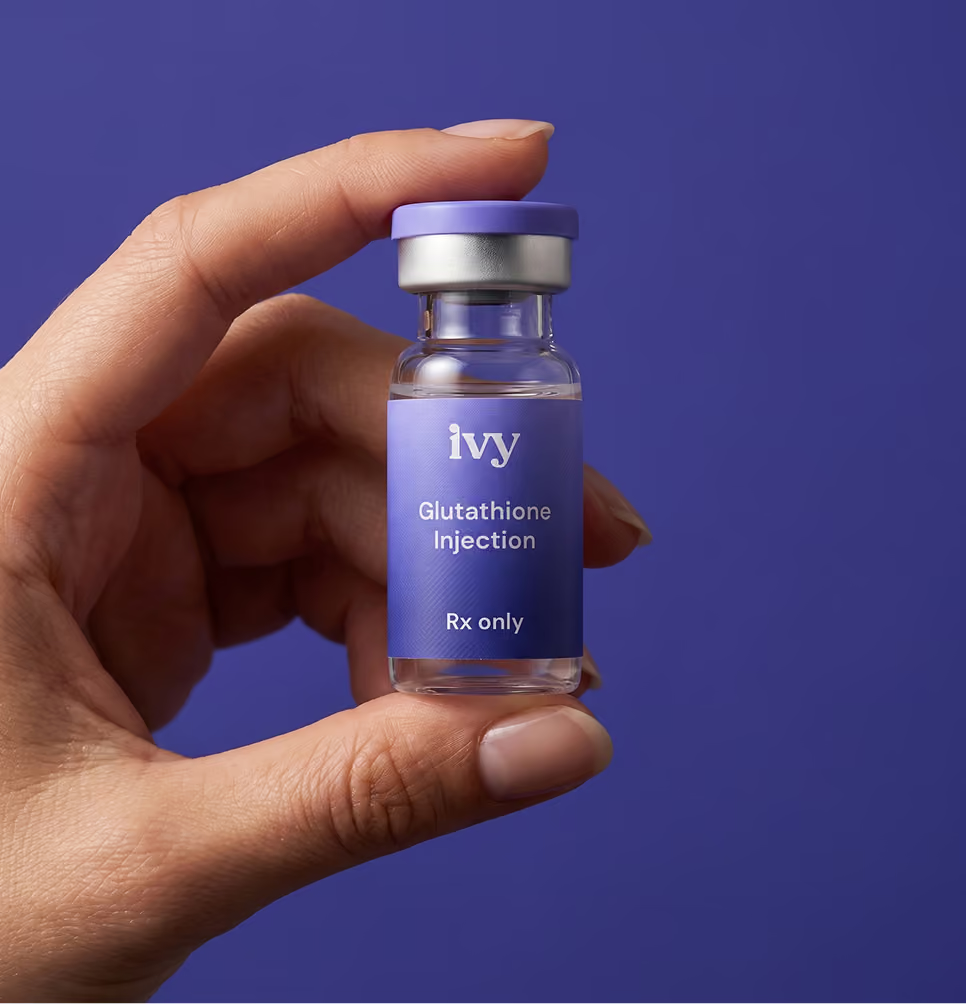
Glutathione injections are given under the skin or into muscles, so the dose does not pass through the digestive tract. Our glutathione injection is subcutaneous, which means it goes into the fatty layer just under the skin.
Glutathione is often compared with NAD+, and glutathione vs. NAD+ differ in how each one supports your cells.
Potential Benefits of Glutathione Injection
Research supports glutathione for raising antioxidant levels, lowering oxidative stress, supporting immune cells, and modestly evening skin tone. Most of those trials used oral or topical glutathione, and researchers are still studying injections under the skin.
1. Antioxidant and Oxidative Stress Support
In a six-month randomized trial, 54 healthy adults took oral glutathione at 250 mg or 1,000 mg a day. Glutathione levels in red blood cells, plasma, and white blood cells rose 30% to 35% in the higher-dose group.
Both dose groups also showed lower oxidative stress, measured by the balance of used and active glutathione in the blood. Levels returned to baseline one month after participants stopped, which suggests steady use matters for keeping the benefit.
2. Immune Support
The same trial measured immune markers in some participants. At three months, natural killer cell activity was more than twice as high in the higher-dose group as in the placebo group.
Natural killer cells help the body find and destroy infected or damaged cells. Larger studies are needed to show whether this change affects how often people get sick.
3. Liver Support
A Japanese study gave oral glutathione at 300 mg a day for four months to people with nonalcoholic fatty liver disease. Among the 29 people who finished, ALT levels fell, and triglycerides and fatty acids dropped too.
The study authors note that doctors have also given glutathione by IV injection to treat acute poisoning and chronic liver disease. This study was small and had no placebo group, so larger trials are the next step.
4. Nerve Protection During Chemotherapy
In a randomized, double-blind trial, 50 patients receiving cisplatin chemotherapy got glutathione or placebo. The glutathione group received an IV dose before each chemotherapy session, then 600 mg by injection into muscle on the next four days.
After 15 weeks, nerve damage appeared in 4 of 24 patients on glutathione, compared with 16 of 18 on placebo. The glutathione group also needed fewer blood transfusions, and glutathione did not reduce the effect of the chemotherapy.
This trial does not show that glutathione prevents nerve problems outside cancer care. It does show that doctors have given injected glutathione in a supervised hospital setting with a measurable benefit.
5. Energy and Skin Aging
Many users report more energy, although controlled trials have not yet measured energy as an outcome. A systematic review found that glutathione may improve skin elasticity and reduce wrinkles.
In a four-week trial in 21 people with Parkinson's disease, IV glutathione three times a week was well tolerated. The researchers saw a possible mild effect on symptoms and said a larger study is needed to confirm it. Glutathione also appears on many lists of anti-aging peptides for its skin effects.
Glutathione for Skin: Brightening and Anti-Aging
Glutathione benefits for skin include a brighter, more even tone in controlled trials, and results depend on ongoing use.
- How it may work: Glutathione blocks tyrosinase, an enzyme that makes melanin, and it shifts production toward lighter pigment
- Oral results: Five randomized trials and one open study found oral glutathione at 250 mg to 500 mg a day lowered the melanin index compared with placebo
- Early trial detail: In a 60-person trial, glutathione lowered melanin at every measured site after four weeks, with the clearest differences on the face and the sun-exposed forearm
- Skin aging: A systematic review found glutathione may also improve skin elasticity and reduce wrinkles
- Injection results: In the only placebo-controlled IV study, 37.5% of treated people responded, compared with 18.7% on placebo, which was a trend that did not reach statistical significance
- How long results last: Skin tone returns toward its starting point after treatment stops, so ongoing use matters, and researchers are still studying how quickly this happens
A dermatologist or clinician can help you combine glutathione with other skin treatments, including FDA-approved topical options for hyperpigmentation and melasma.
Injectable vs. Oral vs. IV Glutathione (Bioavailability)
Each form has trade-offs. Oral glutathione has the most published trials, injections avoid the digestive tract, and IV infusions reach the blood directly but leave it within minutes. Bioavailability means how much of a dose reaches your bloodstream.
Oral Glutathione Capsules
Oral glutathione is the best-studied form for both blood levels and skin. Long-term daily use raised body stores in the six-month trial, and most skin trials in the 2025 review used oral capsules.
A systematic review also found oral glutathione was well tolerated. Route changes results for other treatments too, and NAD injections vs pills show a similar trade-off between convenience and absorption.
Subcutaneous and Intramuscular Injections
Injections under the skin or into muscle avoid the digestive tract, so the dose does not depend on digestion. In the chemotherapy trial, 600 mg injections into muscle were part of the glutathione treatment that protected patients' nerves.
Researchers have not yet published studies that measure blood levels after injections under the skin. One review also noted more tolerability issues with injected forms than with oral forms, which is one reason to start injections with a licensed clinician.
Our glutathione injection is subcutaneous and designed for home use with syringes, needles, and step-by-step instructions.
IV Infusions
IV glutathione reaches the blood directly, and in the Parkinson's trial, it was well tolerated at 1,400 mg three times a week. In one study, IV glutathione left the bloodstream with a half-time of about 10 minutes, and the rest broke down into its amino acids.
The serious risks in the research involve high-dose IV glutathione used for skin lightening. Those uses have been linked to liver failure, kidney failure, and Stevens-Johnson syndrome, which is a severe skin reaction. The 2025 skin review authors advise against IV glutathione for skin lightening for this reason.
Nasal Sprays
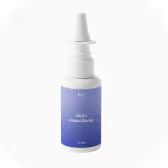
Nasal sprays deliver glutathione through the lining of the nose. Our Glutathione Nasal Spray is used one to two times a day or as your clinician directs, but no published human study in this review measured its absorption.
The same spray-versus-shot choice applies to NAD+ nasal spray vs. injection, where the doses differ between the two forms.
Glutathione Injection Dosage
There is no FDA-established glutathione injection dosage, so a licensed clinician sets your dose and schedule. No trial has set a glutathione injection dosage per day for skin or wellness goals.
The chart below lists doses that researchers tested, which vary widely by form and goal.
Depending on why you use glutathione, your clinician may recommend liver or kidney blood tests to monitor safety. You can review the glutathione injection details before your assessment.
Side Effects and Who Should Avoid It
Most reported glutathione side effects are mild, such as injection-site redness or stomach upset. The serious reactions described in medical reviews involved IV glutathione used for skin lightening, and the FDA has warned about injectable skin whitening products sold online and in spas.
Common side effects
- Redness, swelling, pain, or bruising at the injection site
- Nausea, stomach upset, bloating, cramping, or diarrhea
- Headache, lightheadedness, dizziness, or fatigue
- Changes in skin pigmentation
Serious reactions
- Allergic reactions, including rash, hives, shortness of breath, swelling of the face or throat, and anaphylaxis
- Liver failure, kidney failure, and Stevens-Johnson syndrome, which have been linked to high-dose IV glutathione used for skin lightening
- Infection and blood clots from unsafe injection practices, which the FDA also links to hepatitis and HIV transmission
Who should avoid glutathione injections:
- People with a known allergy to glutathione or any ingredient in the formulation
- People who are pregnant, planning pregnancy, or breastfeeding, unless a clinician reviews the risks first
- People with serious or unstable conditions, such as end-stage kidney disease, severe liver disease, or uncontrolled diabetes, without close medical supervision
- Children and people with weakened immune systems, because safety in these groups is unknown
Glutathione may also interact with some medications and supplements, especially those that affect detoxification pathways. Our safety information lists contraindications for each treatment we offer, so share every medication and supplement with your clinician.
Are Glutathione Injections FDA-Approved and Safe?
No, glutathione injections are not FDA-approved for any specific use, dose, or form.
Glutathione Injections Are Not FDA-Approved
The FDA has not evaluated glutathione injections for safety or effectiveness in any specific medical use. Pharmacies prepare the glutathione injections sold in the U.S., so product quality depends on the pharmacy and its testing.
The FDA Has Warned About Injectable Skin Lightening Products
The FDA warns that injectable skin whitening products sold online and in some spas may be unsafe and ineffective. Some may contain unknown harmful ingredients, and glutathione is a common ingredient in these products.
A 2016 review also found that safety data for IV glutathione used for skin lightening were inadequate.
These warnings target products with unknown ingredients and unknown makers. A clinician-prescribed product from a licensed pharmacy, with published testing, is a different situation, which is why the source of your glutathione matters.
How to Lower Your Risk
Use glutathione only after a licensed clinician reviews your health history. Choose a product prepared by a licensed pharmacy with published testing, and avoid sellers that promise skin whitening.
If you have a serious reaction, stop using glutathione and seek medical care right away. You can report it to the FDA MedWatch program at 1-800-FDA-1088.
How Much Do Glutathione Injections Cost?
Glutathione injection price varies by form, dose, and setting.
Ivy Rx’s glutathione injections start from $179, as of September 2026. Before you buy anywhere, confirm what the price includes, such as supplies, clinician follow-up, and shipping.
How to Get Glutathione Injections Safely
The safest route combines a licensed clinician review, a tested pharmacy-prepared product, and clear instructions for home use.
1. Start With a Licensed Clinician Review
Ivy Rx starts with a five-minute online assessment, and one of our licensed clinicians reviews your information the same day. If glutathione suits you, your clinician writes the prescription, and you can message your care team through our patient portal.
2. Choose Tested, Pharmacy-Prepared Medication
A state-licensed pharmacy prepares our glutathione injection, and it passes potency, sterility, endotoxin, and pH testing. The medication is made in the USA and ships free in temperature-controlled packaging.
We keep pricing transparent, starting from $179 as of September 2026, and our Rate Lock Guarantee keeps your price the same at every dose. Glutathione injections are not FDA-approved, and results vary between people.
3. Learn to Give a Subcutaneous Injection at Home
Subcutaneous injections go into the fatty layer just under the skin, and they do not go into muscle. Common sites include the abdomen, away from the navel, and the back of the upper arm.
Your kit includes step-by-step instructions, and this tutorial video walks through a home injection. A clinician or pharmacy team should explain the technique before your first dose, and you should rotate sites to prevent irritation.
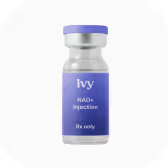
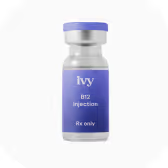
Glutathione is one of several anti-aging injections we offer, alongside NAD+ and B12. If you prefer not to inject, our Glutathione Nasal Spray gives you a needle-free option.
Start Your Glutathione Injection Plan With Ivy Rx
If you want to try glutathione with clinician oversight, start our five-minute online assessment today. A licensed clinician reviews your health history the same day and confirms whether glutathione suits your goals.
Our glutathione injection starts from $179 as of September 2026, with a Rate Lock Guarantee, free temperature-controlled shipping, and no insurance required. A state-licensed pharmacy prepares and tests every vial. You can also explore our other anti-aging treatments.
FAQs
What Are the Main Benefits of Glutathione Injections?
Antioxidant support, immune cell support, and a brighter, more even skin tone are the best-studied benefits. Results vary, and most skin trials used oral glutathione.
Do Glutathione Injections Whiten Skin?
Modestly, while you use them. Trials show glutathione can lower skin melanin, but it does not permanently whiten skin, and results fade after you stop.
How Often Should You Get Glutathione Injections?
It depends on your clinician's plan. No standard schedule exists, and published studies ranged from daily oral doses to IV infusions three times a week.
Are Glutathione Injections Safe?
Generally, when a licensed clinician prescribes them. Mild injection-site reactions are the most common side effect, and serious reactions have been linked to high-dose IV skin-whitening products.
Are Injections Better Than Oral Glutathione?
They work differently. Injections avoid digestion and have been used in hospital settings, while oral glutathione has more published trials for antioxidant levels and skin.
Disclaimer: Research findings, regulatory details, prescribing-label information, safety guidance, product availability, pricing, and treatment expectations in this article were reviewed in September 2026 and may change. This article is for informational purposes only and does not replace medical advice. Always confirm current product details, eligibility, dosing instructions, pharmacy or supplement sourcing, and program terms with a licensed clinician before starting treatment.


Ivy RX patients
Members of Ivy RX branded medications were paid for their testimonials.
- https://onlinelibrary.wiley.com/doi/10.1111/ijd.17535
- https://link.springer.com/article/10.1007/s00394-014-0706-z
- https://pubmed.ncbi.nlm.nih.gov/26770075/
- https://www.ncbi.nlm.nih.gov/pmc/articles/PMC5549431/
- https://pubmed.ncbi.nlm.nih.gov/19230029/
- https://pdfs.semanticscholar.org/4821/734424e7884d7765320196c90cbec5211f6a.pdf
- https://pubmed.ncbi.nlm.nih.gov/20524875/
- https://www.ncbi.nlm.nih.gov/pmc/articles/PMC7196133/
- https://jcadonline.com/efficacy-safety-topical-glutathione/
- https://cacmap.fda.gov/consumers/consumer-updates/injectable-skin-lightening-and-skin-bleaching-products-may-be-unsafe
- https://pubmed.ncbi.nlm.nih.gov/27499402/
- https://youtu.be/wXjQHAxopzk
- https://pubmed.ncbi.nlm.nih.gov/7799029/
Related
Resources

Glutathione vs NAD+ Compared: Benefits, Differences, and Which to Choose
Compare Glutathione and NAD+ therapy benefits, uses, costs, and side effects. Discover which is better for detox, anti-aging, energy, or wellness.

Does Glutathione Lighten Skin Permanently?
Glutathione is an endogenous antioxidant compound present in human tissues and organs. It plays various key roles in the body's functions, such...

Glow from Within How Glutathione Injections Can Transform Your Wellness
With the rise of holistic health trends, many are looking for ways to improve their overall well-being. One such method gaining popularity is gl...