





.avif)


Article Outline
Start your personalized GLP-1 program


Microdosing GLP-1 Reviews: Real User Results, Experiences, Side Effects & Costs
Many people start GLP-1 treatment with the same question: Do I really need the full dose to see results?
That question has led more patients to explore GLP-1 microdosing.
Usually, they start with smaller, personalized doses to reduce side effects, lower monthly costs, maintain a certain weight, or shed only a few pounds.
But does microdosing actually work?
To answer that, we reviewed real experiences shared by people using lower doses of Semaglutide and Tirzepatide through provider-led care. Some report steady progress with fewer side effects. Others say the results feel slow or inconsistent.
But here’s what real users experienced after trying microdosed GLP-1 treatment.
What Is Microdosing GLP-1?
Microdosing with GLP-1 refers to using much lower doses than those used in standard treatment schedules for medications such as Semaglutide or Tirzepatide.
Instead of working up to the highest dose, people stay at smaller, personalized amounts.
From user discussions, the reasons are practical. Some want fewer side effects. Others wish for a gentler level of appetite control. And cost often plays a role in this consideration.
Microdosing is usually done through structured programs, such as personalized GLP-1 injections or dedicated microdose GLP-1 options, rather than self-experimentation.
Next, let’s look at what people actually experience when they try microdosing in real life.
Microdosing GLP-1 Results: What Users Actually Report
Real people across Reddit, TikTok, and online weight-loss communities share consistent patterns in microdosing GLP-1 results.
Most microdosers describe weight loss that occurs more slowly than with standard doses, but feels more manageable.
A 54-year-old woman lost 38 pounds over 10 months by listening to her body instead of rushing doses.
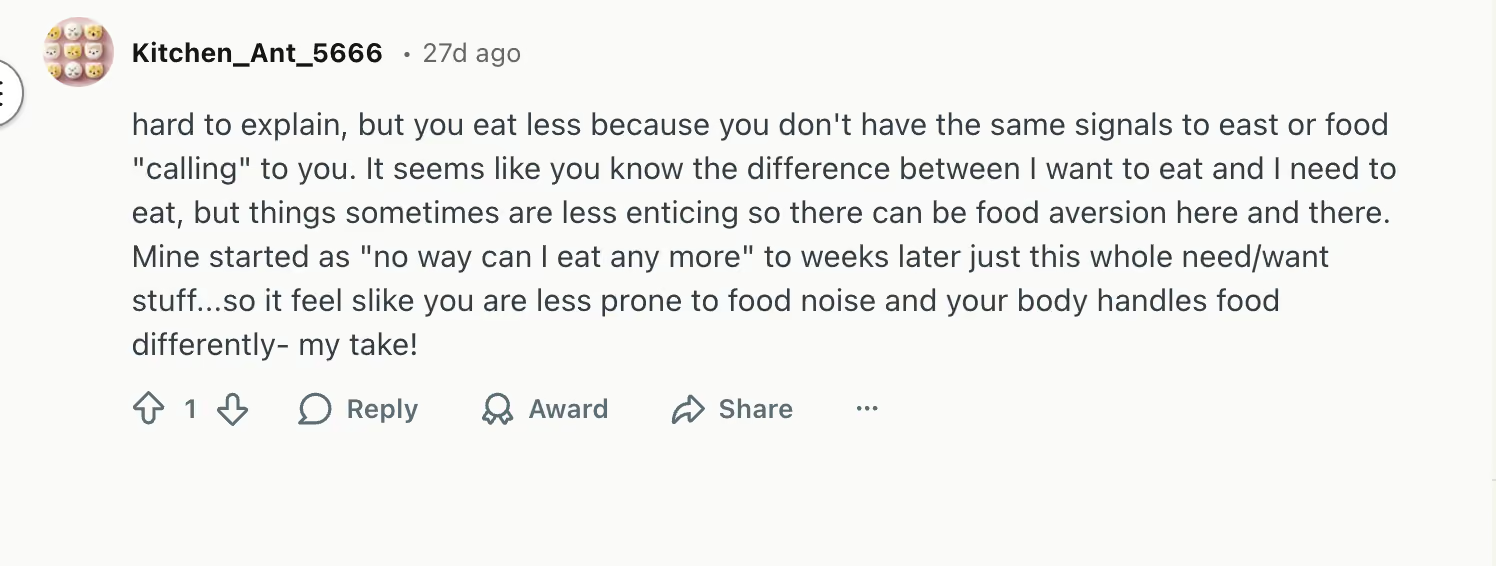
The recurring theme? Food just matters less.
One Reddit user explains: "You eat less because you don't have the same signals to eat or food 'calling' to you."
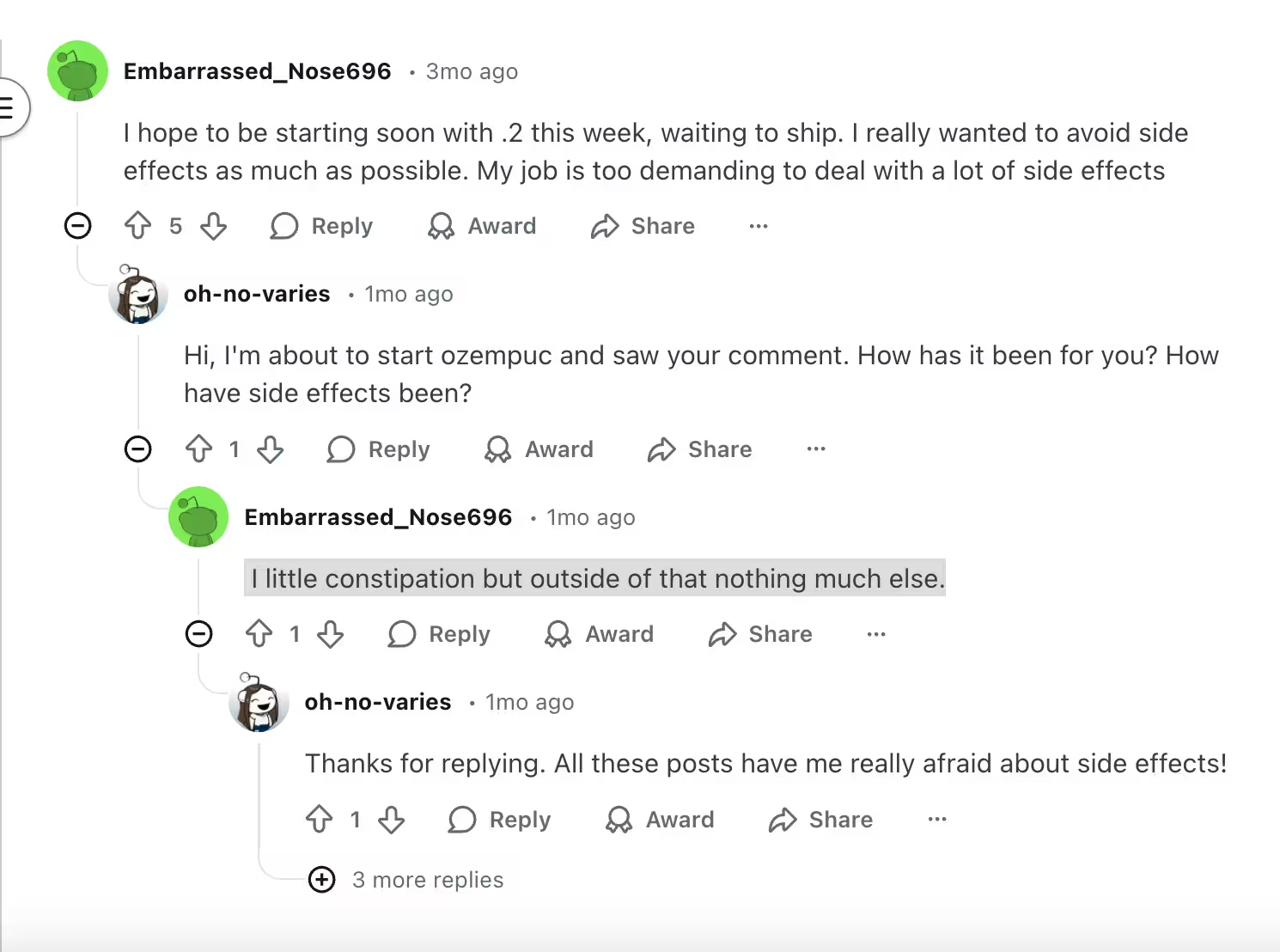
Avoiding side effects is a significant motivator for choosing microdose GLP-1 injections instead of personalized GLP-1 therapy.
One Reddit user explains, “I hope to be starting soon with .2 this week, waiting to ship. I really wanted to avoid side effects as much as possible. My job is too demanding to deal with a lot of side effects.”
And three months into microdosing GLP-1, the user testifies…
“Little constipation, but outside of that, nothing much else.”
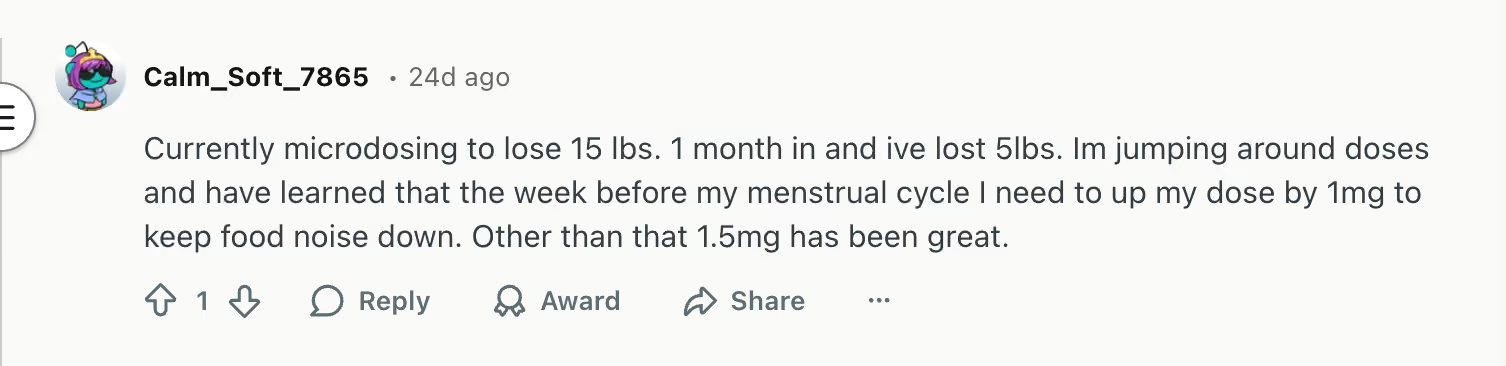
The weight loss results from microdosing GLP-1 can vary. One user reports losing 5lbs within a month…
“Currently microdosing to lose 15 lbs. 1 month in and I've lost 5lbs. I'm jumping around doses and have learned that the week before my menstrual cycle, I need to up my dose by 1mg to keep food noise down. Other than that, 1.5mg has been great.”
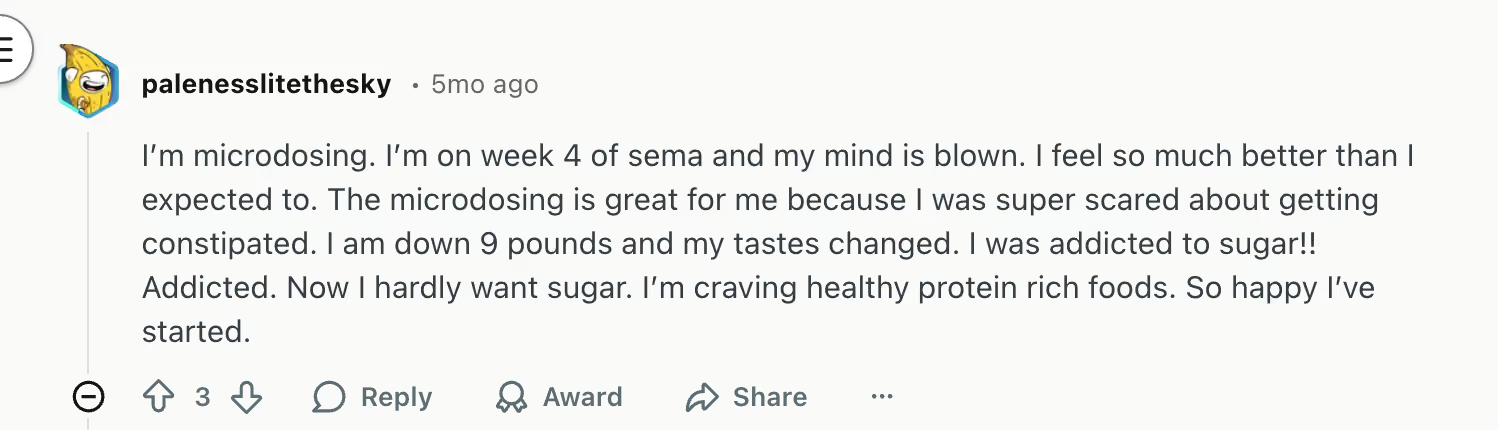
Another Reddit user testifies to losing 9 pounds and losing food cravings from microdosing.
“I’m microdosing. I’m on week 4 of sema and my mind is blown. I feel so much better than I expected to. The microdosing is great for me because I was super scared about getting constipated. I am down 9 pounds and my tastes changed. I was addicted to sugar!! Addicted. Now I hardly want sugar. I’m craving healthy protein-rich foods. So happy I’ve started.”
Also, long-term weight maintenance drives many choices. Some users aren't chasing dramatic transformation; they're protecting what they've already achieved.
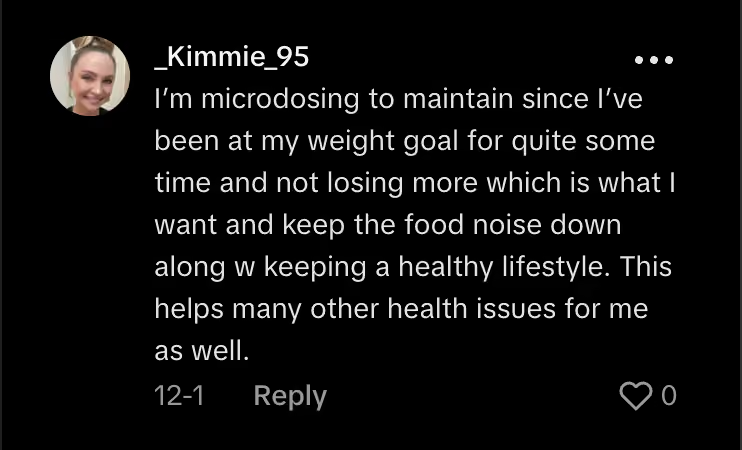
Kimmie commented on a TikTok video from the Today show, saying…
“I’m microdosing to maintain since I’ve been at my weight goal for quite some time and not losing more, which is what I want and keep the food noise down, along with keeping a healthy lifestyle. This helps many other health issues for me as well.”
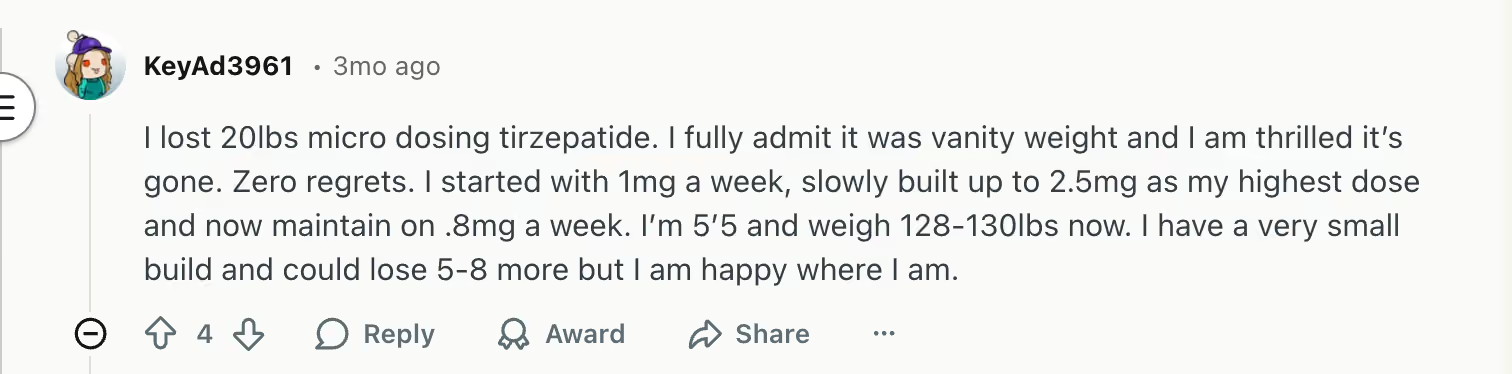
A Reddit user who lost 20 pounds on tirzepatide, and now maintains her weight at 0.8mg weekly, also reinforces the effectiveness of microdosing GLP-1 to maintain body weight.
Curious about typical timelines? Check out 6-week Ozempic results to see how microdosing compares to standard protocols.
So the pattern across communities is clear: people trade speed for comfort. They're okay with slower progress if it means they can function at work, avoid nausea, and feel like themselves while the weight comes off.
Want to read about more experiences? Read real semaglutide weight loss reviews from users at different doses.
Review 1: Finally, No Nausea
Claire Houston, 65, has Hashimoto's disease, so her body overreacts to everything.
Initially, she was worried about the horror stories, people throwing up after every injection. So she found a nurse practitioner who prescribed 0.75mg tirzepatide instead of the standard starting dose.
Six weeks later, she'd worked up to 1.5mg. Zero nausea. Zero digestive drama.
Four months in, she'd lost 20 pounds. Her fasting glucose, A1C, cholesterol, and triglycerides all returned to healthy ranges.
"For me, this turned out to be hope in a syringe," Houston told HealthCentral. "I was never sick or overweight enough that my primary care doctor wanted me to take any of these medications, but now I am feeling so much healthier. I've gotten my quality of life back."
This pattern shows up everywhere.
Especially with people who quit standard doses because of side effects, often tolerate microdose semaglutide just fine.
Review 2: Budget-Friendly Results
Jenn Rossum, 53, couldn't crack 20 stubborn pounds. She skied regularly. She biked. She worked out most days.
"Nothing was budging," Rossum said in a TODAY interview.
She tried a microdose program at $119-199 monthly, because she couldn't afford the $1,349 standard option without insurance.
Thirteen pounds came off. She ate more protein, cut sugar, and the medication helped control portions without making her sick.
Cost opens doors. Many people wouldn't try GLP-1s at full price but find compounding-pharmacy options work within their budget.
Two themes dominate most positive reviews: fewer side effects and financial access.
Want to explore different programs? Compare semaglutide diet plans to support your results.
Mixed or Neutral Reviews
Review 1: Patience Required - 10 Month Journey
A 54-year-old woman lost 38 pounds over 10 months on microdosed tirzepatide. She started at 0.25mg every four days and gradually worked up to 3mg.
Her weight plateaued for a month before she adjusted her approach. The lesson? "It's better to listen to your body than the scale," she writes.
This isn't passive weight loss. It requires meal planning, exercise, and patience.
Struggling with hunger? Learn why you're still hungry on semaglutide and how to adjust.
Negative Microdosing GLP-1 Reviews
Yes, there are a few negative reviews on microdosing…
Review 1: Low Dose, Zero Results
One Reddit user wanted to avoid side effects altogether. She started semaglutide at 0.0025mg, which is an extremely low dose.
A week later, she reports:
“What’s your dose? I started out super low, .0025, I think. It wasn’t great for me, I didn’t feel much, so a week later at my appt, they bumped it up a tiny bit. (Semaglutide) I think that’s the dose, but this week I’m going to have it bumped up slightly a bit more. I’m still learning about the microdose scale. I’d like to make this sustainable - and as slow as it takes - and NOT have any negative side effects.”
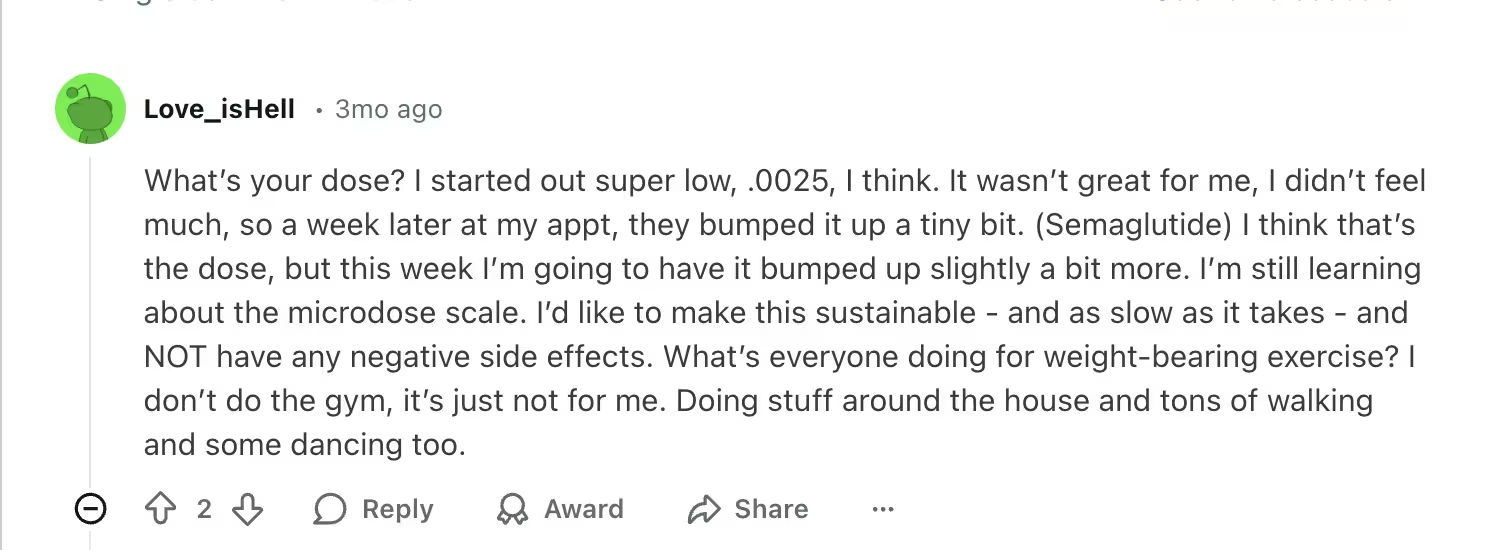
While being conscious of the common side effects of GLP-1s, there is a therapeutic window to find a dosage suitable for you. Start too low, and you waste weeks and money with no result. Jump too high, and side effects kick in.
Concerned about side effects? Check out common semaglutide headaches and tirzepatide side effects to know what's normal, and the symptoms to flag to your health provider.
Microdosing GLP-1 Pros
From our review data, three benefits consistently appear in user reviews.
Fewer Side Effects
Most microdosers choose lower doses to avoid side effects from taking personalized GLP-1 injections.
Nausea ruins standard doses for many people. At 0.2-0.6mg, it hits far less often.
Users say they feel "normal" while the weight comes off, with no food aversions. Energy stays steady. The medication works quietly.
One user put it simply: "I can function at work without planning bathroom breaks."
This matters most for people who quit standard semaglutide doses because of severe digestive problems.
Lower Costs
Microdose programs: $119- $199 monthly.
Standard doses without insurance: $1,349 monthly.
Cost over six months:
- Microdose cost: $714-$1,194.
- Standard dose cost: $8,094.
That's real money. Several microdosers cite cost as a key factor.
For people without insurance coverage, microdosing creates access. You can read our guide to get the cheapest Semaglutide, with or without insurance.
Weight Maintenance Becomes Easier
If you’ve reached your goal weight and want to maintain it, microdose GLP-1 may offer a steadier option.
Lower doses support appetite control and routine without pushing further weight loss, which makes long-term maintenance feel more manageable.
Explore further benefits of microdosing for different goals.
Microdosing GLP-1 Cons
User reports reveal three consistent problems.
Weight May Come Off More Slowly
Lower doses may mean slower results.
Microdosers lose 7-13 pounds over 6-12 weeks. Standard doses may produce 15-20 pounds of weight loss in the same timeframe.
For people with 50+ pounds to lose, this pace feels frustrating. For those patients with obesity-related health problems, slowly may not be enough.
Important note: Time matters when your blood sugar or blood pressure needs quick improvement.
Hunger Control Feels Inconsistent
Some microdosers stretch their doses to save money. They inject less often or take smaller amounts.
This weakens blood levels. Some weeks feel strong. Others bring more hunger. Planning gets hard when you can't predict your appetite week to week.
Quality Varies by Pharmacy
The quality of personalized GLP-1 medications can vary based on where and how they’re prepared.
Some pharmacies follow strict standards and work closely with medical providers. Others fall short on consistency or transparency.
Ivy Rx’s microdose GLP-1 program starts at $155 per month and includes ongoing support, helping reduce guesswork and build trust throughout treatment.
Compare your options carefully: tirzepatide cost vs Mounjaro without insurance, and compare semaglutide pills vs injection.
Who Microdosing GLP-1 Is Most Cost-Effective For
Microdosing makes sense in specific situations, for example:
- You have 10-25 pounds to lose - Smaller goals don't need maximum doses. Lower costs match lower needs. You may reach your target without ever escalating.
- You're maintaining the weight you already lost - Hit your goal on standard doses? Drop to a microdose. Keep the weight off. Pay a fraction of the cost over the long term.
- Your insurance won't cover GLP-1s for weight loss - Only 34% of employer plans covered these medications in 2024. Microdosing at $119- $ 199 monthly beats an out-of-pocket cost of $1,349.
- Side effects stopped you before - Quit standard doses because of nausea? A lower dose may let you try again without the bathroom drama.
- You want metabolic benefits, not weight loss - Some fit people use microdoses to improve blood sugar control, reduce inflammation, or improve cardiovascular markers.
Microdosing is not a good fit if you:
- Need to lose 30+ pounds quickly.
- Require maximum therapeutic effect.
- Have a BMI over 35 with health complications.
Before choosing a dose or approach, check Ivy Rx’s BMI calculator and TDEE calculator.
How Microdosing Compares to Standard GLP-1 Doses
Users notice fundamental differences when they switch between protocols.
- Speed tells the story: Standard doses work faster but hit harder. Microdoses take longer but feel gentler.
- Hunger acts differently: Microdosers describe subtle changes. "I eat less without thinking about it." Standard dose users often report complete appetite wipe-out for days after shots.
- Cost adds up: Standard doses cost 4-5x more monthly.
Read our comparison guide on Semaglutide vs Tirzepatide, and Wegovy vs Ozempic vs Mounjaro.
Get Personalized, Affordable GLP-1 Microdose Injections With Ivy Rx
Microdosing works well for some people and less well for others. The difference often comes down to medical guidance and dosing strategy.
Ivy Rx provides provider-led GLP-1 microdose injections with medical evaluation, flexible dosing, and transparent pricing. Your care team works with you to determine the right approach based on your goals, tolerance, and response over time.
Microdosing may be the right fit. Or a personalized GLP-1 injection may make more sense. Either way, the decision should be guided by your body and your provider, not guesswork.
Start with a medical evaluation to see whether GLP-1 microdosing is right for you.

%25201.avif)

Ivy RX patients
Members of Ivy RX branded medications were paid for their testimonials.
Related
Resources

Does Microdosing GLP-1 Work? What the Evidence Shows (2026)
Does microdosing GLP-1 actually work for weight loss or appetite control? Learn what patients experience, what evidence exists, and key limitations.

13 Benefits of Microdosing GLP-1 (Is it Really Better?)
Curious about microdosing GLP-1? Learn what it is, potential benefits, how it works, and if smaller, personalized doses can improve results and reduce side effects.
.avif)
Microdosing Semaglutide 101: How it Works, Benefits & Risks
Microdosing semaglutide explained: understand effects, benefits, and precautions, plus how telehealth platforms like IvyRx support safe access.