








.avif)



Article Outline
Start your personalized GLP-1 program


Retatrutide vs Semaglutide Differences, Cost & Benefits
Retatrutide is getting attention because its initial trial results look impressive. But there is a major catch: retatrutide is still trial-only and not available by prescription.
For patients comparing retatrutide vs semaglutide right now, semaglutide is the practical choice to discuss with a licensed provider.
Below, we compare how both medications work, weight-loss results, blood sugar effects, side effects, cost, and availability.
Retatrutide vs Semaglutide: A Quick Overview
What Is Retatrutide?
Retatrutide is an investigational injectable medication being studied for obesity and related metabolic conditions. It is sometimes called a “triple agonist” because it targets three hormone receptors: GIP, GLP-1, and glucagon.
At a glance:
- Status: Investigational
- Approval: Not FDA-approved
- Access: Clinical trials only
- Route: Once-weekly injection in studies
- Possible timeline: Potentially late 2026 or 2027, depending on trial completion and regulatory review
Retatrutide is not available by prescription right now. If a website claims to sell “retatrutide” for normal patient use, treat it as a red flag. Current access is limited to legitimate clinical research settings, such as a registered clinical trial listed in a trial registry.
What Is Semaglutide?
Semaglutide is a GLP-1 receptor agonist used in medications for weight management and type 2 diabetes. For weight loss, it helps reduce appetite, increase fullness, and support lower calorie intake when used with lifestyle changes.
At a glance:
- Status: Available by prescription
- Approval: FDA-approved in branded medications for specific uses
- Access: Brand-name and provider-guided compounded pathways where appropriate
- Route: Usually once-weekly injection for weight-loss care
- Best fit: Patients who want a realistic treatment option now
The FDA approved Wegovy, a branded semaglutide injection, for chronic weight management in adults with obesity or overweight with at least one weight-related condition, alongside diet and physical activity. The same active ingredient is also used in Ozempic for type 2 diabetes.
Current compounded semaglutide formulations are not FDA-approved, so provider oversight and pharmacy quality are important. For eligible patients, Ivy Rx’s Personalized GLP-1 Injections create a lower-cost, provider-guided pathway to semaglutide-based weight-loss care.
Learn more about what semaglutide does to your body.
Weight Loss Results Compared
Retatrutide appears highly promising in trials, but semaglutide has the stronger real-world advantage today because it is already available.
Retatrutide: In a phase 2 obesity trial, adults taking the 12 mg dose had a mean weight reduction of 24.2% after 48 weeks. Lower doses also produced meaningful weight loss. These results are impressive, but retatrutide is still investigational and only anecdotally supported.

Semaglutide: In the STEP 1 semaglutide trial, adults without diabetes taking once-weekly semaglutide 2.4 mg lost an average of 14.9% of body weight after 68 weeks, compared with 2.4% with placebo.

Retatrutide may look stronger on headline weight-loss percentage, but these were not head-to-head trials. Different study designs, populations, doses, and timelines can affect outcomes.
For a more realistic current-treatment lens, review semaglutide before and after 1 month.
Blood Sugar Control Compared
Both retatrutide and semaglutide affect metabolic pathways, but their clinical status is different.
Retatrutide is being studied and anecdotally supported for obesity and type 2 diabetes-related outcomes, but it is not approved for blood sugar control. Patients should not use unapproved retatrutide products to manage diabetes or weight.
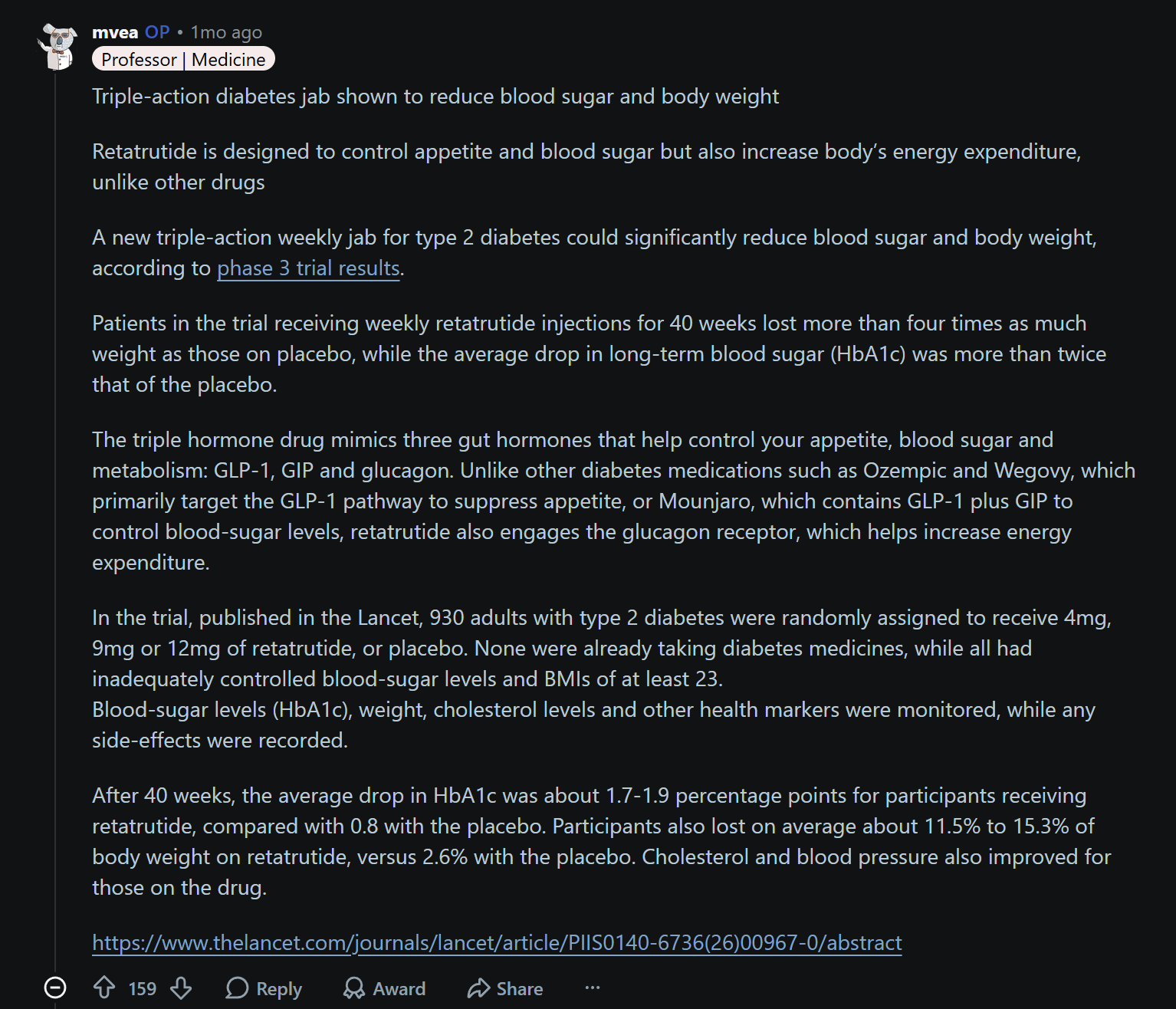
Semaglutide has established use in type 2 diabetes treatment through branded medications such as Ozempic. It helps improve blood sugar by supporting insulin release when glucose is elevated, reducing glucagon release, slowing gastric emptying, and reducing appetite.
For patients focused on weight loss, blood sugar should still be a consideration. Many people seeking GLP-1 care also have insulin resistance, prediabetes, or type 2 diabetes risk. A provider can help decide whether semaglutide, tirzepatide, or another option is more appropriate based on labs, history, and goals.
For more context, see liraglutide vs semaglutide.
Side Effects Comparison
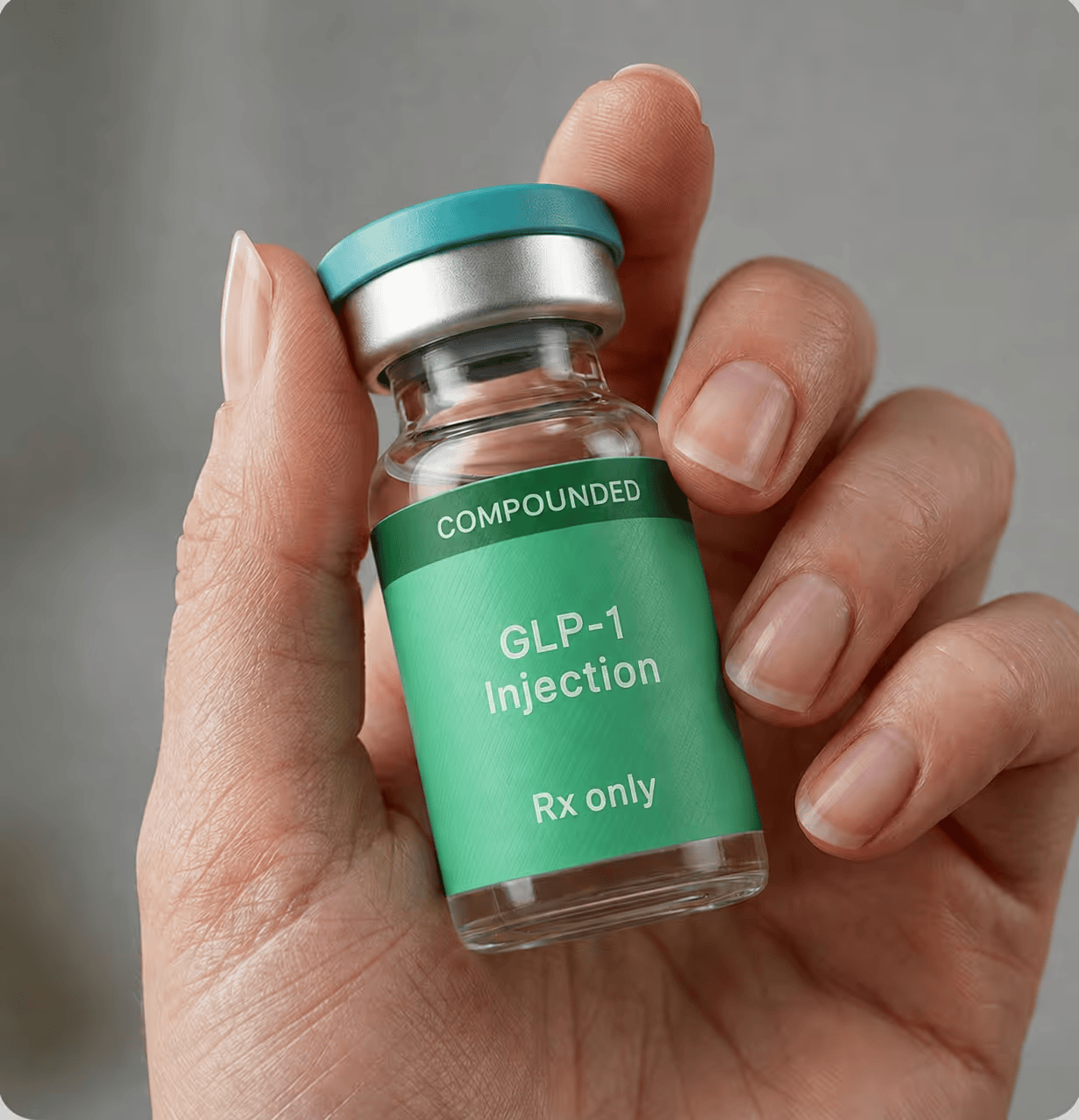
Both medications can cause gastrointestinal side effects because they affect appetite, digestion, and gut-hormone pathways. Retatrutide may also have additional side-effect questions because it activates three receptor pathways and is still being studied.
Common side effects to consider include:
- Nausea
- Vomiting
- Diarrhea
- Constipation
- Reduced appetite
- Indigestion or stomach discomfort
- Injection-site reactions
- Possible blood sugar changes, especially when combined with diabetes medications
Retatrutide
In retatrutide trials, gastrointestinal side effects were common and were generally dose-related. Nausea, diarrhea, vomiting, constipation, and appetite changes are the types of symptoms patients should expect researchers to monitor closely.
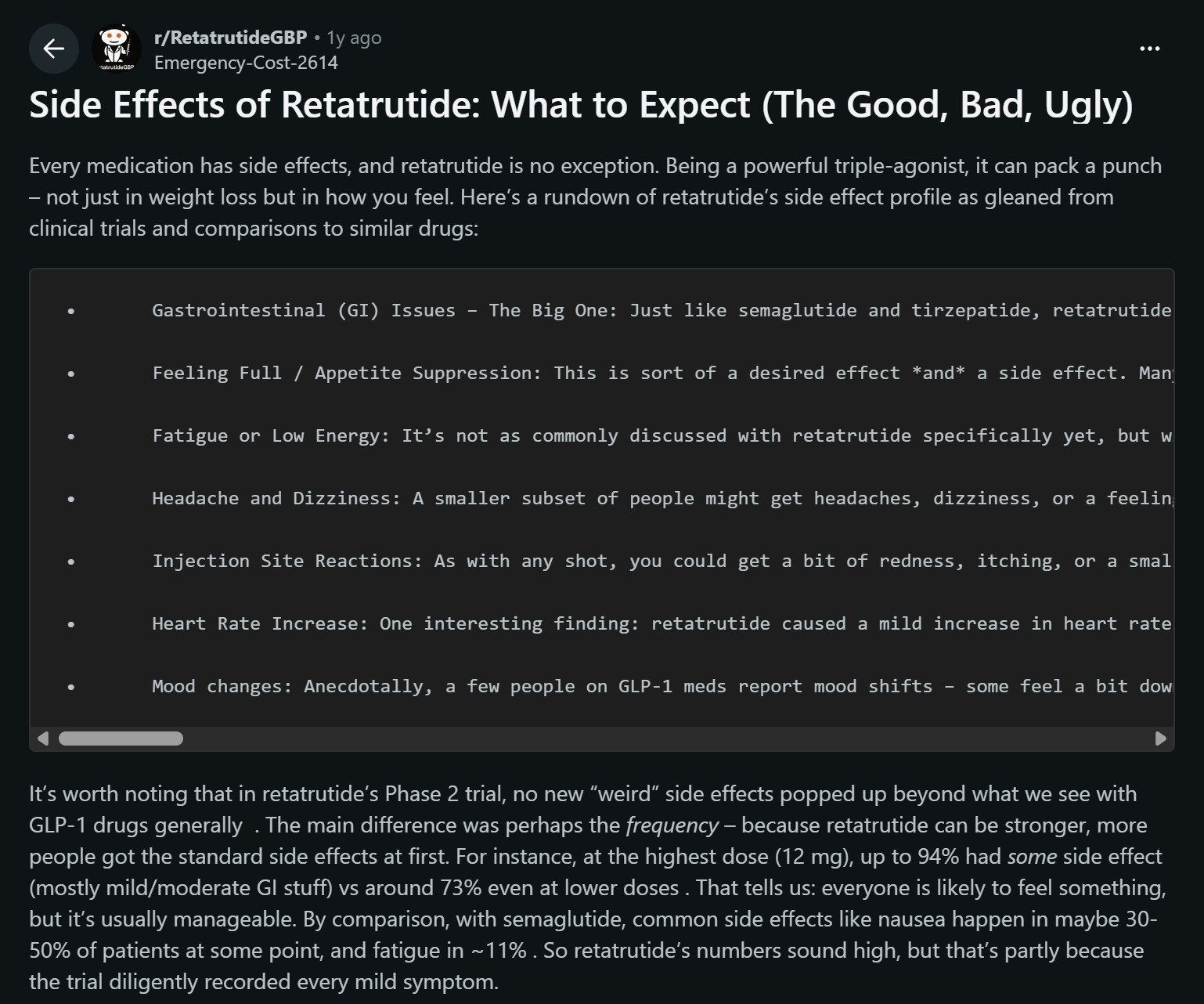
Because retatrutide is not approved, there is less post-approval safety experience than there is with semaglutide. Long-term real-world safety is still being established.
The most important safety point is access. Patients should not buy products marketed as retatrutide from unverified online sellers. Until approval happens, legitimate use should remain within clinical trials.
Semaglutide
Semaglutide side effects are better described because it has been studied across large clinical trials and used more widely in practice.
Common semaglutide side effects include nausea, vomiting, diarrhea, constipation, abdominal pain, headache, and reduced appetite.

The Wegovy prescribing label also includes warnings and precautions for risks such as thyroid C-cell tumors, pancreatitis, gallbladder disease, acute kidney injury, hypoglycemia when used with insulin or insulin secretagogues, and delayed gastric emptying.
Most patients start at a low dose and increase gradually to help reduce stomach side effects. If side effects persist, your provider may adjust the dose, hold an increase, or discuss another treatment.
Read more about semaglutide headache and what to consider if semaglutide is not working.
Cost Comparison
Retatrutide does not have a legitimate prescription price because it is not FDA-approved or available for standard prescribing. Any online “retatrutide” pricing should be viewed cautiously.
Semaglutide is available now, but cost depends on brand access, insurance, pharmacy route, and plan length.
A licensed provider can help compare your options based on medical eligibility, cost, insurance barriers, and whether a personalized formulation may fit your situation.
For patients who want a weight-loss option now, Ivy Rx’s Personalized GLP-1 Injections that are made in the USA provide a lower-cost semaglutide pathway with online assessment, licensed-provider review, home delivery if prescribed, and ongoing support.
How Retatrutide and Semaglutide Are Administered
Retatrutide and semaglutide are both studied or used as injectable medications, but only semaglutide is currently available through normal prescribing channels.
Retatrutide
Retatrutide is being studied as a once-weekly injection in clinical trials. It is not available by prescription, so there is no standard patient dosing schedule outside research settings.
Basic dos and don'ts:
- Do consider a registered clinical trial if you are interested in retatrutide research.
- Do verify any trial through a legitimate trial registry.
- Do not buy “retatrutide” from online sellers claiming to offer it for personal use.
- Do not combine retatrutide with semaglutide, tirzepatide, or other GLP-1 medications outside a clinical trial.
- Do not treat research-dose information as self-use guidance.
Retatrutide may become clinically relevant later, but until approval happens, it should be treated as a research medication.
Semaglutide
Semaglutide is available in different branded forms, including injections and tablets depending on the product and indication. In injection-based weight-loss care, semaglutide is usually taken once weekly as a subcutaneous injection, which means it goes into the fatty tissue under the skin. The abdomen, thigh, or upper arm are common injection areas.
Most semaglutide plans start at a low dose and increase slowly. This gradual titration helps the body adjust and may reduce nausea, vomiting, constipation, diarrhea, and other digestive side effects.
Basic dos and don'ts:
- Follow your prescribed dose and schedule.
- Rotate injection sites.
- Do not increase the dose faster than directed.
- Tell your provider about nausea, vomiting, dehydration, abdominal pain, or low blood sugar symptoms.
- Ask your provider before switching from semaglutide to another GLP-1 medication.
For eligible patients, Ivy Rx’s Personalized GLP-1 Injections include online assessment, licensed-provider review, home delivery if prescribed, and ongoing support. This gives patients a semaglutide pathway that is built around treatment fit, dosing guidance, and affordability, rather than trial-only options or unverified products.
Read more about semaglutide dosage, the maximum dose of semaglutide, and how to inject semaglutide.
Safety Considerations Before Starting Retatrutide or Semaglutide
Retatrutide and semaglutide both affect appetite, digestion, and metabolic signaling. The safety conversation is different because retatrutide is still investigational, while semaglutide has approved uses and broader clinical experience.
Retatrutide
Investigational Status
Retatrutide is not FDA-approved. It is not available by prescription and should only be used in legitimate clinical trials.
Any online seller offering “retatrutide” for personal use should be approached with extreme caution. Without approval and normal prescribing channels, patients cannot reliably verify dose, quality, safety, or medical supervision.
Limited Real-World Safety Data
Retatrutide trial data is promising, but trial data is not the same as routine clinical use. Clinical trials have strict inclusion criteria, monitoring, follow-up, and reporting systems.
Long-term safety, real-world side effect patterns, drug interactions, and use in broader patient groups are still being studied.
Side Effect Monitoring
Retatrutide’s side effects appear to overlap with other incretin-based medications, especially gastrointestinal symptoms such as nausea, vomiting, diarrhea, constipation, and reduced appetite.
Because retatrutide also activates the glucagon receptor, researchers are still studying its broader metabolic effects. Patients should not use trial results as a reason to self-source retatrutide.
Semaglutide
FDA-Approved Uses and Compounded Options
Semaglutide is available in FDA-approved branded medications for specific uses, including chronic weight management and type 2 diabetes depending on the product.
Current compounded or personalized semaglutide formulations are not FDA-approved. When a personalized formulation is prescribed, it should come through a licensed provider and an appropriately licensed pharmacy.
This is where provider review is important. The question is not only whether semaglutide can support weight loss, but whether it fits your health history, medications, budget, side-effect tolerance, and goals.
Gastrointestinal and Gallbladder Risks
Semaglutide commonly causes digestive side effects, especially during dose increases. Nausea, vomiting, diarrhea, constipation, abdominal pain, and reduced appetite are common.
The Wegovy prescribing label also includes warnings for pancreatitis, gallbladder disease, acute kidney injury, increased heart rate, and severe gastrointestinal adverse reactions.
Call your provider if you have severe or persistent abdominal pain, repeated vomiting, dehydration, or symptoms that feel unusual.
Medication and Medical-History Review
Semaglutide may not be appropriate for everyone. A provider should review personal or family history of medullary thyroid carcinoma, Multiple Endocrine Neoplasia syndrome type 2, pancreatitis history, gallbladder disease, kidney issues, pregnancy plans, and current diabetes medications.
People using insulin or sulfonylureas may have a higher risk of low blood sugar and may need closer monitoring.
For related reading, see how long it takes for semaglutide to suppress appetite, semaglutide pills vs injection, and semaglutide withdrawal symptoms.
Who Might Choose Retatrutide or Semaglutide?
Choose Semaglutide If You Want Treatment Now
Semaglutide is the practical choice for patients who want an available, evidence-backed weight-loss medication to discuss with a licensed provider.
It may suit adults with obesity or overweight with weight-related health concerns who want appetite support, gradual dosing, and medical follow-up.
Consider Retatrutide Only If You Are Eligible for a Trial
Retatrutide may suit people interested in clinical research who meet trial criteria and can commit to study monitoring.
It is not a normal treatment option today. Patients looking for real-world care should focus on currently available medications such as semaglutide or tirzepatide.
Choose a Provider-Guided Plan If Cost or Side Effects Are the Main Concern
If cost, access, or side effects are the reason you are comparing options, a licensed provider can help you decide whether semaglutide, tirzepatide, a lower starting dose, or a different plan is more appropriate.
Ivy Rx can support that decision with online eligibility review and clear self-pay pricing for eligible patients.
Who Shouldn't Use Retatrutide or Semaglutide?
Avoid Retatrutide Outside Clinical Trials
Retatrutide should not be used outside legitimate clinical research. It is not approved, not prescribable, and not appropriate to buy from online sellers.
Patients who want weight-loss treatment now should not wait on unapproved products when current options exist.
Semaglutide May Not Suit Some Patients
Semaglutide may not be appropriate for people with a personal or family history of medullary thyroid carcinoma, MEN2, serious hypersensitivity to semaglutide, pregnancy, or certain medical histories that require specialist review.
Extra caution may be needed with pancreatitis history, gallbladder disease, kidney issues, severe digestive disease, insulin use, sulfonylurea use, or planned surgery.
Do Not Self-Combine Weight-Loss Medications
Do not combine semaglutide with retatrutide, tirzepatide, liraglutide, or another GLP-1 medication unless a qualified provider specifically directs the plan.
Combining drugs that affect similar pathways can increase side effects and safety risks.
Can Retatrutide and Semaglutide Be Used Together?
No. Retatrutide and semaglutide should not be used together outside a clinical trial.
Retatrutide is investigational, and semaglutide already works through the GLP-1 pathway. Combining them could increase nausea, vomiting, dehydration, appetite suppression, blood sugar changes, and other risks without a proven added benefit.
If you are already taking semaglutide and are curious about retatrutide, the safer path is to discuss currently available treatment options with a licensed provider. That conversation may include dose adjustment, side-effect management, semaglutide continuation, tirzepatide, or another evidence-backed plan.
Cost and coverage should also be part of the decision. A provider-guided plan can help you compare realistic options instead of chasing unapproved products or trying to build a treatment stack on your own.
Get A Tailored Weight Loss Plan from Ivy Rx
Retatrutide may become an important option in the future, but it is not available today.
For patients seeking weight-loss care now, Ivy Rx offers a provider-guided pathway to Personalized GLP-1 Injections, including semaglutide for eligible patients. Your plan starts with an online assessment and licensed-provider review, so treatment can be matched to your goals, health history, budget, and side-effect concerns.
Explore Personalized GLP-1 Injections today.
FAQs
Is Retatrutide Better Than Semaglutide?
Maybe in the future, but not today. Retatrutide trial results look strong, but semaglutide is approved, available, and prescribable now.
Can I Switch From Semaglutide to Tirzepatide?
Yes, some patients switch from semaglutide to tirzepatide with provider guidance. Your clinician should review dose timing, side effects, goals, and medical history.
Is Retatrutide Available by Prescription?
No. Retatrutide is investigational and not FDA-approved. It is legally available only through clinical trials.
Is Semaglutide FDA-Approved for Weight Loss?
Yes. Wegovy is an FDA-approved semaglutide medication for chronic weight management in eligible patients. Compounded semaglutide formulations are not FDA-approved.
Should I Wait for Retatrutide or Start Semaglutide?
Usually, do not wait if you need treatment now. Retatrutide is trial-only, while semaglutide is available through provider-guided care.

%25201.avif)

Ivy RX patients
Members of Ivy RX branded medications were paid for their testimonials.
Related
Resources
.jpg)
Remedy Meds vs Mochi Which Is Better for Weight Loss
RemedyMeds and Mochi differ in pricing, medications, provider support, and membership structure. Compare both to find the right weight-loss option

Peptides for Weight Loss Explained Which Ones Actually Work
Peptides for weight loss are short amino acid chains that curb appetite and slow digestion. FDA approved options include Wegovy, Zepbound, and Saxenda.

Liraglutide Cost in 2026 Prices With & Without Insurance
Liraglutide costs $500 to $1,700 per month without insurance. Generic versions and discount cards can cut costs to under $500 per month.