





.avif)


Article Outline
Start your personalized GLP-1 program


Tirzepatide vs Wegovy® for Weight Loss 7 Key Differences
Tirzepatide vs. Wegovy® is a common search, and the short answer is that tirzepatide produces more weight loss in the trial data.
However, there is a wrinkle worth knowing before you compare them. Tirzepatide is an active ingredient, while Wegovy® is a brand name, so the two sit at different levels. The like-for-like comparison is either tirzepatide against semaglutide at the ingredient level or Zepbound® against Wegovy® at the brand level.
This guide covers price, insurance, benefits, side effects, and FDA approval, using the correct names throughout.
Tirzepatide vs. Wegovy®: A Quick Overview
Who Is Tirzepatide Best For?
Tirzepatide is the stronger option for weight loss alone. It activates both the glucagon-like peptide-1 (GLP-1) receptor and the glucose-dependent insulinotropic polypeptide (GIP) receptor, while semaglutide acts on GLP-1 only.
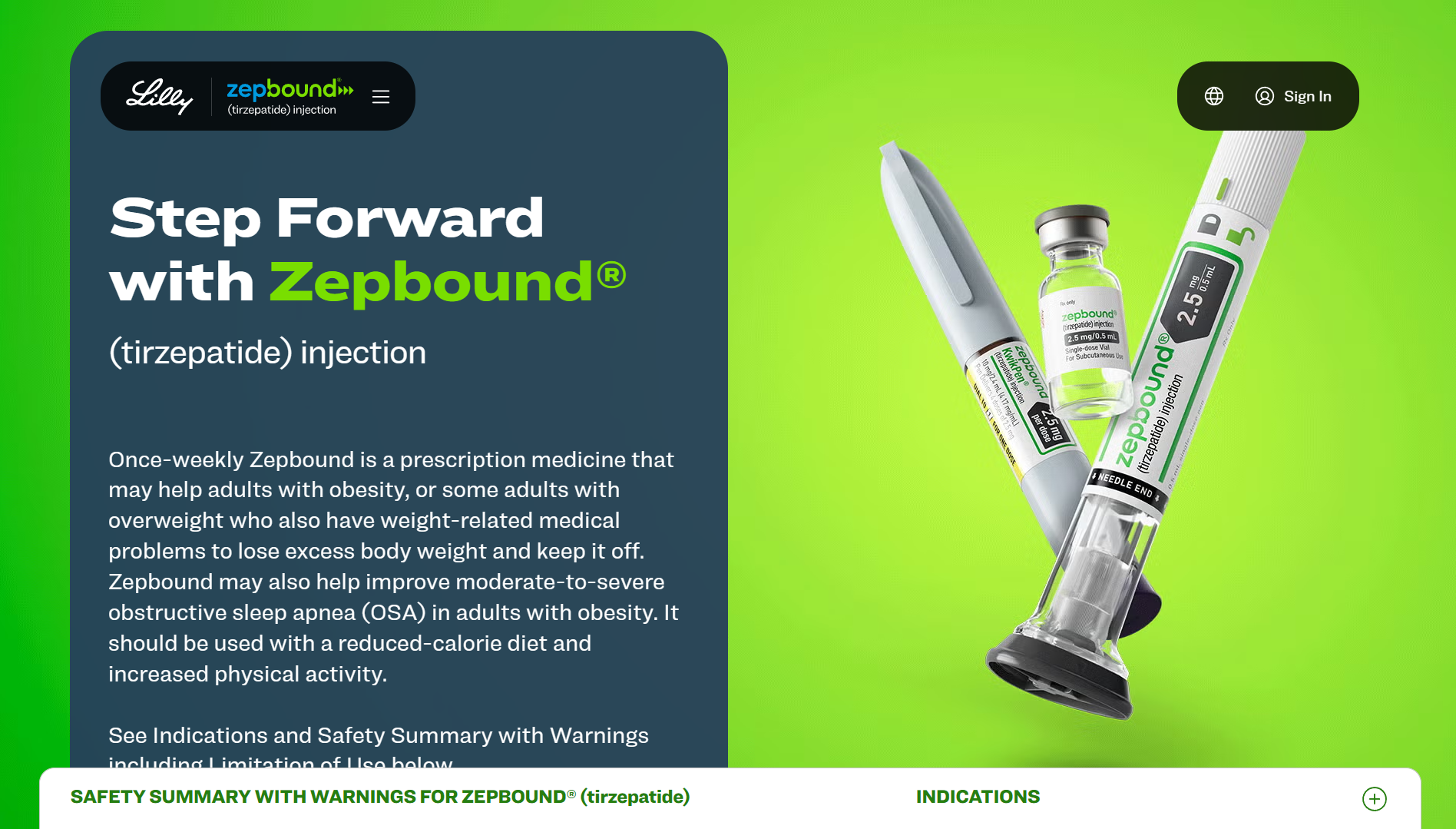
- People who want the largest average weight loss: In its main trial, Zepbound® at 15 mg produced 20.9% average weight loss over 72 weeks.
- People aiming past 20%: In that same trial, 56.7% of patients on 15 mg lost at least a fifth of their body weight.
- Adults with type 2 diabetes: Mounjaro® is approved for blood sugar control in adults and children aged 10 and older.
- Adults with obstructive sleep apnea: Zepbound® is the only one of the two approved to treat moderate to severe sleep apnea in adults with obesity.
- People sensitive to stomach side effects. In the head-to-head trial, fewer patients stopped tirzepatide than semaglutide because of stomach symptoms.
For more on how the ingredient compares across brands, see our guides to semaglutide vs tirzepatide and Mounjaro® vs Ozempic.
Who Is Wegovy® Best For?
Wegovy® wins on breadth of approval. It is the only one of the two with proven cardiovascular outcomes and the only one you can take as a daily tablet instead of a weekly injection.
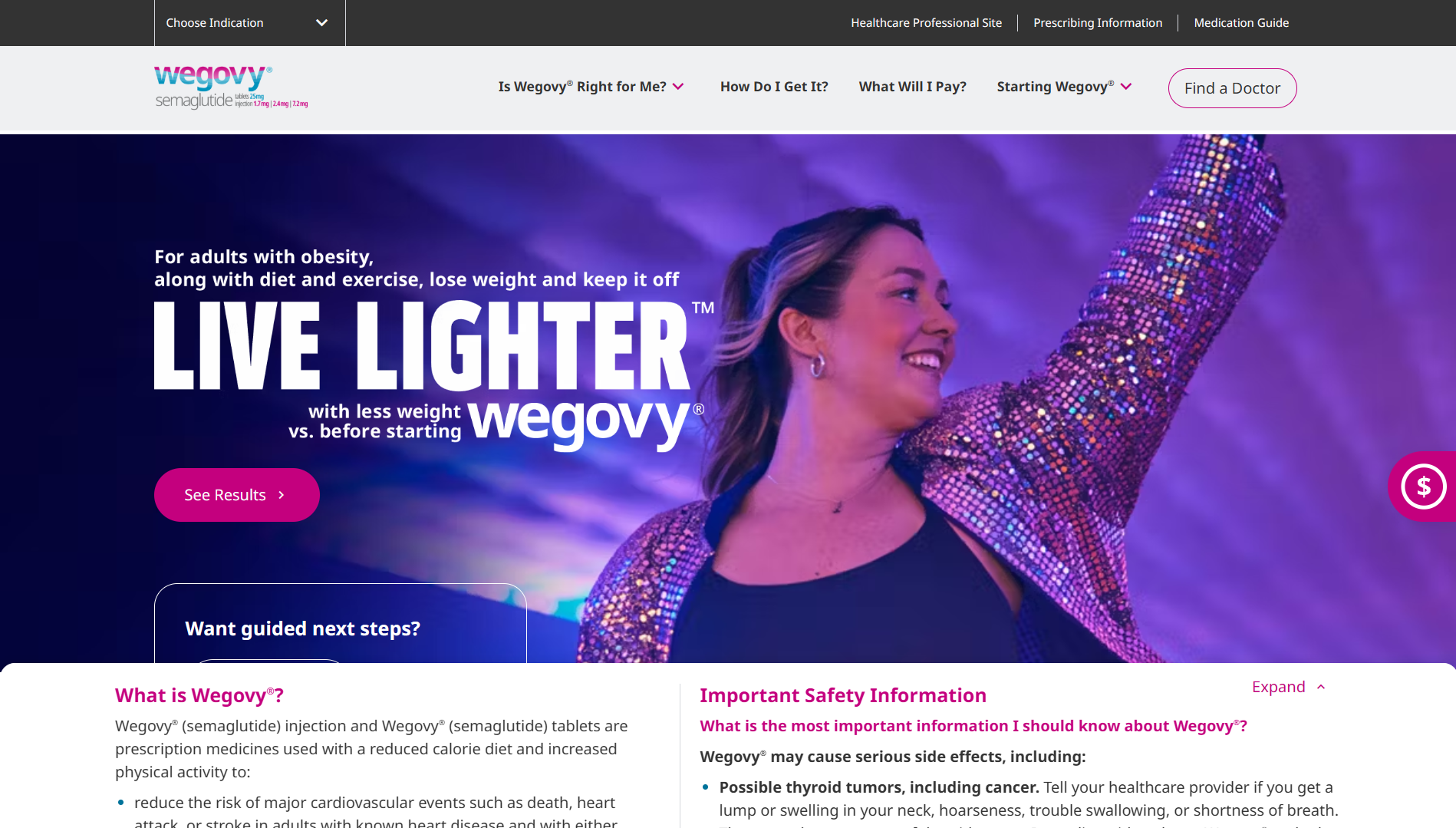
- People with existing heart disease: Wegovy® is approved to lower the risk of cardiovascular death, heart attack, and stroke in adults with established heart disease plus obesity or overweight.
- Teenagers aged 12 and older with obesity: Tirzepatide has no approved use in anyone under 18.
- Adults with liver disease: Wegovy® is approved for noncirrhotic metabolic dysfunction-associated steatohepatitis with moderate to advanced fibrosis.
- People who would rather not inject: Wegovy® is also available as a 25 mg daily tablet.
- People whose plan covers Wegovy®: With covered commercial insurance and the savings card, the cost can drop to as little as $25 per month.
Our comparison of Wegovy® vs Mounjaro® covers the brand-level differences in more detail.
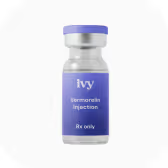
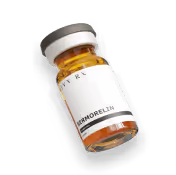
Personalized GLP-1 Injections From Ivy Rx: What They Are and Who They Are For
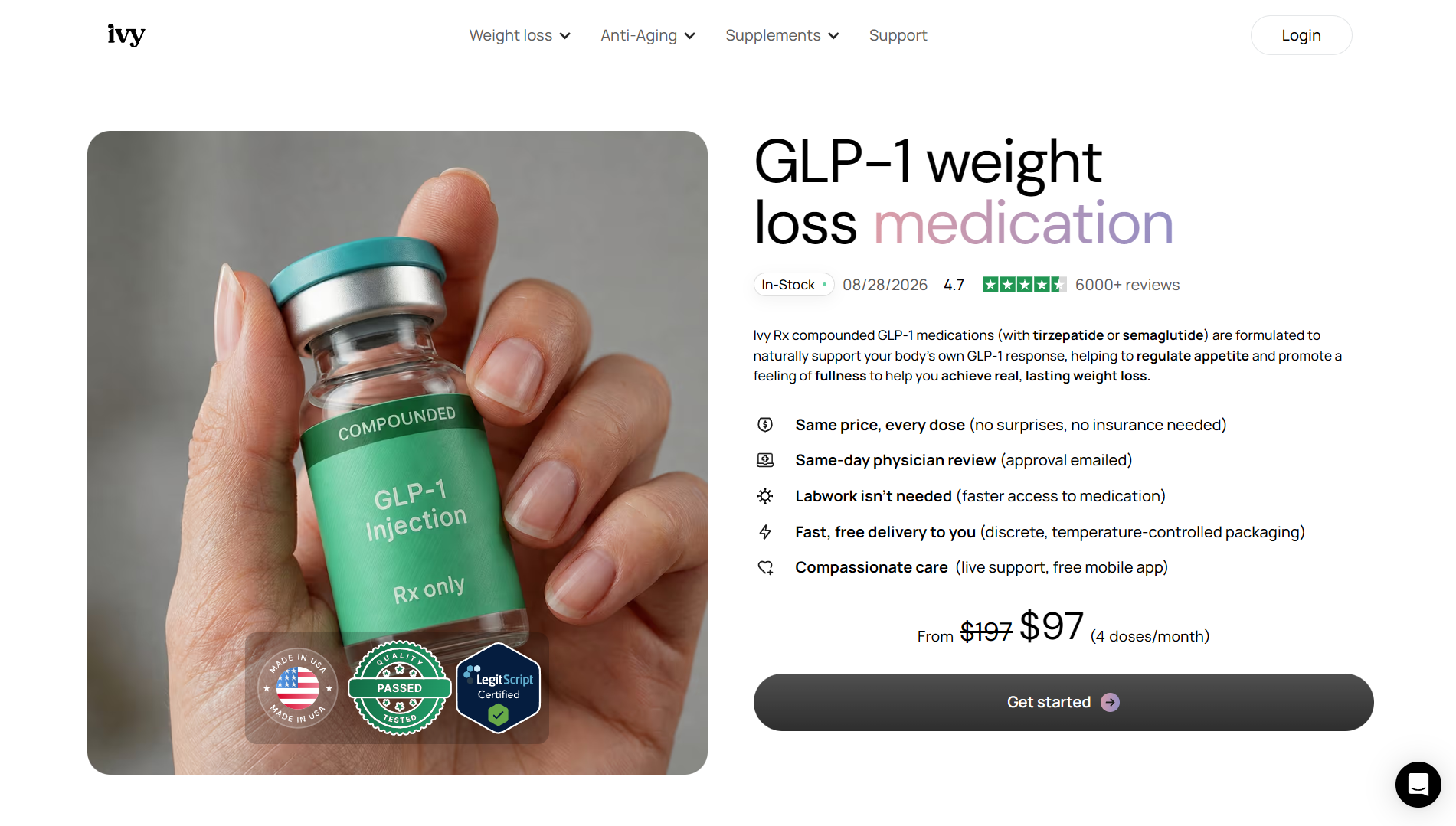
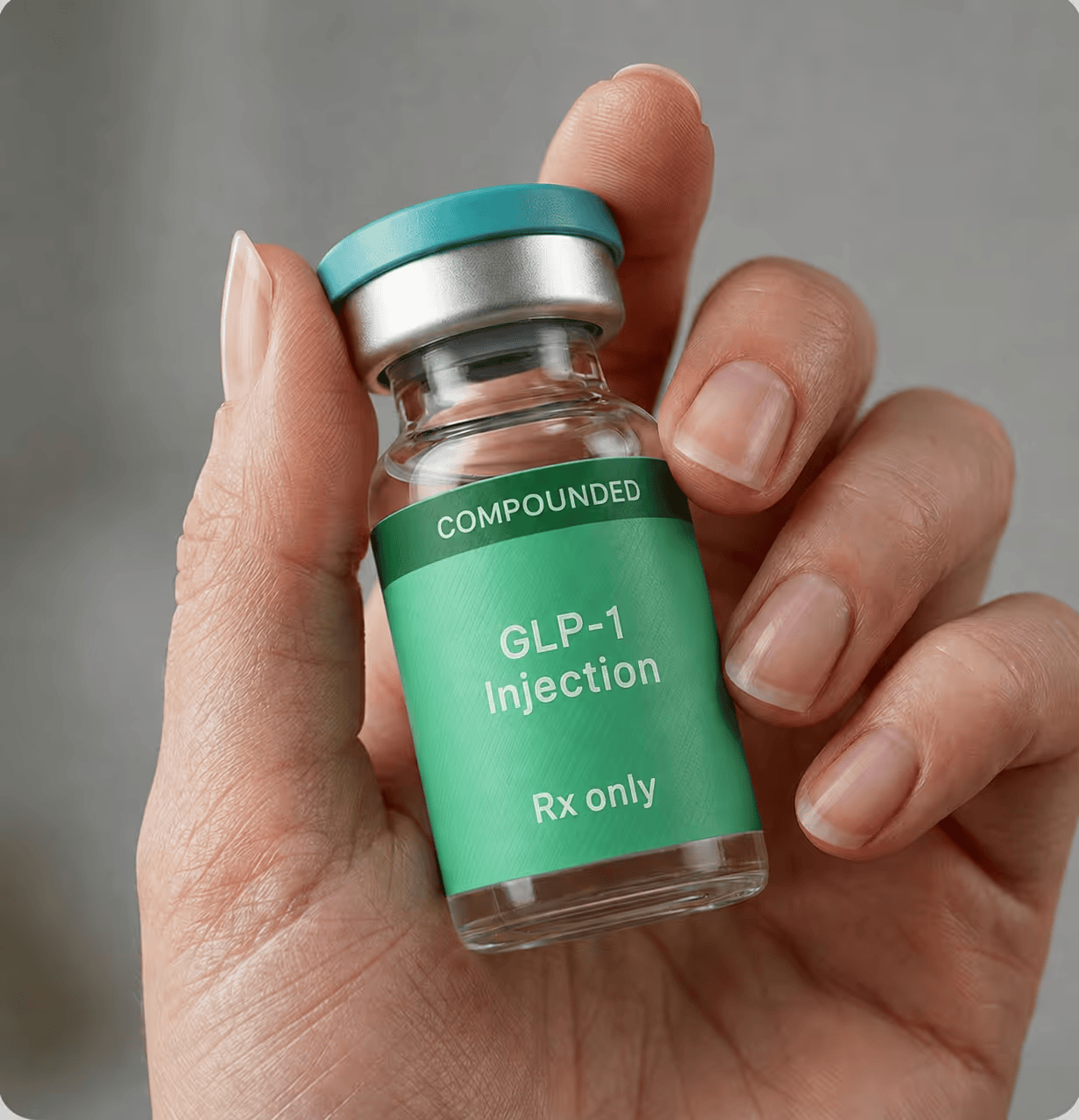
Personalized GLP-1 Injections are a different category of medication from Wegovy®, Mounjaro®, and Zepbound®. A state-licensed compounding pharmacy prepares them for an individual patient after a licensed clinician writes the prescription.
The FDA has not reviewed or approved these formulations. They are not generic versions of any brand-name product, and the trial results described earlier in this article do not apply to them.
Who they are for: Adults paying for treatment themselves, including people whose insurance excludes weight-loss medication, and people who want a licensed United States clinician to review their history and manage their dose online.
Who they are not for: Anyone whose plan already covers a brand-name GLP-1, anyone who needs an FDA-approved product for cardiovascular risk reduction, sleep apnea, or liver disease, and anyone under 18.
Price
Price is where the tirzepatide vs Wegovy® question has changed the most in the past year. Both manufacturers now sell directly to cash payers at a fraction of the retail list price, so the older figures you may have seen are out of date.
Tirzepatide
- Zepbound® self-pay: $299 per month for the 2.5 mg starting dose, $399 for 5 mg, and $449 for 7.5 mg through 15 mg under Eli Lilly's Self Pay Journey Program.
- Refill condition: the $449 price on maintenance doses depends on refilling within 45 days of your last delivery.
- Mounjaro® list price: $1,112.16 for a 28-day supply of four pens, which is what you pay with no program applied.
- Mounjaro® savings card: as little as $25 per month with commercial insurance that covers it, or $499 per month if your plan excludes it.
Our guide to tirzepatide cost breaks down every route in more detail.
Wegovy®
- NovoCare Pharmacy self-pay: $349 per month for any pen dose from 0.25 mg to 2.4 mg, with no insurance involved.
- Introductory price: $199 per month for the first two fills of the 0.25 mg and 0.5 mg starting doses for patients new to the program.
- Wegovy® tablet: $149 per month at the 1.5 mg and 4 mg doses, rising at higher doses.
- With covered insurance: as little as $25 per month with the manufacturer savings card.
For a wider view, read our guides to Wegovy® and semaglutide costs without insurance and semaglutide without insurance.
Verdict
Wegovy® wins on price at the starting doses, and the gap closes at maintenance. A patient on 2.4 mg Wegovy® pays $349 per month, while a patient on 15 mg Zepbound® pays $449. If your plan covers either medicine, the savings card at $25 per month beats both self-pay routes by a wide margin. Personalized GLP-1 Injections through Ivy Rx start at $97 per month.
Insurance Coverage
Coverage is decided per brand, not per ingredient, which is exactly why the terminology matters. Two products containing tirzepatide can have completely different coverage on the same plan.
Tirzepatide
- Mounjaro® is covered more readily than Zepbound®, because type 2 diabetes sits on most formularies while obesity often does not.
- Zepbound® coverage is inconsistent. Many commercial plans exclude weight-loss medicines outright.
- Sleep apnea can change the answer. Some plans cover Zepbound® when it is prescribed for moderate to severe obstructive sleep apnea rather than for weight alone.
- Prior authorization is standard. Expect to document body mass index (BMI), previous attempts at weight loss, and your diagnosis.
- Medicare excludes weight-loss use. Federal law has historically barred Part D from covering drugs prescribed only for weight loss.
Use our BMI calculator to check where you fall before you call your plan.
Wegovy®
- Weight-loss coverage is limited, in the same way it is for Zepbound®.
- Cardiovascular approval helps. Some plans approve Wegovy® when it is prescribed to lower cardiovascular risk in a patient with established heart disease.
- Liver disease may qualify. The MASH approval gives a second route to coverage that tirzepatide does not have.
- Prior authorization is standard, with the same documentation burden.
- The savings card requires commercial coverage. Patients on Medicare, Medicaid, TRICARE, or VA benefits are excluded.
Verdict
Neither is reliably covered for weight loss alone. Wegovy® has two extra routes to approval through its heart and liver indications, so it is the more likely of the two to clear prior authorization for a patient with either condition. For everyone else, the self-pay prices above are a realistic number.
Benefits
The benefit comparison is where the head-to-head evidence finally settles a question that used to depend on comparing separate trials.
Tirzepatide
Tirzepatide activates two receptors rather than one, and the extra GIP activity appears to contribute to appetite control.
- 20.2% average weight loss at 72 weeks in the SURMOUNT-5 trial, which compared tirzepatide directly against semaglutide in 751 adults with obesity and no diabetes.
- 22.8 kg lost on average in that trial, compared with 15.0 kg on semaglutide.
- 18.4 cm off the waist, compared with 13.0 cm on semaglutide.
- Larger reductions in blood sugar than semaglutide 1 mg in the SURPASS-2 study in adults with type 2 diabetes.
- Sleep apnea improvement, with Zepbound® approved for moderate to severe obstructive sleep apnea in adults with obesity.
Wegovy®
Wegovy® has a deeper record on outcomes beyond the scale, which is a different kind of benefit.
- 14.9% average weight loss at 68 weeks in its main trial of 1,961 adults, per the FDA labeling.
- 66.1% of patients lost at least 10% of their starting weight, and 47.9% lost at least 15%.
- 20% lower risk of major cardiovascular events in a trial of 17,604 adults with established heart disease.
- Approved for teenagers aged 12 and older with obesity, which no tirzepatide product is.
- Approved for liver disease, specifically noncirrhotic MASH with moderate to advanced fibrosis.
Verdict
For weight loss alone, tirzepatide wins, and the head-to-head trial removes the guesswork that used to surround this comparison.
Side Effects
Both medicines may cause stomach and bowel symptoms, mostly during dose increases. The rates below come from placebo-controlled trials, so read them as profiles rather than as a direct comparison. Anti-nausea medication like Zofran® and Ondansetron can be used alongside GLP-1 medication to ease nausea during these dosage increases.
Tirzepatide
At the 15 mg dose in the Zepbound® weight-management trials, nausea affected 28% of patients compared with 8% on placebo, according to the FDA label. Diarrhea affected 23%, vomiting 13%, and constipation 11%.
Injection site reactions affected 8%, hair loss 5%, and fatigue 7%. Around 6.7% of patients on 15 mg stopped treatment because of a side effect, compared with 3.4% on placebo. Tirzepatide can also reduce how well birth control pills work for four weeks after starting and after each dose increase.
Wegovy®
At the 2.4 mg maintenance dose, nausea affected 44% of adults compared with 16% on placebo. Diarrhea affected 30%, vomiting 24%, constipation 24%, and abdominal pain 20%.
Headache affected 14%, fatigue 11%, and hair loss 3%. About 6.8% of patients stopped Wegovy® because of a side effect, compared with 3.2% on placebo. Both medicines carry the same boxed warning about thyroid tumors in rodents and the same contraindications. Full warnings appear on our safety information page.
Verdict
Tirzepatide came out slightly better on tolerability in the one trial that measured both under the same conditions. In SURMOUNT-5, 2.7% of tirzepatide patients stopped because of stomach symptoms, against 5.6% on semaglutide. That gap is small, and most people on either medicine find symptoms ease after the titration period. Our guide on reducing semaglutide nausea covers steps that apply to both.
FDA Approval
This is where the ingredient and brand distinction has the most practical consequence. Approval attaches to a brand, not to a molecule.
Tirzepatide
Tirzepatide holds two separate approvals under two separate brand names. Mounjaro® is approved for blood sugar control in adults and children aged 10 and older with type 2 diabetes. Zepbound® is approved for chronic weight management in adults and for moderate to severe obstructive sleep apnea in adults with obesity.
Neither brand is approved for anyone under 18 for weight loss. Neither carries a cardiovascular outcomes approval. Asking for the wrong brand is the most common reason a tirzepatide prescription gets denied.
Wegovy®
Wegovy® is approved for three things. It reduces excess body weight and maintains that reduction in adults with obesity and in adults with overweight plus one weight-related condition. It lowers the risk of major cardiovascular events in adults with established heart disease plus obesity or being overweight. It also treats noncirrhotic MASH with moderate to advanced liver fibrosis.
The weight-management approval extends to patients aged 12 and older. Wegovy® is available as a once-weekly injection and as a once-daily tablet.
Verdict
Wegovy® has the broader approval, and tirzepatide has the stronger weight-loss result. Neither is approved in a form that covers everything, which is why the honest answer to Wegovy® vs tirzepatide depends on your diagnosis rather than on which one is stronger.
How to Choose Between Wegovy® and Tirzepatide
Three practical questions settle most of these decisions. Work through them in order before you call your clinician.
Do You Have a Condition Beyond Weight?
Start here, because a second diagnosis changes both the medical answer and the coverage answer. Established heart disease points toward Wegovy®. Type 2 diabetes points toward Mounjaro®. Moderate to severe sleep apnea points toward Zepbound®. Liver fibrosis points toward Wegovy®.
If weight is your only concern, both remain reasonable options, and the decision moves to the next two questions. At Ivy Rx, a licensed clinician reviews your full intake before recommending semaglutide or tirzepatide, so you are not guessing at which ingredient fits your history.
What Will You Actually Pay Each Month?
Run the numbers on your maintenance dose rather than your starting dose, because that is what you will pay for most of the year. Wegovy® holds at $349 per month across every pen dose. Zepbound® rises from $299 to $449 as you titrate up, and the $449 rate depends on refilling within 45 days.
If your plan covers either brand, the savings card at $25 per month beats both. If it covers neither, compare the self-pay prices against a personalized route. Ivy Rx applies a Rate Lock Guarantee, so the price you start at is the price you pay at your maximum dose.
How Well Do You Tolerate Stomach Symptoms?
Most people who stop these medicines stop in the first few months because of nausea, vomiting, or diarrhea. If you have had trouble with stomach symptoms before, the titration plan matters more than the choice of ingredient.
Alternative to Tirzepatide and Wegovy®: Ivy Rx
Ivy Rx offers Personalized GLP-1 Injections prepared with semaglutide or tirzepatide, so you are not choosing a brand before you have spoken to a clinician. Treatment is delivered entirely online, made in the USA, and priced the same at every dose.
Key Features
Three things separate the Ivy Rx route from a brand pharmacy route: how the price behaves as your dose rises, how fast you can start, and how the medication quality is verified.
Rate Lock Guarantee
Most GLP-1 pricing rises as you titrate. Zepbound® goes from $299 at 2.5 mg to $449 at maintenance. Ivy Rx charges the same monthly rate whether you are at your starting dose or your maximum dose.
That matters because titration takes months, and most people reach a maintenance dose they stay on long-term. A flat rate makes the annual cost predictable from the first month. Longer plans are billed upfront rather than as rolling monthly charges.
Same-Day Review With No Lab Work
You complete an online health questionnaire, and a licensed clinician reviews it the same day. No lab work is required before you start, and no in-person visit is needed.
If you are approved, medication ships free in temperature-controlled packaging, usually within two business days, with all injection supplies included. Ongoing questions go to your care team through the patient portal at no extra cost.
Independently Verified Quality Testing
Ivy Rx medication is prepared in a state-licensed pharmacy and independently verified in FDA-registered labs. Potency is confirmed every three to six months to stay within 10% of the target strength.
Each batch is also screened for sterility to USP 797 standards, checked for endotoxins to USP 85 limits, and pH-adjusted for a smoother injection. Those four test results are published on the product page.
Pricing
Where Ivy Rx Shines
- Predictable cost: the Rate Lock Guarantee means a dose increase never raises your bill, which removes the main budgeting problem people hit around month four.
- Speed to start: same-day clinician review and no required lab work compress a process that often takes weeks through a traditional clinic and insurer.
- Ingredient flexibility: because we work with both semaglutide and tirzepatide, your clinician can switch the active ingredient without moving you to a different company.
Where Ivy Rx Falls Short
- Not FDA-approved as a finished product: personalized GLP-1 formulations are not reviewed by the FDA for safety or effectiveness, even though the active ingredients have been studied extensively in their branded forms.
- No insurance billing: Ivy Rx is a self-pay service. If your plan covers Wegovy® or Zepbound® at a $25 copay, that will cost you less than any self-pay route.
Customer Reviews
“Great response. Quick follow-up and fast shipping. Answers any questions very quickly.” Sherry P, Trustpilot.
“I have been very pleased. I was getting my prescription from a doctor but they were not very forthcoming about the price. And it was not affordable. The communication with the doctors and representatives have been easy and wonderful. And I’m overall pleased with them and the medication I’m taking. Would definitely recommend to my friends.” Verified Trustpilot review.
Who Ivy Rx Is Best For
- People without GLP-1 coverage: if your plan excludes weight-loss medicines, self-pay is the only route, and $97 per month compares favorably against $349 or $449.
- People worried about cost creep: the Rate Lock Guarantee suits anyone who expects to reach a maintenance dose and stay there.
- People who want to start quickly: no lab work and same-day review remove the two longest delays in getting started.
- People who want clinician guidance on the ingredient: if you do not know whether semaglutide or tirzepatide fits your history, a licensed clinician decides rather than a formulary.
Personalized GLP-1 Injections are made in the USA, with transparent pricing from $97 per month and a Rate Lock Guarantee at every dose. Get started with Ivy Rx.
Tirzepatide vs Wegovy®: Which One to Choose
Choose Wegovy® if you have established heart disease, liver fibrosis, or a teenager aged 12 or older who needs treatment, because tirzepatide has no approval covering those cases. Choose tirzepatide, as Zepbound®, if weight loss is the goal and you want the largest average result. Choose Ivy Rx if neither brand is covered by your plan and a flat monthly price matters more than a brand name on the box.
Take the five-minute assessment and find out which active ingredient your clinician recommends. Start with Ivy Rx.
FAQs
Is Tirzepatide Safer Than Semaglutide?
Neither is safer overall. Both carry the same boxed warning about thyroid tumors in rodents, and both cause similar stomach side effects.
Does Tirzepatide Burn Fat or Just Suppress Appetite?
Mostly appetite. Tirzepatide lowers calorie intake and slows stomach emptying. Trials show greater fat mass loss than lean mass loss as a result.
What Are the Drawbacks of Tirzepatide?
Three main ones. It has no cardiovascular approval, no approved use under age 18, and stomach side effects are common during dose increases.
Is Wegovy® the Same as Semaglutide?
Partly. Semaglutide is the active ingredient in Wegovy® and also in Ozempic® and Rybelsus®. The brands differ in dose, form, and approved use.
How Long Does It Take to Reach a Full Dose?
About 16 to 20 weeks for both. Wegovy® escalates every four weeks to 2.4 mg. Tirzepatide escalates in 2.5 mg steps to a maximum of 15 mg. Our guide on how long Mounjaro® stays in your system covers what happens when you stop.

%25201.avif)

Ivy RX patients
Members of Ivy RX branded medications were paid for their testimonials.
- https://www.accessdata.fda.gov/drugsatfda_docs/label/2026/217806s042lbl.pdf
- https://www.accessdata.fda.gov/drugsatfda_docs/label/2026/215256s033lbl.pdf
- https://www.accessdata.fda.gov/drugsatfda_docs/label/2026/215866s041lbl.pdf
- https://pubmed.ncbi.nlm.nih.gov/40353578/
- https://pubmed.ncbi.nlm.nih.gov/34170647/
Disclaimer: Clinical trial figures, prescribing-label details, approved uses, dosing schedules, side effect rates, insurance rules, and pricing in this article were curated in August 2026 and may change. Trial averages do not guarantee individual results. Personalized GLP-1 Injections are not reviewed or approved by the FDA and are not equivalent to any brand-name product. Always confirm current prescribing information, eligibility requirements, and program terms with a licensed clinician before starting treatment.
Related
Resources
Semaglutide vs Tirzepatide for Weight Loss: Pros, Cons, and Side Effects
Semaglutide vs Tirzepatide: Which one offers the best weight loss results? Explore key differences in side effects, cost, and effectiveness.
.avif)
Tirzepatide (Zepbound) Dosage Chart: 2026 Dosing Guide
Confused about your Tirzepatide (Zepbound) dosage? Get the exact dosage chart and expert tips to stay on track with your treatment.
.avif)
How Much Does Wegovy Cost Without Insurance in 2026?
Cost of Wegovy without insurance in 2026. Learn about pricing, payment options, and ways to save on this popular weight loss medication.