






.avif)


Article Outline
Start your personalized GLP-1 program


Zepbound vs Mounjaro: Key Differences, Cost, & Uses (2026)
If you're torn between Zepbound and Mounjaro, here's the first thing to know: they contain the same active ingredient, tirzepatide, but they serve different purposes.
This guide breaks down what each medication is, how they compare, what they cost, and what side effects to expect.
What Is Zepbound?
Zepbound is a once-weekly injectable prescription that contains tirzepatide as an active ingredient and is made by Eli Lilly.
It works by mimicking two gut hormones, GLP-1 and GIP, for slow digestion, to reduce appetite, and regulate blood sugar.
It’s also approved to treat moderate-to-severe obstructive sleep apnea in adults with obesity.
What Is Mounjaro?
Mounjaro is a once-weekly injectable made by Eli Lilly to improve blood sugar control and type 2 diabetes in adults.
Mounjaro contains tirzepatide, activating both GLP-1 and GIP receptors to boost insulin release, slow gastric emptying, and suppress appetite.
Similarities Between Zepbound and Mounjaro
Both medications are built on the same foundation. Contain tirzepatide, a dual GIP/GLP-1 receptor agonist manufactured by Eli Lilly. And delivers as once-weekly subcutaneous injections.
See how these two medications overlap.
Key Differences That Actually Matter
FDA Approval and Intended Use
Mounjaro is FDA-approved for type 2 diabetes management while Zepbound is approved for chronic weight management in adults who meet specific BMI criteria.
Your diagnosis determines which medication your provider prescribes. If you have type 2 diabetes, Mounjaro is the standard choice.
If your primary goal is weight loss without a diabetes diagnosis, Zepbound is the approved option.
Insurance and Coverage Differences
Most commercial insurance plans cover Mounjaro for type 2 diabetes, though coverage typically requires a diagnosis, prior authorization, and proof that current treatments aren't providing adequate blood sugar control.
For Zepbound, many insurers still classify weight-loss drugs as "lifestyle" medications and exclude them from formularies. Navigating coverage for Mounjaro can be equally complex, so it helps to understand how to get Mounjaro before assuming it's out of reach. For those exploring digital telehealth options, learning how to buy Mounjaro online can clarify the process and requirements.
If your plan covers either medication, Eli Lilly savings cards may reduce your monthly cost to as little as $25 per month. Note that government insurance (Medicare, Medicaid, VA) doesn't qualify for these programs.
Clinical Trial Focus
- Zepbound: The SURMOUNT program’s Phase 3 trials focused on tirzepatide for obesity treatment in adults without type 2 diabetes. SURMOUNT-1 enrolled 2,539 participants and ran for 72 weeks.
- Mounjaro: The SURPASS program’s trials evaluated tirzepatide for blood sugar control in adults with type 2 diabetes, enrolling more than 19,000 participants across ten clinical trials.
The primary outcome differed: body weight for SURMOUNT, blood sugar (A1C) for SURPASS.
Weight Loss Results Compared
Tirzepatide's dual-action mechanism may produce greater weight loss than GLP-1-only medications though individual results between Zepbound and Mounjaro may vary.
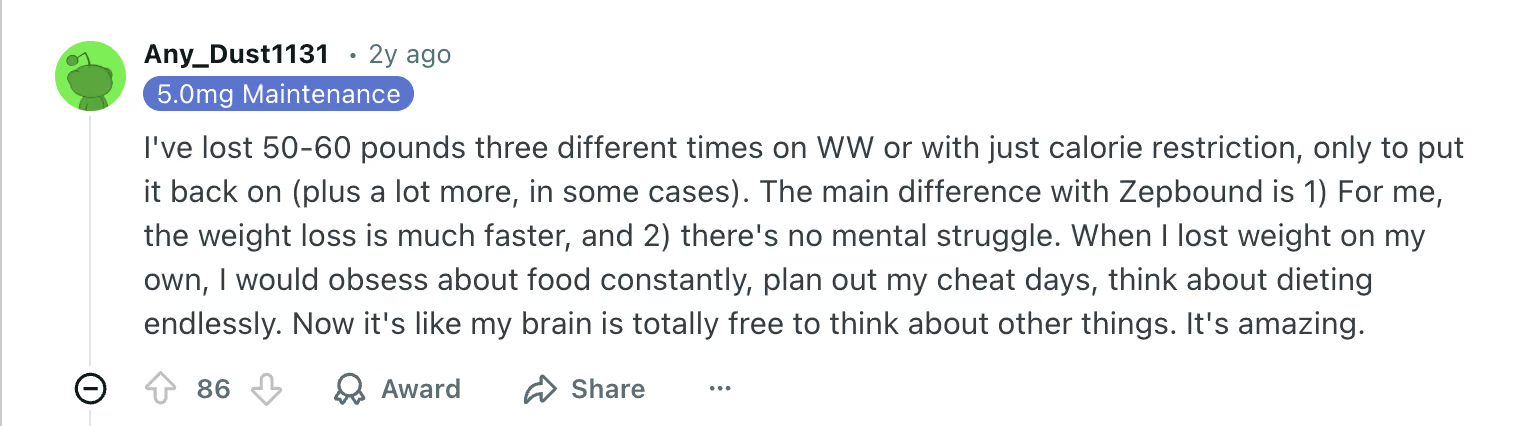
One Reddit user described losing 50 to 60 pounds three separate times through Weight Watchers and calorie restriction, only to regain the weight each time.
Zepbound, they said, changed two things:
"When I lost weight on my own, I would obsess about food constantly, plan out my cheat days, think about dieting endlessly," they wrote. "Now it's like my brain is totally free to think about other things.”
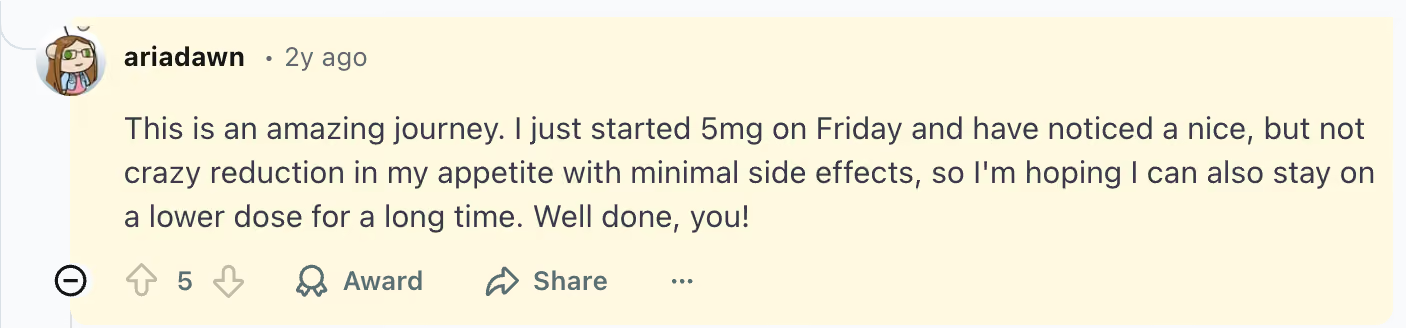
One Reddit user, Ariadown, who recently started Mounjaro, reported a noticeable but manageable reduction in appetite, with minimal side effects.
See other comparison articles to discover the best fit for your health goal:
Side Effects Comparison
Since Zepbound and Mounjaro contain the same active ingredient, their side effect profiles are nearly identical.
Common side effects (occur in more than 5% of patients):
- Nausea
- Vomiting
- Diarrhoea
- Constipation
- Decreased appetite
- Abdominal discomfort
- Injection site reactions.
Serious but rare side effects:
- Pancreatitis
- Gallbladder problems
- Serious allergic reactions
- Hypoglycemia (more relevant for diabetes patients using insulin)
- Acute kidney injury (usually linked to severe dehydration from GI symptoms).
If side effects are a concern, microdose GLP-1 injections offer a lower starting dose that may reduce early GI discomfort while your body adjusts.
You may also want to explore Mounjaro alternatives if tolerability is a priority.
Cost Comparison
Here's a quick breakdown of both medications’ cost:
At IvyRx, personalized GLP-1 treatment starts at just $175/month with no insurance required, including medical evaluation and ongoing support.
See more on the best injection for weight loss for your budget.
How Zepbound and Mounjaro Are Administered
Both medications are injected once a week, subcutaneously (into the fat layer of the skin). The injection is quick, easy, and designed for home use with a pre-filled pen.
Dosage schedule:
Safety Considerations Before Starting Tirzepatide
Before starting either Zepbound or Mounjaro, review the safety factors below to manage potential side effects.
Thyroid Tumor Risk
Tirzepatide is not recommended for patients with a personal or family history of medullary thyroid carcinoma or MEN 2. Animal studies found thyroid C-cell tumors in rats, though this has not been confirmed in humans. Both medications carry a boxed warning.
Pancreatitis
Cases of acute pancreatitis have been reported in patients taking tirzepatide. If you experience severe, persistent abdominal pain radiating to your back, stop the medication and contact your provider immediately.
Gastrointestinal Intolerance
Nausea, vomiting, and diarrhea are common side effects of GLP-1 medications. They’re temporary and manageable, especially when paired with a proper Mounjaro diet plan designed to minimize stomach upset during the early weeks.
In severe cases, these symptoms may lead to dehydration, which may then affect kidney function. Staying hydrated during the early dose-escalation weeks is important.
Pregnancy
Stop tirzepatide at least two months before a planned pregnancy. Discontinue immediately if you become pregnant while on either medication.
Gallbladder Problems
Some patients have reported gallbladder-related events, including gallstones. Rapid weight loss may increase this risk. Discuss your gallbladder history with your provider before starting treatment.
For more on compounded tirzepatide safety, differences, or to learn about personalized GLP-1 injections with medical oversight, those resources may be helpful.
Who Might Choose Zepbound?
Zepbound may be a good fit if you:
- Have a BMI of 30 or higher and are looking for a prescription weight management option backed by strong clinical evidence.
- Have a BMI of 27 or higher with a weight-related condition like high blood pressure, high cholesterol, or obstructive sleep apnea.
- Don't have type 2 diabetes but want access to tirzepatide's dual-action weight loss benefits.
- Have insurance that covers obesity treatment, or are willing to use the LillyDirect self-pay program.
- Have tried lifestyle changes on their own and need additional support to reach a healthy weight.
Setting up an aligned Zepbound diet plan alongside your treatment helps ensure you maintain muscle mass and meet your daily nutrient goals as your appetite changes.
Who Might Choose Mounjaro?
Mounjaro may be a better fit if you:
- Have type 2 diabetes and need improved blood sugar control as your primary treatment goal
- Want both blood sugar management and weight loss from a single medication.
- Have insurance that covers diabetes medications (most plans do, which makes Mounjaro more accessible for eligible patients).
- Are currently on metformin or insulin and need additional support for glycemic control.
- Want a medication with a longer track record (Mounjaro was approved a year before Zepbound, with extensive diabetes-focused trial data).
The primary difference between these two is often just the insurance approval criteria. For those facing a coverage gap for either, we've put together a strategy for getting Mounjaro without insurance.
Can You Switch Between Them?
Yes, but only with your provider's guidance. Since both medications contain the exact same active ingredient, switching between them may be medically straightforward.
Your body tirzepatide the same way, regardless of the brand name. Your provider will review your health profile and dosage calibration.
Start Your Personalized Weight Loss Plan with IvyRx
If the cost or complexity of brand-name Zepbound or Mounjaro feels out of reach, you're not alone.
While you can review our full guide on how to get Zepbound through traditional channels, many people want access to effective, weight-loss treatment without the insurance battles and sticker shock.
IvyRx offers personalized GLP-1 injections with medical evaluation, ongoing provider support, and dosing guidance included. Treatment starts at $175 per month. There’s no insurance required and the medication will be delivered to your door.
Start your personalized weight loss plan with IvyRx.
FAQs
1. Is Zepbound the Same as Mounjaro?
Yes and no. Both contain tirzepatide and work identically in the body. The difference is their FDA-approved use: Zepbound is approved for weight management and sleep apnea, while Mounjaro is approved for type 2 diabetes.
2. When Is Tirzepatide Used to Treat Diabetes?
Tirzepatide is prescribed as Mounjaro for adults with type 2 diabetes who need better blood sugar control. It may be used alone or in combination with other diabetes medications, such as metformin.
3. Can I Use Mounjaro for Weight Loss If I Don't Have Diabetes?
Some providers prescribe Mounjaro off-label for weight loss, especially when Zepbound is unavailable or not covered by insurance. However, off-label use may not be covered, and you should discuss the risks and benefits with your provider.

%25201.avif)

Ivy RX patients
Members of Ivy RX branded medications were paid for their testimonials.
- Jastreboff AM, Aronne LJ, Ahmad NN, Wharton S, Connery L, Alves B, Kiyosue A, Zhang S, Liu B, Bunck MC, Stefanski A; SURMOUNT-1 Investigators. Tirzepatide Once Weekly for the Treatment of Obesity. N Engl J Med. 2022 Jul 21;387(3):205-216. https://pubmed.ncbi.nlm.nih.gov/35658024/. DOI: 10.1056/NEJMoa2206038.
- Dahl D, Onishi Y, Norwood P, Huh R, Bray R, Patel H, Rodríguez Á. Effect of Subcutaneous Tirzepatide vs Placebo Added to Titrated Insulin Glargine on Glycemic Control in Patients With Type 2 Diabetes: The SURPASS-5 Randomized Clinical Trial. JAMA. 2022 Feb 8;327(6):534-545. https://pubmed.ncbi.nlm.nih.gov/35133415/. DOI: 10.1001/jama.2022.0078.
- https://www.fda.gov/drugs/drug-approvals-and-databases/drug-trials-snapshots-mounjaro. Accessed 19th March, 2026.
- https://www.fda.gov/news-events/press-announcements/fda-approves-new-medication-chronic-weight-management. Accessed 19th March, 2026.
- https://diabetes.org/newsroom/latest-data-from-SURPASS-trials-demonstrate-tirzepatide-provided-blood-sugar-reductions-weight-loss. Accessed 19th March, 2026.
- https://www.accessdata.fda.gov/drugsatfda_docs/nda/2024/217806Orig1s000StatR.pdf. Accessed 19th March, 2026.
Related
Resources

What Does Semaglutide Do To Your Body?
Semaglutide is a drug similar to the endogenous GLP-1 peptide secreted from the intestinal L-cells. GLP-1 is released from the intestine and exh...

Tirzepatide vs. Ozempic: Key Differences & Similarities
Compare Tirzepatide and Ozempic to find out how they work, key similarities, and which offers better results for weight loss and type 2 diabetes.

Contrave vs Zepbound: Weight Loss Comparison & Differences
Compare Contrave and Zepbound to understand their differences in effectiveness, weight loss potential, side effects, and cost. Find the right weight loss solution for you.