






.avif)


Article Outline
Take your supplements with


BPC-157 Before and After: Realistic Results & Timeline
When a nagging tendon issue, joint pain, or gut problem will not settle, dramatic BPC-157 before and after claims can feel tempting and suspicious at the same time.
The realistic answer is less flashy: BPC-157 results are usually about function. Users tend to report less pain first, then better mobility, training tolerance, or digestive comfort over several weeks.
This guide breaks down the timeline, results by goal, real user reports, and how to approach BPC-157 safely.
What is BPC-157?
BPC-157 is a synthetic peptide based on a sequence associated with a larger protein found in gastric juice. It is often discussed for recovery, joint and tendon support, gut comfort, and tissue-repair pathways.
The evidence needs careful interpretation. BPC-157 has been studied heavily in animal and lab models, where researchers have explored effects on blood-vessel formation, collagen activity, inflammation, nitric oxide pathways, and tissue repair. Those findings are interesting, but they do not prove the same effects in humans.
A 2026 investigational peptide review reported that available human clinical data come from fewer than 30 subjects across three uncontrolled pilot studies. That is the key context for any before-and-after claim: user stories may be useful, but they are not the same as large controlled human trials.
BPC-157 Results Timeline: Week by Week
BPC-157 timelines are based mostly on user reports, not definitive clinical trial timelines. Some people notice early changes, while others feel nothing in the first couple of weeks.
Weeks 1 to 2: Early Signals
In the first 1 to 2 weeks, some users report subtle changes: slightly less morning stiffness, less irritation after activity, or calmer digestion. Others notice nothing, which is normal.
This is too early to decide whether BPC-157 is “working.” Pain and gut symptoms can fluctuate even without a peptide, and early improvement may reflect rest, rehab, diet changes, or the natural course of healing.
A better first-week goal is tracking. Note pain level, range of motion, gut comfort, training tolerance, sleep, and flare-ups. If you only track the scale or mirror, you may miss the functional changes people usually mean by “before and after.”
Weeks 3 to 4: Pain and Mobility Shifts
By weeks 3 to 4, responders often describe clearer changes in pain or mobility. For tendon or joint complaints, that may look like walking with less discomfort, warming up faster, or needing less time to recover after normal activity.
For gut comfort, some users report fewer flare-ups or more predictable digestion. This is still anecdotal, and digestive symptoms should not be self-treated without medical evaluation if they are persistent, severe, or unexplained.
Community reports often suggest that people who stop very early rarely get enough time to judge the response. That does not mean everyone should continue regardless of symptoms. It means a clinician-guided plan should define what to track, when to reassess, and when to stop.
Weeks 5 to 8: Functional Recovery
Weeks 5 to 8 are when before-and-after changes may become more noticeable for responders. The “after” may look like deeper squats, better grip tolerance, fewer pain spikes after activity, or more confidence returning to workouts.
For an older tendon or ligament issue, the change is usually functional rather than dramatic. You may still have the underlying injury or tissue limitation, but day-to-day use may feel easier.
Months 3 to 6: Consolidated Results
By months 3 to 6, the most realistic “after” is consistency: fewer setbacks, better mobility, improved training tolerance, or more stable gut comfort.
This is also the point where expectations should be revisited. If nothing has changed after several months of consistent, clinician-guided use, the issue may need a different diagnosis, treatment, rehab plan, or specialist input.
BPC-157 should be evaluated as one piece of a recovery plan, not as a stand-alone fix. The final outcome depends on the severity and age of the issue, product quality, consistency, nutrition, sleep, rehab, and whether the original problem was correctly identified.
How BPC-157 Effects Vary Depending on the Goal
BPC-157 results depend heavily on the problem you are trying to improve. Gut comfort, tendon irritation, and general joint recovery do not follow the same timeline.
Gut and Digestive Comfort
The “before” is often bloating, gut irritation, food sensitivity, or unpredictable digestive comfort. The first reported change is usually calmer digestion, fewer flare-ups, or more predictable tolerance.
Preclinical research has explored BPC-157 in gastrointestinal injury and inflammatory models, but that does not prove it treats human digestive disease. If you have blood in stool, unexplained weight loss, persistent pain, chronic diarrhea, or severe reflux, start with a licensed clinician.
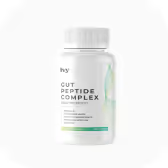
A realistic “after” is better comfort and predictability, not a cure claim. You can also check out Ivy Rx’s Gut Peptide Complex if your main goal is broader digestive support and optimal gut health.
Tendon and Ligament Recovery
The “before” is usually a tendon or ligament issue that flares with load: Achilles irritation, elbow pain, shoulder discomfort, knee pain, or slow return to training.
Animal studies have explored BPC-157 in tendon and ligament models, and a small human knee-pain case series reported relief in 14 of 16 contacted patients after BPC-157 alone or with TB4. But that study was retrospective, uncontrolled, and small.
A realistic “after” is not a guaranteed repaired tendon. It is less discomfort with loading, better range of motion, or improved tolerance for rehab. Progressive loading and professional assessment still matter.
Joint and Everyday Recovery
For joint and everyday recovery, users often describe less stiffness, fewer minor flare-ups, and easier movement through daily tasks. This is most relevant for people whose goal is function rather than visible transformation.
The key is to define your “after” before starting. That might be walking stairs with less discomfort, getting through work without a flare, training twice a week again, or sleeping without being woken by joint irritation.
What Real Users Report About BPC-157 Effects
Community sentiment is mixed but useful. In Reddit peptide discussions and peptide forums, positive reports usually focus on less pain, improved mobility, calmer digestion, and faster return to normal activity. Negative reports usually mention no clear effect, questionable product quality, or disappointment after expecting dramatic injury repair.
The strongest pattern is that users who report benefits usually combine BPC-157 with something else: rehab, rest, load management, better sleep, nutrition, or a longer consistent trial. Users who report failure often describe stopping early, using research-chemical products, skipping rehab, or expecting passive healing.
Treat user reports as clues, not proof. They can help you set expectations, but a licensed clinician is still the right person to evaluate pain, injury, gut symptoms, medication interactions, and whether BPC-157 makes sense for your situation.
Factors That Shape Your Results
BPC-157 results vary because the starting problem, product quality, consistency, and recovery plan vary. The best “before and after” comparisons track function, not hype.
Factor 1: Product quality and sourcing
Product quality is one of the biggest variables people mention in community reports. If someone uses a poorly labeled product, an underdosed product, or a product from an unclear source, the result is hard to interpret.
A safer route starts with a vetted source, clear ingredient information, and clinician-informed guidance. BPC-157 should not replace conventional care for medical conditions, injuries, or persistent symptoms. It is not FDA-approved for any medical indication, and FDA has flagged BPC-157-related bulk substances for potential safety and quality concerns, including immunogenicity risk, peptide-related impurities, and active ingredient characterization in its current safety-risk guidance.
Human side effect data is limited, and individual responses can vary. Before starting BPC-157, talk with a qualified clinician about your medical history, current medications, supplements, allergies, pregnancy or breastfeeding status, and any serious or unstable medical conditions.
Factor 2: Consistency over an appropriate treatment period
Many user reports describe gradual changes, especially for tendon, joint, or gut-comfort goals. Inconsistent use makes it harder to know whether the issue is the product, the timeline, the underlying condition, or the recovery plan.
That does not mean you should force yourself to continue if something feels wrong. It means your clinician-guided plan should define what to track, how long to evaluate progress, and what symptoms should prompt reassessment.
A simple tracking routine helps: record pain, mobility, gut comfort, activity tolerance, flare-ups, and sleep once or twice a week. If nothing changes after a reasonable treatment period, bring those notes to your clinician and ask whether a different approach makes sense.
Factor 3: The age and severity of the issue
A recent irritation is different from a years-old tendon problem, a joint condition, or unexplained gut symptoms. Older or more severe issues usually need more than a peptide. They may need imaging, physical therapy, load management, nutrition support, medication review, or specialist care.
This is where many before-and-after stories get misleading. A person with a mild flare may feel better quickly, while someone with a structural injury may need a much longer plan or a different diagnosis.
Use BPC-157 as a possible support tool, not as proof that a hidden injury has healed. If pain worsens, function declines, or symptoms keep returning, get evaluated.
Factor 4: Rehab, sleep, nutrition, and overall health
BPC-157 does not replace the basics of recovery. Rehab gives tissues the right loading signal. Sleep supports repair. Protein and micronutrients support normal healing. Stress, alcohol, poor sleep, and inconsistent training can make progress harder to interpret.
A realistic “after” usually comes from the whole recovery plan, not from a capsule alone. If you are trying BPC-157 for mobility or training tolerance, pair it with clinician-approved rehab and track what you can actually do more comfortably.
How to Get BPC-157 Safely
A safer BPC-157 plan starts with medical judgment, a clear product source, and realistic expectations. Avoid treating forum routines as a substitute for care.
Step 1: Talk to a licensed clinician
Start with a clinician if you have persistent pain, digestive symptoms, a suspected injury, or other medical conditions. BPC-157 has limited human evidence, and FDA’s current materials make clear that it is not an FDA-approved drug product.
A licensed clinician can help you decide whether BPC-157 is appropriate, whether you need diagnostic work first, and whether another treatment is a better fit. This is especially important if you take medications, have liver or kidney disease, have autoimmune concerns, are pregnant or breastfeeding, or have symptoms that have not been properly evaluated.
Step 2: Choose a vetted source, not a research-chemical seller
Do not rely on products marketed for “research use” when your goal is personal recovery or wellness. Those sources can leave you guessing about identity, strength, quality, storage, and whether the product is suitable for human use.
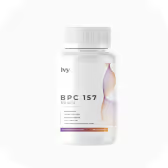
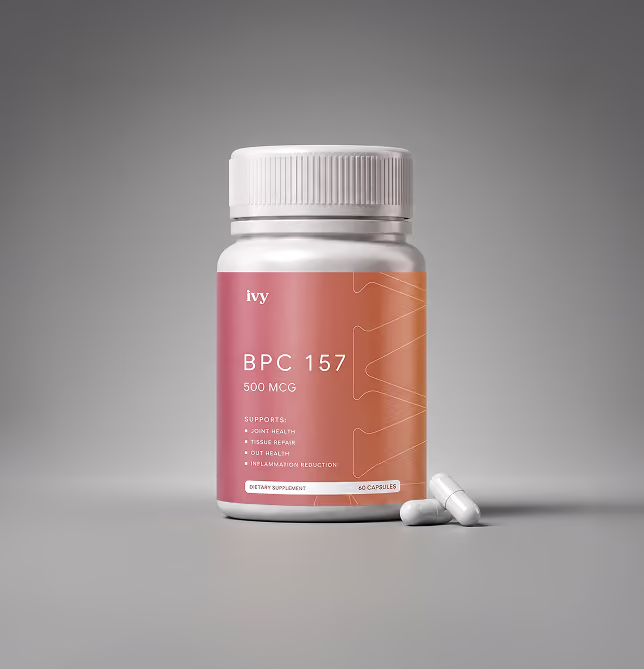
Ivy Rx offers BPC-157 Capsules as an oral supplement option for adults exploring joint, tissue, gut, and everyday recovery support via peptide therapy. They are made in the USA, start from $129 for 60 capsules of 500 mcg each (as of August 2026), and quality-tested, with medication prepared in a state-licensed pharmacy and independently verified through registered labs.
You can also review other Ivy Rx supplements to compare adjacent wellness products.
Step 3: Stay consistent, then reassess
Give your plan enough time to evaluate functional changes, but do not confuse consistency with ignoring problems. Track a few concrete markers: pain with a specific movement, walking tolerance, morning stiffness, gut comfort, training recovery, or flare frequency.
If you improve, your clinician can help you decide what comes next. If you do not improve, that is useful information too. It may mean the underlying issue needs a different diagnosis, a different support plan, or conventional treatment.
If you are unsure whether your goal fits BPC-157 capsules or conventional care, Ivy Rx’s How It Works page explains the online consultation pathway to help patients find the right treatment.
Support Your Recovery With Ivy Rx
Realistic BPC-157 before and after results take time, consistency, and a quality product. The goal is not a dramatic photo transformation. It is better function: calmer movement, fewer flare-ups, improved gut comfort, or a smoother return to everyday activity.
Ivy Rx offers BPC-157 supplements for patients exploring an oral BPC-157 option. Explore BPC-157 Capsules to see if they fit your goals.
FAQs
Can you take BPC-157 long term?
Unknown. Long-term human safety data are limited. Talk with a licensed clinician before continuing BPC-157 for an extended period.
Is oral BPC-157 as effective as injections?
Unclear. Oral and injectable routes differ, but human evidence is too limited to confidently compare effectiveness.
What happens when you stop taking BPC-157?
It varies. Some users report maintaining functional gains, while others notice symptoms return if the underlying issue was not addressed.
Is BPC-157 hard on your liver?
Unknown. Human liver-safety data are limited. Ask a clinician first if you have liver disease or take liver-metabolized medications.
Disclaimer: Research findings, FDA regulatory details, safety information, user-reported timelines, product availability, pricing, plan terms, and peptide-program details in this article were curated in September 2026 and may change. BPC-157 user reports and preclinical findings do not guarantee individual results. Always confirm current product details, eligibility requirements, pharmacy or supplement sourcing, medication availability, pricing, and program terms with a licensed clinician before starting any peptide.

.png)

Ivy RX patients
Members of Ivy RX branded medications were paid for their testimonials.
Related
Resources

Sermorelin vs BPC-157 Benefits, Differences & How to Choose
Sermorelin stimulates growth hormone release while BPC-157 promotes tissue and gut repair, both are peptides used off-label, with no FDA approval for either.

7 Best Anti-Aging Peptides for Youthful, Firm Skin in 2026
Discover the top anti-aging peptides for reducing wrinkles, boosting collagen, and improving skin texture. Science-backed options reviewed here.

4 Best Anti-Aging Injections to Keep Your Skin Looking Young and Slow the Process of Aging
Explore the best anti-aging injections to smooth wrinkles, lift skin, and restore volume. Safe, non-surgical, and clinically proven to deliver results.

3 Best Options to Buy Sermorelin in 2026 (Without the Hassle)
See how to buy Sermorelin online the right way, understand costs, prescriptions, and how to avoid unsafe suppliers