





.avif)


Article Outline
Start your personalized GLP-1 program


How Much Is Rybelsus®? With & Without Insurance [2026]
Rybelsus® cost can feel confusing because the number you see online is rarely the number you pay at the pharmacy. There is the manufacturer list price, the retail cash price, the coupon price, and your insurance co-pay if your plan covers it.
In 2026, Rybelsus® costs about $900 to $1,000 per month at list price without insurance, but some pharmacies may show cash prices above that before discounts.
This guide breaks down Rybelsus® cost with and without insurance, why the medication is expensive, and what options may help reduce your monthly cost.
How Much Does Rybelsus® Cost?
Rybelsus® has a current manufacturer list price of $997.58 per package for the 3 mg, 7 mg, and 14 mg strengths. Most Rybelsus® packages contain 30 tablets, so the list price is roughly the monthly price before insurance, coupons, or pharmacy discounts.
Your final cost depends less on the dose and more on how you pay. Someone with commercial insurance and coverage may pay a much lower co-pay. Someone paying cash may see a price closer to full retail, unless they use a discount card or find a lower pharmacy price.
Rybelsus® is approved as an oral semaglutide tablet for adults with type 2 diabetes. The current prescribing label lists 3 mg, 7 mg, and 14 mg tablet strengths. Coverage is usually more straightforward when the prescription is for type 2 diabetes, while weight-loss use can be harder to get covered.
Rybelsus® Cost Without Insurance
Without insurance, Rybelsus® usually costs around $1,000 per month at list price. At many pharmacies, the posted retail cash price may be higher before discount cards are applied.
Here is a practical way to think about the cost by dose:
The 3 mg dose is usually a starter dose, while 7 mg and 14 mg are maintenance doses your provider may consider after reviewing your response and tolerance. Even if the dose changes, the monthly retail price may stay in the same general range.
If you are paying cash, compare pharmacies before filling the prescription. Prices can change by location, and discount programs such as GoodRx may show lower coupon prices at participating pharmacies.
You can also compare Rybelsus® with broader semaglutide without insurance options if your main concern is the monthly cash cost.
Rybelsus® Cost With Insurance
With insurance, Rybelsus® may cost far less than the retail cash price, but coverage depends on your plan. Many people prescribed Rybelsus® for type 2 diabetes pay a co-pay instead of the full list price, and manufacturer savings programs may lower eligible commercial-insurance costs further.
Coverage is less predictable when the prescription is for weight loss, because Rybelsus® is a type 2 diabetes medication and is not usually covered as a weight-loss drug. Your plan may also require prior authorization, step therapy, or proof that the medication is medically appropriate for your diagnosis.
Here are the main cost factors to check:
- Whether Rybelsus® is on your plan’s formulary
- Whether your prescription diagnosis is type 2 diabetes or off-label weight management
- Whether prior authorization is required
- Whether you have met your deductible
- Whether you qualify for a manufacturer savings card
If Rybelsus® is not covered, ask your provider or insurance plan whether another semaglutide option is covered. You can also read Ivy Rx’s guide to the cheapest semaglutide without insurance for a broader view of cost-saving routes.
Why Is Rybelsus® So Expensive?
As is the case with many medications, Rybelsus® is expensive for reasons that go beyond one pharmacy or one insurance plan. The high monthly cost is tied to brand-name pricing, the complexity of oral semaglutide formulation, limited generic competition, and insurance rules around GLP-1 medications.
Factor 1: Rybelsus® Is a Brand-Name GLP-1 Medication
Rybelsus® is a brand-name version of oral semaglutide. Brand-name GLP-1 medications often carry high list prices because the manufacturer controls pricing while the drug remains protected by patents and market exclusivity.
There is no widely available generic version of Rybelsus® in the U.S. market, so patients usually compare brand-name Rybelsus® against coupons, savings cards, insurance coverage, or semaglutide alternatives.
The lack of a generic option also means pharmacy-to-pharmacy comparison becomes more important. You may not be able to find a true generic substitute, but you may still find a lower cash price, a coupon, or another medication your provider thinks is a better fit.
Factor 2: Oral Semaglutide Is Harder to Formulate
Rybelsus® is different from injectable semaglutide because it is taken as a tablet. That can be convenient for people who prefer pills, but oral semaglutide is also harder to formulate because the body does not absorb peptide-based medications easily through the digestive system.
Rybelsus® uses an absorption enhancer called SNAC to help semaglutide pass through the stomach lining. Even then, the amount absorbed into the body is low compared with many standard oral medications. This is one reason the tablet has very specific instructions: take it first thing in the morning, with a small amount of water, and wait before eating, drinking, or taking other medications.
That formulation complexity can contribute to the high price. It also means Rybelsus® may not be interchangeable with other GLP-1 options without provider guidance.
If you are considering switching because of cost, do not change medications or doses on your own. A licensed provider can review your diagnosis, goals, side effects, and medical history before recommending a safer next step.
Factor 3: Insurance Coverage Depends on the Diagnosis
Even when a plan covers Rybelsus®, the reason it is prescribed can affect approval. Rybelsus® is more likely to be covered when prescribed for type 2 diabetes. It is often harder to get covered when the goal is weight loss alone.
This creates a frustrating gap for people who are interested in semaglutide but do not have insurance coverage for GLP-1 weight-loss treatment. They may see that Rybelsus®, Ozempic®, and Wegovy® all involve semaglutide, but each medication has different approved uses, forms, doses, and insurance rules.
That is why it helps to ask your insurance plan very specific questions:
- Is Rybelsus® on my formulary?
- Is it covered for my diagnosis?
- Do I need prior authorization?
- Do I need to try another medication first?
- What will my co-pay be before and after my deductible?
If your plan will not cover GLP-1 treatment, Ivy Rx’s guide on how to get weight loss medication without insurance can help you compare practical next steps.
Does Insurance Cover Rybelsus®?
Insurance can cover Rybelsus®, but approval depends on your plan and the reason it was prescribed. Coverage is usually more likely when Rybelsus® is prescribed for type 2 diabetes, because that is its FDA-approved indication.
Commercial insurance plans often place Rybelsus® on a formulary tier, which determines your co-pay or coinsurance. Some plans also require prior authorization, meaning your provider must confirm why the medication is medically necessary before the plan pays.
Medicare Part D plans can cover prescription drugs through plan-specific formularies, tiers, and utilization rules such as prior authorization or step therapy. You can review your plan’s drug coverage through Medicare’s official tool.
Medicaid drug coverage also varies by state, even though all states currently provide outpatient prescription drug coverage to most Medicaid enrollees through their programs, according to Medicaid’s guidance.
To check your own coverage, call the number on your insurance card and ask whether Rybelsus® is covered for your diagnosis, whether prior authorization is required, and what your estimated co-pay will be before and after your deductible.
If you are comparing GLP-1 access across plans, these guides on Medicaid and Ozempic® coverage, Wegovy® insurance requirements, and Blue Cross Ozempic® coverage can help you understand how insurers usually review GLP-1 requests.
How to Save Money on Rybelsus®
You do not always have to accept the first pharmacy price you see. Rybelsus® is expensive, but there are several legitimate ways to lower the final cost or find a more affordable path with your provider’s help.
Step 1: Check the Manufacturer Savings Card
Start with Novo Nordisk’s savings card if you have commercial insurance and your plan covers Rybelsus®. Under the current 2026 terms, eligible commercially insured patients with Rybelsus® coverage may pay as little as $25, subject to program limits.
The offer is not for full cash-paying patients and cannot be used by patients enrolled in federal or state healthcare programs, including Medicare or Medicaid. The 3 mg strength is limited to a 1-month prescription per redemption, while 7 mg and 14 mg may be eligible for up to a 3-month prescription if the plan allows it.
Your action step: check the official savings-card terms before filling your prescription and bring the savings card details to your pharmacy. If the card is rejected, ask whether the issue is savings-card eligibility, insurance coverage, prior authorization, or the way the pharmacy processed the claim.
Step 2: Compare Pharmacy Prices Before Filling
Rybelsus® prices vary by pharmacy, even when the medication and dose are the same. A few minutes of comparison can prevent you from paying more than necessary.
Ask for the cash price at your usual pharmacy, then compare it with nearby retail pharmacies, mail-order options, and discount-card prices. If you have insurance, compare both the insurance price and the cash or coupon price, because the lower option is not always obvious.
Your action step: ask the pharmacy, “What is the lowest available price if I use insurance, and what is the lowest available price if I pay cash with a discount card?” Then confirm whether using a coupon instead of insurance affects your deductible.
If you are uninsured, read more about how to get GLP-1 without insurance to learn other ways people compare access, pricing, and provider-reviewed options.
Step 3: Ask Your Provider About Lower-Cost Alternatives
If Rybelsus® is still too expensive after insurance, coupons, and savings cards, ask your provider whether a different GLP-1 option makes sense. The right alternative depends on your diagnosis, medical history, medication tolerance, insurance coverage, and whether you prefer tablets or injections.
Some people compare Rybelsus® with injectable semaglutide options, other GLP-1 medications, or provider-reviewed personalized GLP-1 plans. Personalized GLP-1 formulations are not FDA-approved, so the provider and pharmacy standards behind the treatment are important.
Your action step: bring your actual pharmacy quote to your provider and ask, “Is there a clinically appropriate lower-cost option for my situation?” If the main barrier is out-of-pocket cost, you can also compare semaglutide compounding pharmacy cost and Personalized GLP-1 Injections from Ivy Rx.
Cheaper Alternatives to Rybelsus®
Rybelsus® is not the only semaglutide-related option. If the monthly price is too high, your provider can help you compare alternatives based on cost, form, dosing, indication, and medical fit.
Alternative 1: Injectable Semaglutide
Injectable semaglutide may be an alternative if your provider thinks a weekly injection is appropriate. Ozempic® and Wegovy® both contain semaglutide, but they are approved for different uses, come in different dosing schedules, and have different insurance rules.
Ozempic® is generally prescribed for type 2 diabetes, while Wegovy® is prescribed for chronic weight management in eligible patients. Depending on your insurance, one option may be covered more easily than another.
The trade-off is form. Rybelsus® is a daily tablet, while injectable semaglutide is typically used once weekly. The injections are subcutaneous, which means they go into fatty tissue under the skin, not muscle. Your provider or pharmacy team can show you how to administer them correctly if this option fits your treatment plan.
Alternative 2: Personalized GLP-1 Injections
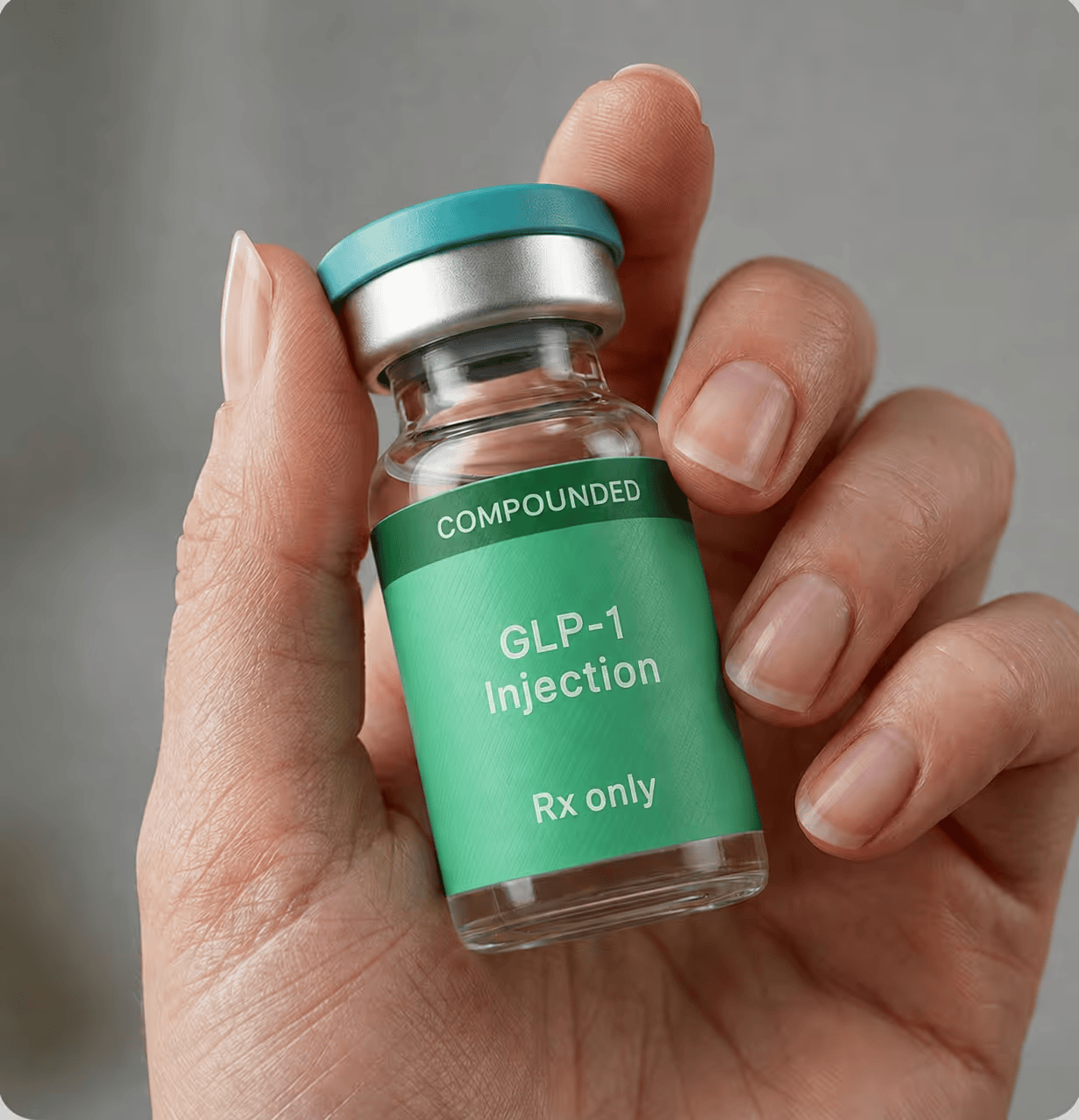
Personalized GLP-1 Injections may be a lower-cost option for people who do not have insurance coverage for brand-name medications or cannot afford high monthly pharmacy prices.
Through Ivy Rx, treatment begins with an online intake and licensed clinician review. If prescribed, medication is dispensed through a licensed pharmacy, with clear dosing instructions and follow-up support. Ivy Rx’s GLP-1 plans use transparent pricing, so patients can understand monthly costs before moving forward.
The trade-off is regulatory status. Personalized GLP-1 formulations are not FDA-approved, even when they include the same active ingredient used in FDA-approved drugs. Choose this route only through a reputable care pathway that uses licensed pharmacy dispensing, prescription-based care, and ongoing support.
If you are comparing this option against brand-name semaglutide, read more on compound semaglutide vs Ozempic® to understand the major differences you can discuss with a clinician.
Alternative 3: Other Weight-Loss or Diabetes Medications
Rybelsus® may not be the best fit for every person. Depending on your diagnosis and goals, your provider may discuss other prescription options, including metformin, other GLP-1 medications, or non-GLP-1 weight-management drugs.
Metformin is usually much less expensive than Rybelsus® and is commonly used for type 2 diabetes. It does not work the same way as a GLP-1 medication, and weight effects are usually more modest, but it can be a practical option for some patients.
Other GLP-1 or dual-action medications may also be considered, but cost and coverage vary widely. Some are injectable, some have stricter eligibility requirements, and some may not be appropriate depending on your medical history.
Your best next step is to ask your provider which lower-cost options fit your diagnosis, labs, medication history, and comfort level. You can also review cheaper alternatives to Ozempic® and broader alternatives to Ozempic®.
Start a Personalized GLP-1 Plan with Ivy Rx
If Rybelsus® is too expensive or your insurance will not cover GLP-1 treatment, Ivy Rx offers a more affordable, transparently-priced route with a Rate Lock Guarantee to explore clinician-reviewed options.
Patients complete an online intake, receive licensed clinician review, and, if prescribed, get medication dispensed through a licensed pharmacy with follow-up support. Explore Personalized GLP-1 Injections today.
FAQs
Is there a generic version of Rybelsus®?
No. There is no generic version of Rybelsus® available in the U.S. Rybelsus® is a brand-name oral semaglutide medication, so patients usually compare insurance coverage, savings cards, pharmacy discounts, or provider-reviewed alternatives.
Can you get Rybelsus® over the counter?
No. Rybelsus® is a prescription medication. A licensed healthcare provider must review whether it is appropriate based on your diagnosis, medical history, current medications, and treatment goals.
Is Rybelsus® cheaper than Ozempic®?
Sometimes. Rybelsus® and Ozempic® prices depend on insurance coverage, pharmacy pricing, coupons, and diagnosis. Without insurance, both can be expensive, so compare your actual quoted price before deciding.
Does Rybelsus® work for weight loss?
Sometimes. Some people lose weight while taking Rybelsus®, but it is FDA-approved for type 2 diabetes, not chronic weight management. Ask your provider which medication fits your goals and diagnosis.
Why is my Rybelsus® co-pay still high?
Your co-pay can stay high because of your deductible, formulary tier, prior authorization rules, or coinsurance. Call your plan and ask for the exact coverage reason.

%25201.avif)

Ivy RX patients
Members of Ivy RX branded medications were paid for their testimonials.
- https://dailymed.nlm.nih.gov/dailymed/fda/fdaDrugXsl.cfm?setid=27f15fac-7d98-4114-a2ec-92494a91da98&type=display
- https://www.medicare.gov/plan-compare/
- https://www.medicaid.gov/medicaid/prescription-drugs
Disclaimer: Pricing, coverage, savings-card terms, coupon availability, pharmacy cash prices, and plan details in this article were curated in August 2026 and may change. Always confirm the latest manufacturer list price, pharmacy price, insurance coverage rules, savings-card eligibility, medication availability, and program terms before starting treatment.
Related
Resources

Rybelsus vs Wegovy: A Full Review & Which One to Choose
Compare Rybelsus vs Wegovy for weight loss: discover key differences, effectiveness, side effects, and which option may be right for you.

How to Get the Cheapest Semaglutide With & Without Insurance
No insurance? Learn how to get semaglutide at the cheapest price with discount programs, generic options & coupons deals.

Complete Guide to Semaglutide Dosage For Weight Loss: Dosage Schedule & Adjustments (+Chart)
Ensure proper semaglutide usage with our dosage chart, adjustment tips, and helpful advice on what to do when you miss a dose.