





.avif)


Article Outline
Explore Weight Loss Treatments


Does Medicaid Cover Ozempic & Other GLP-1’s? (2026 Guide)
You're standing at the pharmacy counter, prescription in hand, wondering if your Medicaid will cover that Ozempic your doctor just prescribed.
Whether Medicaid covers Ozempic depends on why you need it and where you live.
If your doctor prescribed it for Type 2 diabetes or heart complications, you'll likely get coverage with some paperwork. But if you’re trying to use it for weight loss, many states won't approve it.
This guide shows you exactly what is covered, what isn’t, and what you can do if your state says no.
What is Ozempic and What is it Approved For?
Ozempic contains semaglutide, a GLP-1 receptor agonist that mimics hormones your body naturally produces.
The Food and Drug Administration approved it in 2017 for adults with Type 2 diabetes. It may help manage blood sugar, reduce heart attack and stroke risk in people with diabetes and known heart disease, and treat kidney problems in diabetic patients.
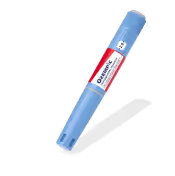
Ozempic may cause significant weight loss, but it's not approved specifically for that purpose. Meanwhile, Novo Nordisk sells a weight-loss specific version called Wegovy for obesity treatment. Though, the active ingredient in both is still semaglutide.
This distinction matters for insurance. Your Medicaid program covers FDA-approved uses but may reject prescriptions written solely for weight loss.

How Does Medicaid Drug Coverage Work?
Medicaid operates as a federal-state partnership where each state runs its own program with different rules.
The Medicaid Drug Rebate Program requires states to cover prescription drugs, and all 50 states participate. While federal rules generally ensure broad coverage, there's a major exception for anti-obesity medications.
Drug coverage works through layers of approval. States create a Preferred Drug List that ranks medications by preference. When your doctor writes a prescription, the pharmacy checks if it's on the list.
If extra approval is needed, you'll go through prior authorization. Your doctor must prove you meet specific medical criteria before your state pays.
Common restrictions include step therapy, where you must try cheaper medications first, or meet clinical thresholds like hemoglobin A1C levels above a certain point.
What's covered in California might be completely denied in Ohio, even though both are Medicaid programs.
Is Ozempic Covered by Medicaid?
The answer depends entirely on why you need it.
Coverage for Diabetes and Approved Indications
Does Medicaid cover Ozempic for diabetes? Almost certainly yes, with requirements.
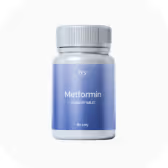
Most states require you to have tried metformin for at least 60 days without good results, or have a reason you can't take metformin, or have established cardiovascular disease, or need combination therapy with an A1C of 7.5 percent or higher.
Your doctor must document your diagnosis, previous medications you've tried, and current lab results. The prior authorization process typically takes two to six weeks.
Your state's pharmacy administrator also reviews whether you meet medical necessity criteria before approving coverage.
Pro Tip: Ask your doctor's office if they handle prior authorization regularly, as experienced offices can speed things up significantly.
Coverage for Weight Loss and Off-Label Use
Does Medicaid cover Ozempic for weight loss? In most states, no.
Federal law lets states exclude weight-loss drugs from coverage, and most states do this to control costs.
Only 16 state Medicaid programs covered GLP-1s for obesity as of October 2025. This means 34 states won't cover these medications when prescribed solely for weight management.
California recently proposed dropping coverage of the weight-loss indication in its Medi-Cal program. And North Carolina Medicaid announced it would no longer cover Wegovy or Zepbound except for diabetes or heart uses.
Even if you're significantly overweight with a high body mass index, your Medicaid program likely won't cover Ozempic prescribed specifically for obesity.
What Are the Approval Requirements and Restrictions?
Getting your prescription approved involves jumping through specific hoops.
Common requirements include:
- Documented hemoglobin A1C of 7.5% or higher
- Confirmed Type 2 diabetes history
- Established cardiovascular disease
Some states require trying two or more oral medications before approving injectable GLP-1 receptor agonists.
Plan limitations may often include quantity limits (usually one pen per month) and restrictions on using multiple GLP-1s together.
Example: If your A1C is 7.2% and you've never tried metformin, expect a denial even with a valid diabetes diagnosis.
State Variation and What to Check in Your State
Sixteen state Medicaid programs covering GLP-1s for obesity, while others don't, means your location is the most important factor.
Search "[Your State] Medicaid preferred drug list Ozempic" to find your state's current list. Most states publish this through their health department website.
- The North Carolina Department of Health and Human Services operates both NC Medicaid Direct and NC Medicaid Managed Care with different rules.
- Michigan Department of Health and Human Services contracts with Blue Cross Blue Shield of Michigan and other organizations, each with their own requirements.
- Health First Colorado maintains a Colorado Pharmacy Call Center where you can verify coverage before filling prescriptions.
Action step: Call your state's Medicaid pharmacy line before your doctor submits the prescription to confirm current requirements and avoid delays.
Are Other GLP-1 Medications Covered by Medicaid?
Coverage varies across the entire class of GLP-1 receptor agonists, with diabetes indications typically covered but obesity indications excluded in most states.
- Liraglutide (Victoza/Saxenda): Victoza for Type 2 diabetes is typically covered with similar requirements to Ozempic, while Saxenda for weight loss is only covered in states that cover obesity medications.
- Semaglutide (Ozempic/Wegovy/Rybelsus): Ozempic and Rybelsus (oral form) are covered for diabetes in most states, while Wegovy faces obesity restrictions; understanding Wegovy requirements may help you navigate approval.
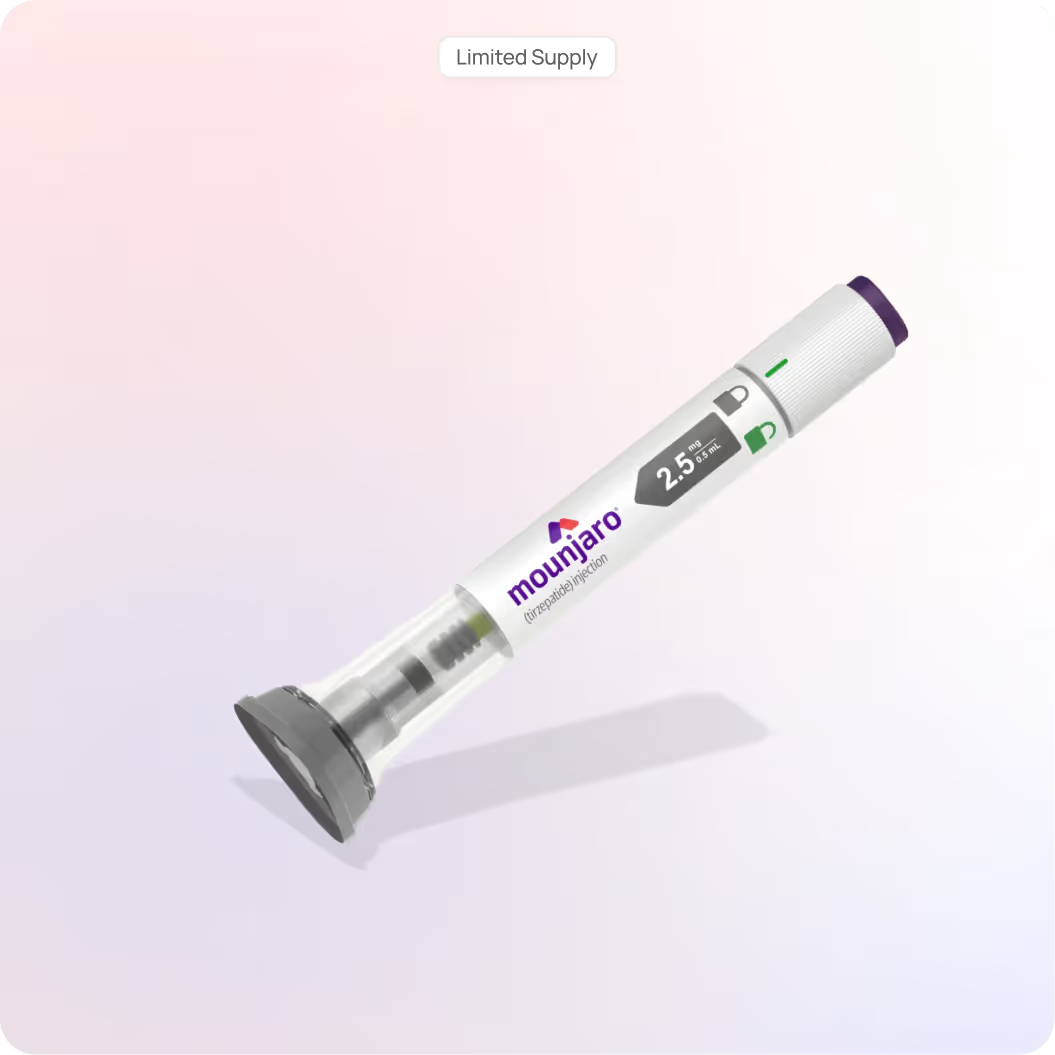
- Tirzepatide (Mounjaro/Zepbound): Mounjaro is typically covered for diabetes and may have fewer restrictions, though Mounjaro costs without insurance and general tirzepatide pricing matter if your state denies coverage; Zepbound for weight loss faces obesity exclusions.
The pattern is consistent: your Medicaid program covers these medications for diabetes but not obesity in most states.
Alternative Options if Ozempic Isn't Covered by Medicaid
When your state denies your prescription, you still have alternatives to Ozempic for treatment.
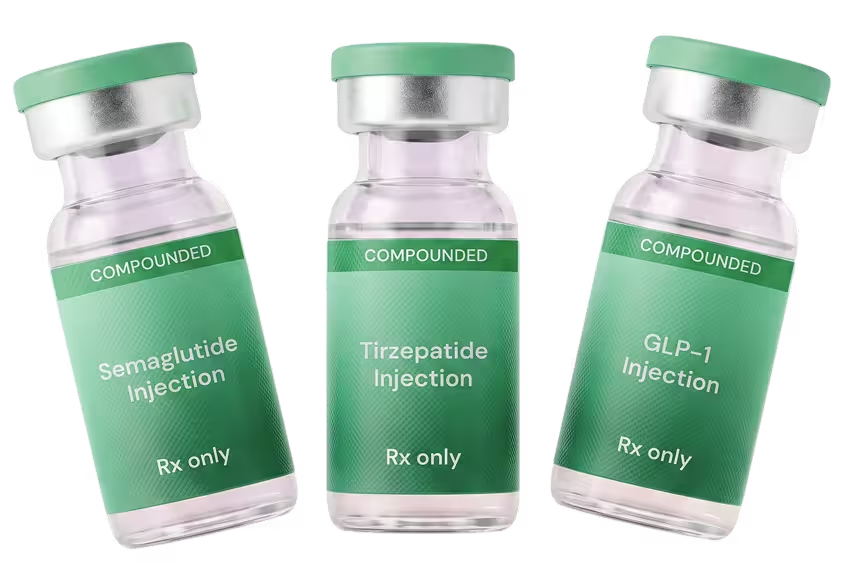
Compounded GLP-1 Injections
Compounded versions cost significantly less than brand-name options and don't require insurance approval.
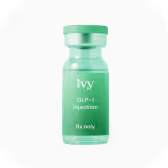
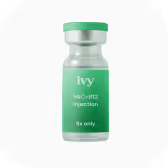
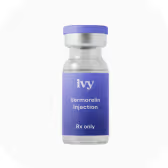
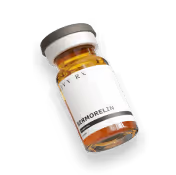
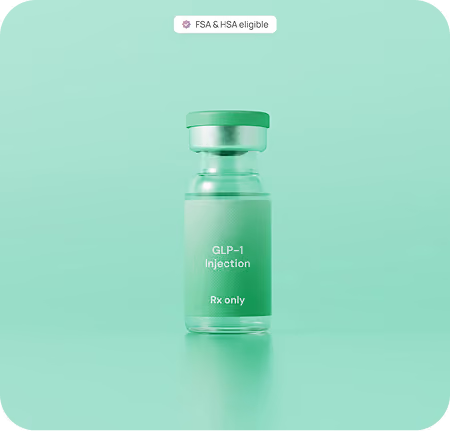
Personalized GLP-1 injections prepared in FDA-registered pharmacies provide the same active ingredients at transparent pricing. For instance, Ivy Rx offers personalized GLP-1 injections at $175 per month with no insurance needed, including free shipping and 24/7 provider access.
You avoid coverage gaps entirely while still getting effective treatment under medical supervision. Check out our GLP-1 vs Ozempic comparison for more information.
Patient Assistance Programs
Novo Nordisk and Eli Lilly offer assistance programs, though these typically don't work with government insurance like Medicaid.
Federal law prohibits using manufacturer coupons with Medicaid or Medicare coverage. This creates a gap where private insurance patients get discounts, but Medicaid patients don't qualify.
Exploring Alternative Medications
Some states cover older medications with fewer restrictions.
For heart protection, your Medicaid program might cover other medications that reduce cardiovascular risk without the obesity coverage hurdle.
Explore Your GLP-1 Weight Loss Options with Ivy Rx
Whether your state denies coverage for weight loss or you're stuck in endless paperwork for diabetes treatment, Ivy Rx provides personalized GLP-1 injections at $175 per month with transparent pricing and no insurance complications.
You'll get medical supervision and quality standards without fighting through denials or waiting weeks for approval. Start with a free health quiz, get evaluated by licensed providers, and receive 24/7 ongoing support.


Ivy RX patients
Members of Ivy RX branded medications were paid for their testimonials.
Related
Resources
%2520(5).png)
Is Ozempic (Semaglutide) Safe? Benefits & Risks in 2026
Want to know if Ozempic (Semaglutide) is safe for weight loss? Understand how semaglutide works, benefits & common side effects.

Wegovy Requirements For Insurance Coverage Explained (2026)
Learn how to get Wegovy covered by insurance, the cost breakdown, and the steps you can take to ensure you receive the medication through your health plan.

Does Blue Cross Blue Shield Cover Ozempic + 5 Alternative Options in 2026
Wondering if Blue Cross cover Ozempic? See coverage factors, costs, and affordable GLP-1 alternatives to help you choose the right option.