







.avif)



Article Outline
Lose weight with Metformin


Is it Safe to Take Metformin & Ozempic Together? [2026 Guide]
Taking metformin and Ozempic together is a common approach to treating type 2 diabetes.
When metformin alone falls short on blood sugar control, providers may introduce Ozempic to reinforce the treatment plan.
In some cases, this combination also supports weight management under careful medical supervision.
This guide walks through how the two medications work together, why clinicians pair them, what side effects to watch for, and who is most likely to benefit.
Can you take metformin and Ozempic together?
Yes. Doctors often safely prescribe metformin and Ozempic together when one medication doesn't adequately control your blood sugar or support weight loss goals.
Some clinical guidelines recommend metformin as a first-line treatment for type 2 diabetes. But when blood sugar remains elevated despite metformin therapy, providers recommend GLP-1 medications like Ozempic.
Your health provider may suggest adding Ozempic based on your A1c, response to metformin, kidney function, current medications, and weight goals.
For a detailed comparison, see semaglutide vs. metformin for weight loss.
How Metformin and Ozempic work (simple breakdown)
Metformin and Ozempic may work synergistically to lower blood sugar through different mechanisms.
How metformin works
Metformin improves how your body responds to insulin. It primarily reduces the amount of glucose your liver releases into the bloodstream and helps your cells use insulin more effectively.
Because metformin does not stimulate the pancreas to release insulin, it rarely causes low blood sugar when used on its own.
This safety profile is a key reason it is often prescribed as first-line treatment for type 2 diabetes.
Learn about the potential additional benefits of metformin for the skin.
How Ozempic works
Ozempic is a GLP-1 receptor agonist that contains semaglutide. It mimics the hormone your gut naturally produces after eating.
This hormone does four things:
- Reduces appetite signals in your brain.
- Slows how quickly food leaves your stomach.
- Tells your liver to stop releasing stored glucose.
- Signals your pancreas to release insulin when blood sugar rises.
This causes better sugar control and weight reduction
Discover what semaglutide does to your body, or read our comparison guide between two effective GLP-1 therapies in semaglutide vs tirzepatide.
Why the combination works
Metformin improves insulin sensitivity and reduces excess glucose release from the liver.
Ozempic stimulates insulin release when blood sugar rises and helps limit postprandial glucose spikes.
Together, they often provide more comprehensive blood sugar control than either medication alone. Metformin improves how cells respond to insulin, while Ozempic increases insulin release when blood sugar rises.
For specific dosing information, see our metformin dosage chart.
Ivy Rx provides personalized GLP-1 injections starting at $175 per month, with medical oversight and no insurance required, as well as online Metformin prescriptions.

Benefits of taking metformin and Ozempic together
Taking Ozempic with metformin typically produces stronger results than either medication alone. Here's what clinical evidence shows:
Stronger A1c reductions
Your A1c measures average blood sugar over three months. So a lower level is better.
Metformin alone drops A1c by about 1-2%. Adding Ozempic can drop it an additional 1-1.5%.
This matters because each point reduction significantly lowers your risk of diabetes complications.
Greater weight loss
Weight loss differs dramatically between the two medications.
Metformin typically causes you to shed 4-7 pounds of fat over several months of dosage. Weight loss may be gradual and smaller than with lifestyle interventions.
And Ozempic produces significant results; many patients lose 10-15% of their body weight over a year.
When combined, the appetite-suppressing effect of Ozempic dominates. While metformin provides metabolic support to sustain the loss.
Read semaglutide weight loss reviews from real patients, and learn how fast semaglutide works for weight loss to guide your expectations.
Better appetite control
Ozempic slows gastric emptying, so food stays in your stomach longer and you feel full for hours after eating.
It also affects brain regions that control hunger and food cravings. Metformin stabilizes blood sugar, which prevents the energy crashes that trigger hunger.
The combination helps control your appetite and maintains a calorie deficit more easily, without requiring a constant battle with willpower and food noise.
Cardiovascular protection
Both medications protect your heart through different mechanisms.
Metformin reduces cardiovascular events in patients with diabetes. The exact mechanism isn't fully understood, but decades of data show the benefit.
Ozempic has demonstrated significant cardiovascular benefits in clinical trials - specifically reducing heart attacks, strokes, and cardiovascular death in type 2 diabetes patients with existing heart disease.
Using both provides dual cardiovascular protection, limits individual risk factors, and helps determine whether this matters for your treatment strategy.
You can also read our metformin comparison guides with other medications below:
Side effects and risks of metformin and Ozempic together
Both medications cause side effects, and taking them together doesn't eliminate those effects, it may combine them in some patients. Here's what to expect:
Digestive problems
Nausea, diarrhea, stomach pain, and bloating are the most common side effects from both treatments.
Metformin may irritate your digestive system, especially when you first start taking it.
Ozempic, on the flip side, can worsen this by slowing digestion, so food sitting in your stomach may cause ongoing discomfort.
But these side effects often improve within 2-4 weeks as your body adjusts to treatment.
If symptoms persist for more than four weeks or worsen, contact your provider to adjust your dosage or stop treatment.
Low blood sugar risk
Metformin alone rarely causes hypoglycemia because it does not stimulate the pancreas to release insulin.
Ozempic increases insulin release only when blood sugar rises, so the risk of low blood sugar remains low when it is used with metformin alone.
However, the risk increases if Ozempic is combined with insulin or sulfonylureas, such as glipizide or glyburide.
Symptoms of low blood sugar include shakiness, sweating, confusion, rapid heartbeat, dizziness, and intense hunger.
See Ozempic benefits and side effects for complete safety information.
Dehydration and kidney strain
Both medications can contribute to dehydration through different mechanisms.
Ozempic may cause nausea and vomiting in some patients, reducing fluid intake.
Metformin causes diarrhea, increasing fluid loss. Less fluid in, more fluid out. The result is that you become dehydrated.
Dehydration may place strain on your kidneys, and reduced kidney function increases metformin levels in your blood, which in turn raises the risk of lactic acidosis.
Contact your provider immediately if you can't keep fluids down for more than 24 hours, notice dark urine, urinate much less than normal, or feel extremely weak and dizzy.
Pancreatitis and gallbladder problems
GLP-1 medications like Ozempic carry a small risk of pancreatitis and gallbladder problems, including gallstones.
Pancreatitis causes severe upper abdominal pain that often radiates to the back and may occur with nausea, vomiting, or fever. Gallbladder problems cause similar pain, typically on the right side under the ribs, often after fatty meals.
These complications are uncommon and are more related to rapid weight loss, rather than the treatments themselves, but require immediate medical attention if symptoms persist.
Who may benefit most from taking both Ozempic and metformin
If you’re considering your eligibility for combining metformin and Ozempic, you may qualify in these scenarios:
You may benefit if you:
- Have type 2 diabetes with A1c above target despite maximum metformin dosing – Your A1c remains above 7% (or your personal target) even though you’re following lifestyle recommendations.
- Need significant weight loss for health reasons – Your BMI is 27+ with weight-related health conditions (like high blood pressure or sleep apnea) or 30+ without other conditions. Weight loss would improve multiple health markers beyond blood sugar.
- Have cardiovascular disease or significant risk factors – You've had a heart attack, stroke, or have multiple risk factors like high blood pressure, high cholesterol, and diabetes. GLP-1 medications reduce cardiovascular events in this population.
- Tolerate both medications without severe side effects – You can manage the digestive symptoms, don't experience dangerously low blood sugar, and can afford consistent access to both medications.
Your provider will normally evaluate:
- Weight loss goals and current BMI.
- Complete medication list to check for interactions.
- Your ability to manage injections and potential side effects.
- Kidney function tests (creatinine, eGFR) and liver function tests.
- Insurance coverage and out-of-pocket costs for both medications.
- Personal and family medical history, especially with heart disease.
- Current A1c and daily blood sugar patterns from your glucose monitor.
- How did you respond to metformin alone—did A1c drop initially, then plateau?
Get personalized metformin + GLP-1 support with Ivy Rx
Metformin and Ozempic can be used safely together when prescribed and monitored by a medical provider like Ivy Rx.
The combination delivers better blood sugar control and weight loss than either medication alone, when matched to your specific needs.
If you’re ready to explore GLP-1 treatment with ongoing medical oversight, Ivy Rx offers personalized GLP-1 injections starting at $175 per month and access to Metformin.
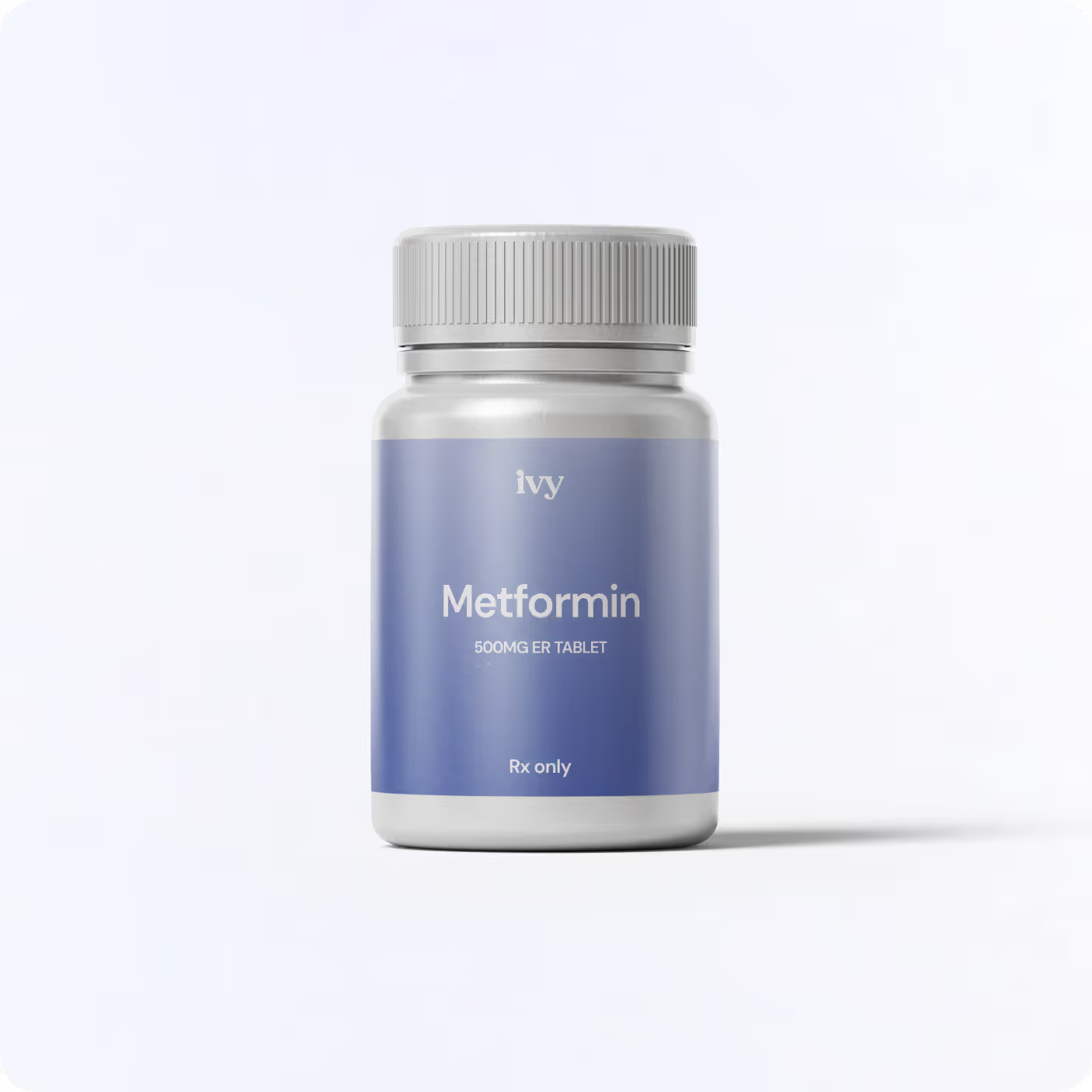
You get provider consultations, dosing guidance, and medication delivered to your door. No insurance required.
Visit Ivy Rx to start your consultation today.


Ivy RX patients
Members of Ivy RX branded medications were paid for their testimonials.
- Bailey CJ. Metformin: Therapeutic profile in the treatment of type 2 diabetes. Diabetes Obes Metab. 2024 Aug;26 Suppl 3:3-19. https://pubmed.ncbi.nlm.nih.gov/38784991/. DOI: 10.1111/dom.15663.
- Hirst JA, Farmer AJ, Ali R, Roberts NW, Stevens RJ. Quantifying the effect of metformin treatment and dose on glycemic control. Diabetes Care. 2012 Feb;35(2):446-54. https://pmc.ncbi.nlm.nih.gov/articles/PMC3263873/. doi: 10.2337/dc11-1465.
- Meier JJ. Efficacy of Semaglutide in a Subcutaneous and an Oral Formulation. Front Endocrinol (Lausanne). 2021 Jun 25;12:645617. https://pmc.ncbi.nlm.nih.gov/articles/PMC8269445/. doi: 10.3389/fendo.2021.645617.
- Knowler WC, Barrett-Connor E, Fowler SE, Hamman RF, Lachin JM, Walker EA, Nathan DM; Diabetes Prevention Program Research Group. Reduction in the incidence of type 2 diabetes with lifestyle intervention or metformin. N Engl J Med. 2002 Feb 7;346(6):393-403. https://pubmed.ncbi.nlm.nih.gov/11832527/. DOI: 10.1056/NEJMoa012512.
- Wilding JPH, Batterham RL, Calanna S, Davies M, Van Gaal LF, Lingvay I, McGowan BM, Rosenstock J, Tran MTD, Wadden TA, Wharton S, Yokote K, Zeuthen N, Kushner RF; STEP 1 Study Group. Once-Weekly Semaglutide in Adults with Overweight or Obesity. N Engl J Med. 2021 Mar 18;384(11):989-1002. https://pubmed.ncbi.nlm.nih.gov/33567185/. DOI: 10.1056/NEJMoa2032183.
- Jensterle M, Ferjan S, Ležaič L, Sočan A, Goričar K, Zaletel K, Janez A. Semaglutide delays 4-hour gastric emptying in women with polycystic ovary syndrome and obesity. Diabetes Obes Metab. 2023 Apr;25(4):975-984. https://pubmed.ncbi.nlm.nih.gov/36511825/. DOI: 10.1111/dom.14944.
- Harada N. Effects of metformin on blood glucose levels and bodyweight mediated through intestinal effects. J Diabetes Investig. 2020 Nov;11(6):1420-1421. doi: 10.1111/jdi.13301. https://pmc.ncbi.nlm.nih.gov/articles/PMC7610103/. doi: 10.1111/jdi.13301.
Related
Resources

Metformin Dosage Chart: 2026 Dosing Guide
See recommended Metformin doses by age and product type. Learn about IR, ER, combos, dose adjustments, and tips for taking Metformin safely.

Semaglutide vs. Metformin: Which Is Better for Weight Loss in 2026?
Compare Semaglutide and Metformin for weight loss. Learn their differences, effectiveness, side effects, and which is right for your health goals.

What Does Semaglutide Do To Your Body?
Semaglutide is a drug similar to the endogenous GLP-1 peptide secreted from the intestinal L-cells. GLP-1 is released from the intestine and exh...