









.avif)




Article Outline
Start your personalized GLP-1 program


Switching Between GLP-1 Agonists (2026 Ultimate Guide)
Common reasons patients on GLP-1 therapy look for an alternative GLP-1 include weight loss plateaus, persistent side effects, changes in insurance coverage, or rising out-of-pocket costs.
This raises a valid question; Is it safe to switch between GLP-1 medications?
In many cases, yes. With medical guidance.
The transitions between options like semaglutide and tirzepatide to alternative GLP-injections follow established clinical approaches designed to keep treatment in motion.
In our guide, we explain why people switch, what safety measures providers use, what changes you might notice during the transition, and which GLP-1 switches are commonly considered.
What Does "Switching Between GLP-1 Agonists" Mean?
Switching between GLP-1 agonists means moving from one GLP-1 medication to another under medical supervision.
Most GLP-1 medications work in a similar way: they mimic hormones that control appetite and blood sugar.
But just as there are similarities in mechanism, there are also differences.
They differ in strength, duration, side effects and number of pathways targeted. Some target only GLP-1 receptors like Ozempic (semaglutide). Others target both GLP-1 and GIP receptors (like Mounjaro/tirzepatide).
Differences in effectiveness between Semaglutide and Tirzepatide may prompt a change, especially if weight loss has slowed, more side effects have appeared or appetite control feels less consistent on the current medication.
Why Do People Switch GLP-1 Agonists?
Switches are most often driven by insurance coverage, cost, side effects, or an inadequate treatment response.
Here are reasons why people switch between therapies:
Weight Loss Plateaus
A weight-loss plateau means your body has adapted to the amount you're eating.
This often happens because the body adjusts by burning fewer calories and becoming more efficient at holding its current weight, even when appetite remains well controlled.
Although a plateau does not mean the medication has stopped working.
In many cases, progress resumes after staying on the same dose long enough for the body to respond fully, correcting missed or inconsistent doses, or adjusting the dose under medical guidance rather than switching medications right away.
Side Effects
If you continue to experience side effects like nausea, diarrhea, or vomiting well beyond the initial adjustment period.
When these symptoms persist for several weeks rather than easing, they may interfere with your daily life and treatment adherence.
Switching to a different GLP-1 medication may reduce side effects for some patients.
Appetite Isn't Controlled
If you’re still feeling hungry on a GLP-1 therapy, it may be a sign that the medication isn’t providing enough appetite control for your body.
For example, persistent hunger on semaglutide may be a reason to consider tirzepatide (or vice-versa).
Tirzepatide acts on both GLP-1 and GIP receptors, which may offer stronger appetite suppression for some people. But the effect these therapies may have depends on individual response.
Insurance Changes
GLP-1 therapy is often a long-term commitment, and the monthly cost can add up quickly without coverage.
For many people, insurance approval is what makes consistent treatment possible.
When insurance coverage is dropped, step therapy is added, or a preferred drug changes, staying on the same medication may no longer be feasible due to the high cost of maintaining treatment with the same therapy.
The experience of semaglutide shortages may also prompt patients to explore alternatives.
Therefore, getting GLP-1s without insurance may require switching to personalized GLP-1 injections for a lower price.
Higher Costs
Without insurance, brand-name GLP-1 medications can cost $900–$1,600 per month.
When that expense becomes unsustainable, some people switch to personalized GLP-1 injections as a lower-cost way to continue treatment under medical supervision.
Current Medication Stops Working
In some cases, a GLP-1 medication may not produce meaningful weight loss from the start. This is different from a plateau, where progress slows after initial results.
If you’ve reached an appropriate dose and still see minimal change, switching medications may be an option tp explore
For example, if semaglutide does not produce results despite proper use, a provider may recommend tirzepatide, which acts on an additional metabolic pathway.
Clinical studies show tirzepatide is associated with greater average weight loss, though individual responses vary.
Is It Safe to Switch Between GLP-1 Agonists?
Yes, it is safe to switch between GLP-1 agonists, as long as it is under medical supervision. All GLP-1s work similarly, so your body isn't adjusting to something completely foreign.
Safety factors to consider before making a switch:
- Response to your current medication: How you tolerated side effects and responded to treatment helps predict how your body may handle the next option.
- Starting-dose strategy: Most switches resume at a lower dose, even after higher doses, to reduce the risk of gastrointestinal side effects.
- Medical history and risk factors: Thyroid history, pancreatitis risk, kidney function, and related conditions guide medication selection.
- Ongoing monitoring and follow-up: Providers track side effects, weight changes, and blood sugar trends, then adjust dosing as needed.
In practice, the safety of compounded semaglutide and compounded tirzepatide depends largely on medical oversight, appropriate dose adjustments, and regular monitoring.
For detailed safety info, see our safety information page.
What Changes Might You Notice After Switching?
Changes are common but unpredictable. Some feel immediate differences; others notice subtle shifts over the course of weeks. Your response depends on the medications, doses, and metabolism.
Appetite Shifts
Hunger may spike temporarily before the new medication kicks in, or you may feel more satisfied between doses.
Some people switching to tirzepatide report stronger appetite suppression than on semaglutide. Others notice little difference or the complete opposite.
GI Symptoms Return
Nausea, bloating, or bowel changes may reappear during the first few weeks, even if your previous medication was fine.
Tirzepatide side effects tend to involve GI issues. If you had nausea before, the new drug may cause diarrhea or constipation instead. These issues should resolve as your body adjusts to the new treatment and dose.
Energy Fluctuations
Energy changes are common after switching GLP-1 medications. Some people feel more energized, while others notice temporary fatigue as the body adjusts.
These shifts often reflect changes in blood sugar control, calorie intake, and overall metabolic balance rather than a problem with the medication itself.
But these patterns settle over time, so it’s more useful to track trends over weeks rather than day to day.
Some feel more energized after switching; others get temporary fatigue.
Weight Loss Pace Changes
A change in weight-loss pace is normal after switching GLP-1 medications. Your progress may slow, pause, or temporarily reset before improving again.
This happens because most transitions require you to start at a lower dose, even if you were previously on a higher one.
Some people notice stronger results after switching to a more potent option, while others need several weeks at the maintenance dose before changes appear.
How fast semaglutide works may differ from the tirzepatide timeline.
Common GLP-1 Switches Compared
These are some of the most common GLP-1 switches people make. The best fit depends on how you’ve responded so far and your overall health profile.
Ivy Rx offers medically supervised personalized GLP-1 injections starting at $175 per month, with easy access and no insurance required.

Get the same active ingredients found in brand-name medications with transparent pricing, ongoing provider support, and medications delivered to your door.
Start your consultation today.
How to Switch Between GLP-1 Agonists
Switching requires medical oversight. Here's how providers manage transitions.
Step 1: Review Your Current Treatment
Seek a health provider to evaluate your weight-loss progress, side effects, blood sugar control, and adherence.
Sometimes adjusting your current medication may be the solution you need, rather than switching to another GLP-1 therapy.
Step 2: Check Medical History
Not every GLP-1 suits every patient. Allow your provider to review contraindications, including thyroid conditions, a history of pancreatitis, and kidney function.
They consider which prescription weight loss medications fit your health profile. Cost and insurance also factor in.
Step 3: Create a Transition Plan
Most transitions restart at the lowest dose of the new medication, even if you were on a high dose before. This helps prevent severe side effects.
Step 4: Monitor and Follow Up
Switching between GLP-1s isn't one-and-done. Providers should schedule follow-ups to track side effects, weight changes, and adherence.
They may adjust the plan if unexpected symptoms arise or results don't match expectations.
Step 5: Reassess Long-Term
Reassess whether the switch achieved your desired goals after 8-12 weeks, and at regular intervals beyond this period.
Did your weight loss improve? How were the experienced side effects? Was cost more sustainable?
If the new medication isn't working better for you, inform your healthcare provider to adjust your dose. Success depends on finding a sustainable and consistent regimen.
Read our guide about choosing the right medical weight loss clinic to ensure you get quality health services.
Bonus Guide: Read our guide on the cautious steps to take when traveling with a compounded GLP-1 medication.
Thinking About Switching GLP-1 Medications? Check Ivy Rx
If insurance coverage changed, costs spiked, or you need more consistent access, personalized GLP-1 options may be an alternative worth considering.
Ivy Rx provides medically supervised weight-loss treatment with transparent pricing, no insurance required, and ongoing provider support.
You'll work with licensed healthcare professionals who evaluate your current treatment, explain your options, and create a transition plan that prioritizes safety and effectiveness.
Explore personalized GLP-1 injections starting at $175/month.

%25201.avif)

Ivy RX patients
Members of Ivy RX branded medications were paid for their testimonials.
- https://www.nejm.org/doi/full/10.1056/NEJMoa2416394. Accessed 29th of January, 2026.
- Ard J, Lee CJ, Gudzune K, Addison B, Lingvay I, Cao D, Mast CJ, Stefanski A, Falcon B, Mojdami D. Weight reduction over time in tirzepatide-treated participants by early weight loss response: Post hoc analysis in SURMOUNT-1. Diabetes Obes Metab. 2025 Sep;27(9):5064-5071. https://pmc.ncbi.nlm.nih.gov/articles/PMC12326891/. doi: 10.1111/dom.16554.
Related
Resources
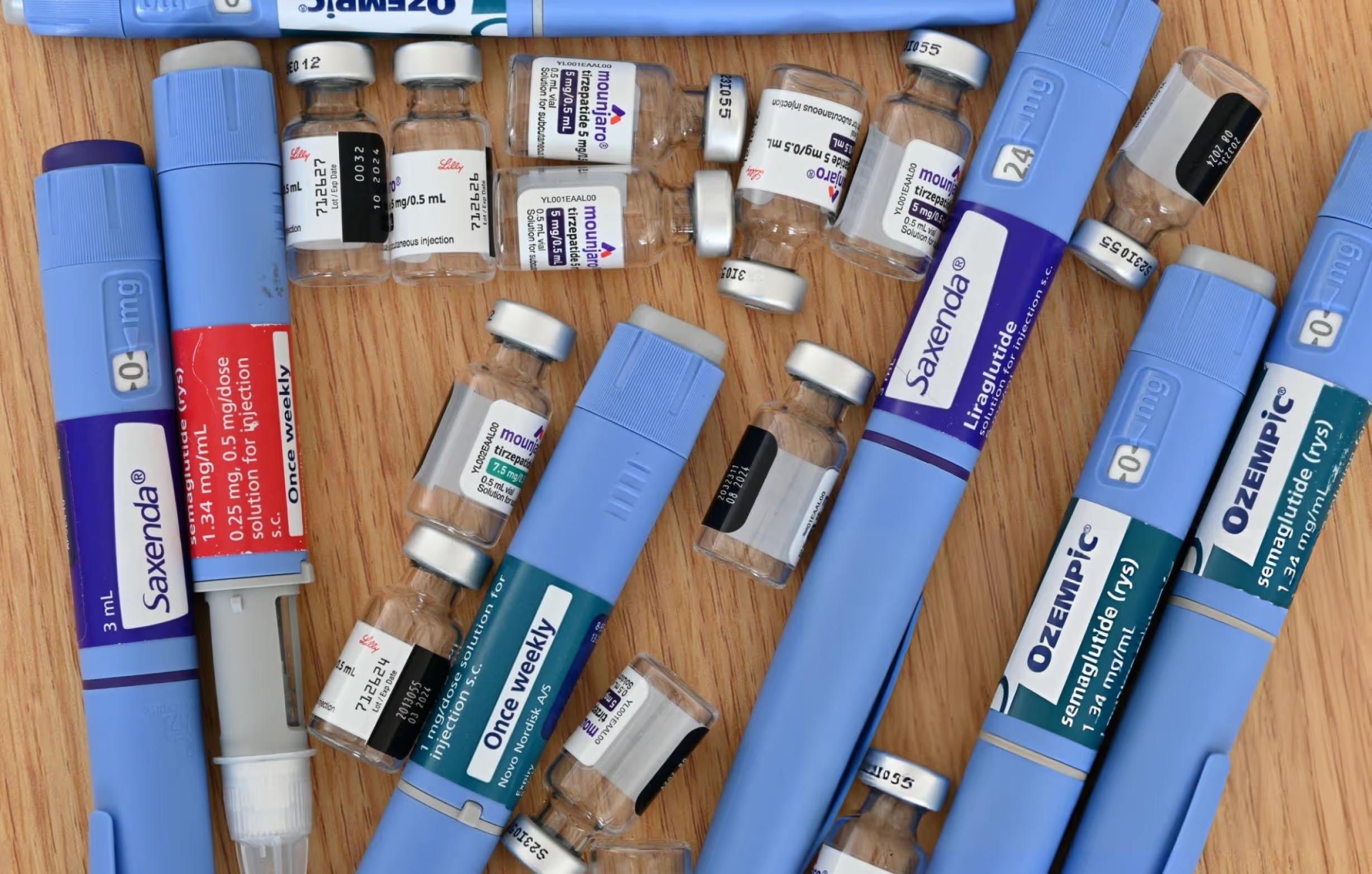
Switching From Ozempic To Mounjaro
Switching between Ozempic® and Mounjaro® is a decision for you and your doctor. Both medicines help control type 2 diabetes. Mounjaro® may work...

Switching from Semaglutide to Tirzepatide: A 2026 Step-by-Step Guide to Doing it Safely
Switching from semaglutide to tirzepatide is a big decision for you and your doctor to make together. Tirzepatide is a new medicine that works s...

What Does Semaglutide Do To Your Body?
Semaglutide is a drug similar to the endogenous GLP-1 peptide secreted from the intestinal L-cells. GLP-1 is released from the intestine and exh...