





.avif)


Article Outline
Start your personalized GLP-1 program


Why Am I Not Losing Weight on Ozempic Causes & Quick Fixes
If you started Ozempic hoping to lose weight and the scale has barely moved, it can feel frustrating. You may be eating less, taking your injections, and still wondering why your results do not look like the stories you have seen online.
The truth is, weight loss on Ozempic is not instant. Ozempic contains semaglutide and is approved for type 2 diabetes, but providers may prescribe it off-label for weight management when appropriate. Semaglutide works by mimicking GLP-1, a hormone involved in appetite, fullness, digestion, and blood sugar response.
Why Am I Not Losing Weight on Ozempic?
There is usually more than one reason Ozempic is not leading to the weight loss you expected. Here are the most common possibilities to discuss with your provider.
1. Your Dose Is Still Too Low
Many people start Ozempic at a low dose so the body can adjust. At this stage, the goal is often tolerance, not maximum weight loss. You may notice less appetite, but the effect may not be strong enough yet to change your weight significantly.
Do not increase your dose on your own. If your current dose feels ineffective, ask your provider whether your plan needs more time or a supervised adjustment.
2. You Have Not Reached Your Maintenance Dose Yet
Semaglutide dosing is usually increased gradually. In the Ozempic label, the dose starts low and may be increased over time based on clinical need. Weight management studies using semaglutide also include a dose-escalation period before patients reach the target dose.
This matters because some people do not see stronger appetite control until later in treatment. If you are early in the process, your body may simply not be at the dose where weight changes become easier to notice.
3. Lifestyle Habits Are Offsetting the Medication
Ozempic can help reduce hunger, but it does not replace daily habits. Prescription weight management medications work best when paired with a lifestyle plan that supports nutrition, movement, sleep, and consistency.
Small changes can offset the medication without you realizing it. Larger portions, frequent snacking, high-calorie drinks, low activity, poor sleep, or stress eating may slow progress even when appetite feels lower.
4. You Have Hit a Weight Loss Plateau
A plateau does not mean Ozempic stopped working. Weight loss often slows after the first few months because your body adapts to a lower weight and uses less energy than before.
This is one reason progress may happen in waves. You may lose weight for several weeks, stay the same for a while, and then begin losing again after your routine, dose, or treatment plan is reassessed.
5. A Medical Condition Is Getting in the Way
Some health conditions can make weight loss harder, even with medication. Thyroid disease, insulin resistance, sleep apnea, hormonal changes, depression, chronic stress, and certain medications may all affect appetite, energy, fluid balance, or metabolism.
This is why follow-up matters. Your provider may review labs, medication interactions, sleep patterns, and your overall health before deciding whether Ozempic is still the right fit.
6. You Are Missing or Skipping Doses
Consistency is important with once-weekly GLP-1 treatment. Missing doses, delaying injections, or stopping and restarting can reduce appetite control and make it harder to judge whether the medication is working.
If you missed a dose, follow your prescription instructions or ask your provider what to do next. Do not double up or change the timing without medical guidance.
How Long Does It Take to Lose Weight on Ozempic?
Some people notice appetite changes in the first few weeks. Visible weight loss often takes longer, especially when the medication is being increased slowly.
In clinical research using once-weekly semaglutide 2.4 mg for weight management, participants lost an average of 14.9% of body weight over 68 weeks when treatment was combined with lifestyle intervention. Ozempic is a different branded medication and dosing plan, but the research helps explain why semaglutide-related weight changes may build over months, not days.
If you are only a few weeks in, it may be too early to know. If you have taken it consistently for several months with little change, that is a good time to review your dose, habits, side effects, and alternatives with your provider.
How to Tell If Ozempic Is Working Even When the Scale Is Not Moving
The scale is useful, but it is not the only sign. Ozempic may still be affecting appetite and metabolic patterns before weight loss becomes obvious.
How to Make Ozempic Work Better for Weight Loss
The safest way to improve results is not to push your dose higher on your own. It is to work with your provider on the factors that influence weight loss.
- Take the medication consistently as prescribed, and ask what to do if you miss a dose.
- Build meals around protein, fiber, and steady eating patterns so appetite changes translate into better intake habits.
- Add realistic movement you can repeat, rather than trying to overdo exercise for a few days and stop.
- Track non-scale changes like appetite, cravings, clothing fit, energy, and waist measurements.
- Report side effects early, because nausea or digestive discomfort may affect what and how you eat.
If you feel stuck, bring specific details to your provider. Your dose, injection routine, other medications, lab results, and symptoms all help guide the next step.
Does Ozempic Dose Affect How Much Weight You Lose?
Yes, dose can affect results, but it is not the only factor. A dose that supports blood sugar control may not always create the appetite change a person expects for weight loss.
That does not mean higher is always better. Your provider has to balance results with tolerability, side effects, medical history, and whether another treatment may be more appropriate. For some people, the answer is more time. For others, it may be a different GLP-1 plan.
Still Not Losing Weight? It Might Be Time to Try a Different Medication.
If you have used Ozempic consistently and still feel hungry, stuck, or unable to lose weight, your provider may discuss other options. Some patients respond better to semaglutide at a different treatment plan, while others may be candidates for tirzepatide, which targets both GLP-1 and GIP pathways.
For eligible adults, a licensed provider may discuss whether continuing Ozempic, changing the care plan, or considering another GLP-1 option is appropriate. Ivy Rx's model emphasizes provider review, transparent pricing, the Rate Lock Guarantee, and medication prepared in the USA through a licensed pharmacy partner.
Personalized semaglutide is not FDA-approved, but it is prepared by a licensed US pharmacy under provider review and may offer a lower-cost, provider-guided option for eligible patients.
Not Seeing Results? Here's Your Next Step
Not losing weight on Ozempic can be discouraging, but it does not mean you are out of options. Your body may need more time, a dose review, better support around habits, or a different medication plan.
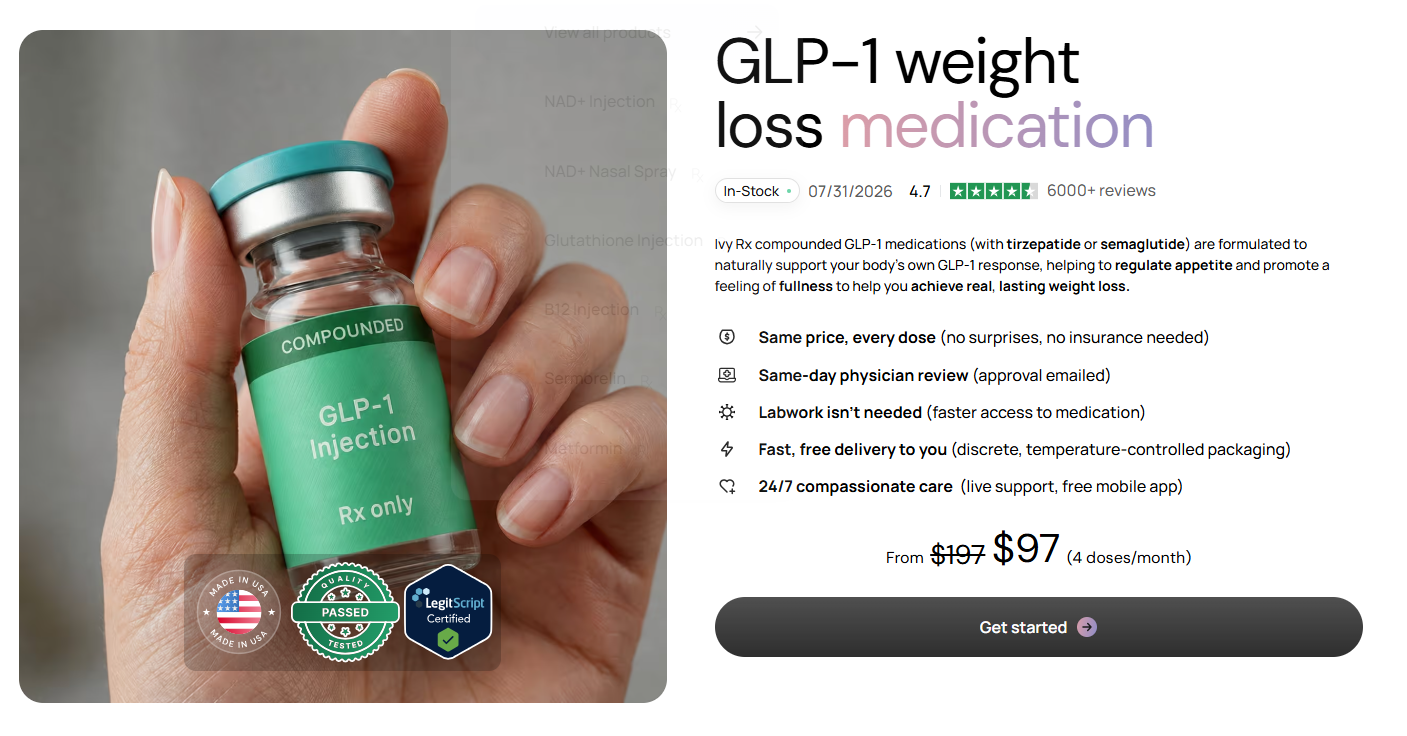
Ivy Rx offers personalized GLP-1 injections starting at $97 per month. It also comes with prescription benefits that includes a medical evaluation, dosage guidance, and medications delivered to your door.
Start your evaluation today and take the next step toward a weight loss approach that fits your life and your budget.
FAQs
1. Does Body Weight Affect How Well Ozempic Works?
Body weight can influence how much weight a person loses, but it is not the only factor. Dose, consistency, medical history, lifestyle habits, and how your body responds to semaglutide all matter. Your provider can help interpret your progress in context.
2. What Should I Do If Ozempic Stops Working for Weight Loss?
Do not change your dose on your own. Review your injection schedule, appetite, food patterns, side effects, and other medications with your provider. They may adjust your plan, check for medical barriers, or discuss another GLP-1 option.
3. How Can I Speed Up Weight Loss on Ozempic?
The goal is steady, medically guided progress, not forcing fast weight loss. Focus on taking Ozempic as prescribed, building consistent nutrition and movement habits, getting enough sleep, and keeping follow-up appointments so your provider can adjust your plan safely.
4. Is It Possible to Be Resistant to Ozempic?
Some people respond less strongly to Ozempic than others. That does not always mean true resistance. Dose, timing, missed injections, medical conditions, and lifestyle factors can all affect results. If progress stays limited, your provider may recommend another treatment approach.
5. Should I Switch to Mounjaro If Ozempic Is Not Working?
Only your provider can decide whether switching makes sense. Mounjaro contains tirzepatide and is approved for type 2 diabetes, while Zepbound contains tirzepatide for weight management. Your provider may consider tirzepatide if semaglutide is not giving enough benefit.

%25201.avif)

Ivy RX patients
Members of Ivy RX branded medications were paid for their testimonials.
- https://www.accessdata.fda.gov/drugsatfda_docs/label/2026/209637s038lbl.pdf
- https://www.niddk.nih.gov/health-information/weight-management/prescription-medications-treat-overweight-obesity
- Wilding JPH, et al. Once-Weekly Semaglutide in Adults with Overweight or Obesity. N Engl J Med. 2021. https://pubmed.ncbi.nlm.nih.gov/33567185/
- Rubino D, et al. Effect of Continued Weekly Subcutaneous Semaglutide vs Placebo on Weight Loss Maintenance in Adults With Overweight or Obesity: The STEP 4 Randomized Clinical Trial. JAMA. 2021. https://pubmed.ncbi.nlm.nih.gov/33755728/
- Wilding JPH, et al. Weight regain and cardiometabolic effects after withdrawal of semaglutide: The STEP 1 trial extension. Diabetes Obes Metab. 2022. https://pubmed.ncbi.nlm.nih.gov/35441470/
Related
Resources

Liraglutide Cost in 2026 Prices With & Without Insurance
Liraglutide costs $500 to $1,700 per month without insurance. Generic versions and discount cards can cut costs to under $500 per month.
.jpg)
Glutathione Injections Benefits, Risks & Side Effects (2026)
Do glutathione injections really work? Explore the evidence behind their proposed skin, antioxidant, anti-aging, and wellness benefits.

Ro Weight Loss Review 2026 Cost, Legitimacy & Verdict
Ro weight loss review: the Ro Body program is a legit brand-name GLP-1 service, but a $149/mo membership plus separate medication means $4,000+ a year