
















Article Outline
Start your personalized GLP-1 program


Tesofensine vs Semaglutide Which Is Better for Weight Loss
When considering tesofensine vs. semaglutide, semaglutide is the better-supported option for most adults. Semaglutide is FDA-approved for weight loss as Wegovy®, it has been tested in trials with thousands of people, and adults can get it with a prescription.
In the main Wegovy® trial, adults lost 14.9% of their body weight on average over 68 weeks, compared with 2.4% on placebo. Tesofensine showed promising early results, but it has never been approved in the U.S.
This guide compares how each drug works, its results, side effects, cost, and safety, so you can see where each one stands.
Tesofensine vs. Semaglutide: At a Glance
How Each Drug Works
Both drugs lower appetite, but they reach the brain through different routes. Tesofensine changes the levels of brain chemicals directly. Semaglutide copies a hormone your gut already makes after meals.
How Tesofensine Works
- It keeps three brain chemicals active longer. Tesofensine blocks the reuptake of norepinephrine, dopamine, and serotonin. Saniona, the company that owns tesofensine, says these chemicals help regulate appetite.
- It works in a similar way to older stimulant diet drugs. Because it raises norepinephrine, it can also raise heart rate. The main trial found a heart rate increase of 7.4 beats per minute at the 0.5 mg dose.
- It stays in the body for about 10 days. Earlier human research, cited in a later study, put tesofensine’s half-life at about 234 hours. The same research put the half-life of the substance the body turns it into at 374 hours. This means side effects can last for weeks after the last dose.
How Semaglutide Works
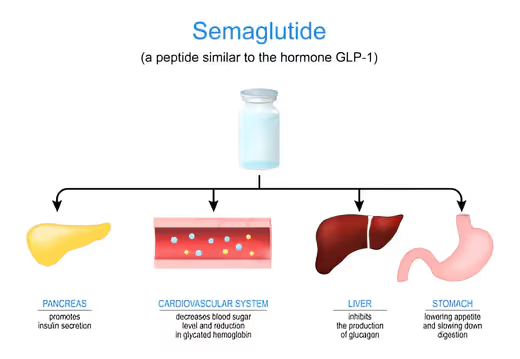
- It copies a natural gut hormone. Semaglutide shares 94% of its structure with human GLP-1, a hormone your intestines release after you eat.
- It acts on the parts of the brain that control appetite. Animal studies show it reaches brain areas involved in food intake. People on semaglutide eat fewer calories because they feel less hungry.
- It slows how fast your stomach empties. Food stays in your stomach longer, so you feel full for longer after a meal.
- It has a half-life of about one week. This is why it is a once-weekly shot. The Wegovy® label says it stays in the blood for about five to seven weeks after the last 2.4 mg or 7.2 mg dose.
If you are weighing other drugs against semaglutide, the Ivy Rx guides on semaglutide vs tirzepatide, phentermine vs semaglutide, and Contrave® vs semaglutide cover those comparisons.
Weight Loss Results: What the Clinical Data Shows
In the 68-week Wegovy® trial described on the label, 1,961 adults took Wegovy® (semaglutide 2.4 mg) or a placebo. People on Wegovy® lost 14.9% of their body weight on average. In a study, tesofensine produced 9.2% weight loss at 0.5 mg and 10.6% at 1.0 mg over 24 weeks in 203 adults.
These numbers are hard to compare directly because the trials had different lengths and sizes. No trial has tested the two drugs against each other. The Wegovy® label reports that 83.5% of people on the injection lost at least 5% of their weight, and 47.9% lost at least 15%
Saniona reports that a later Phase 3 study in Mexico with 372 people showed about 10% average weight loss at 24 weeks. These results come from a company press release, so they have not gone through the same public review as a journal paper.
For what semaglutide results look like over time, see how fast semaglutide works and semaglutide before and after.
Side Effects Comparison
Both drugs cause stomach side effects, but tesofensine also acts on the heart and brain. Semaglutide's side effects are mostly in the gut and are most common while the dose is being raised.
Tesofensine
- Common side effects: The main trial reported dry mouth, nausea, constipation, hard stools, diarrhea, and trouble sleeping.
- Heart rate: Heart rate rose by 7.4 beats per minute at the 0.5 mg dose.
- Blood pressure: A letter in The Lancet pointed out that blood pressure did not fall as expected with weight loss. Blood pressure was 1 mmHg higher for the top number and 2 to 3 mmHg higher for the bottom number compared with the control group.
The trial’s authors later acknowledged that side effects from all trial sites were underreported in the published paper. This means the true side effect rates for tesofensine are uncertain.
Semaglutide
- Stomach side effects: In the Wegovy® trials, 44% of people had nausea, 30% had diarrhea, 24% had vomiting, and 24% had constipation. These were most common while the dose was being raised.
- Stopping treatment: About 6.8% of people stopped Wegovy® because of side effects, compared with 3.2% on placebo.
- Heart rate: Resting heart rate rose by 1 to 4 beats per minute on average.
- Other effects: Gallstones occurred in 1.6% of people on Wegovy® and 0.7% on placebo. Hair loss was reported by 3%.
Availability and Cost Comparison
As of October 2026, you can get semaglutide with a prescription, while tesofensine is not approved in the U.S. or anywhere else that we could confirm. In November 2024, Mexico’s drug regulator withheld approval of tesofensine. Saniona’s partner, Medix, resubmitted the application in February 2025, and we have not found a decision on it since then.
A licensed clinician can review your health history and explain which options you are eligible for. Compounded GLP-1 formulations are not FDA-approved, so confirm the dispensing pharmacy, dosing instructions, and follow-up support before you pay. Our guide to semaglutide without insurance covers how to pay for treatment.

How Tesofensine and Semaglutide Are Administered
Tesofensine was tested as a daily pill, while semaglutide is usually a weekly shot under the skin. The chart below shows the doses used in trials and on the Wegovy® label.
Tesofensine
No approved dose of tesofensine exists, and no product sold in the U.S. has passed FDA review. The doses above are only the amounts tested in research. They are not a guide for personal use.
- Do take part only through a registered clinical trial if you want to try tesofensine.
- Do tell every clinician if you have taken tesofensine, because it stays in your body for weeks.
- Don't buy tesofensine online, since there is no way to check what the product contains.
- Don't combine it with other weight loss drugs or stimulants.
Semaglutide
Semaglutide injections are subcutaneous, meaning they go into the fatty tissue under the skin, not into muscle. You inject once a week on the same day into your belly, thigh, or upper arm. A clinician or pharmacy team should show you how before your first dose.
- Do raise your dose every four weeks only as your clinician directs.
- Do take a missed dose as soon as you can if your next dose is more than two days away.
- Don't take a missed dose if your next dose is less than two days away. Wait for your usual day.
- Don't change your dose without clinician guidance.
For step-by-step help, see how to inject semaglutide and the full semaglutide dosage chart.
Safety Considerations Before Starting Tesofensine & Semaglutide
Semaglutide's risks are well studied and listed on an FDA label. Tesofensine's risks are less certain because its main trial data has been questioned. Below are the most important points for each drug.
Tesofensine
1. Heart Rate and Blood Pressure
Tesofensine raised heart rate by 7.4 beats per minute at 0.5 mg in its main trial. Blood pressure also stayed higher than expected for the amount of weight people lost.
Saniona later developed Tesomet™, which combines tesofensine with metoprolol, a heart rate medication. People with heart disease, high blood pressure, or heart rhythm problems face added risk from any drug that raises heart rate.
2. Questions About the Trial Data
The Lancet placed an Expression of Concern on the main tesofensine trial in 2013. An inspection by the Danish Health and Medicines Authority found that some side effects were not recorded, and the trial’s authors later acknowledged under-reporting across all sites.
This does not prove the drug is unsafe, but it means the published safety numbers may not give a full picture.
3. No Product Quality Checks
Tesofensine has no FDA approval, so no product sold in the U.S. has been checked by the FDA for content, strength, or purity. A product sold online could contain the wrong amount of drug or a different substance.
Tesofensine also lasts about 10 days in the body. If a problem starts, the drug does not leave your system quickly after you stop.
Semaglutide
1. Thyroid Tumor Warning
The Wegovy® label has a boxed warning about thyroid C-cell tumors seen in rodents. It is unknown whether this happens in people.
You should not use semaglutide if you or a family member has had medullary thyroid cancer or if you have MEN 2. Tell your clinician right away about a neck lump, trouble swallowing, or ongoing hoarseness.
2. Stomach Side Effects and Kidney Strain
Severe stomach side effects affected 4.1% of people on Wegovy® injections, compared with 0.9% on placebo. Vomiting and diarrhea can cause dehydration, and dehydration has led to kidney injury in some people.
Drink enough fluids, and call your clinician if you cannot keep liquids down. The label does not recommend Wegovy® for people with severe gastroparesis.
3. Gallbladder and Pancreas Problems
Gallstones were more common on Wegovy® than on placebo, at 1.6% compared with 0.7%. Acute pancreatitis has also been reported with GLP-1 drugs.
Get medical care for severe belly pain that does not go away, with or without vomiting. The Ivy Rx safety information page lists more warning signs.
Who Might Choose Tesofensine or Semaglutide?
- Adults with obesity: Wegovy® is approved for adults with a BMI of 30 or higher. A clinician can confirm whether you qualify.
- Adults with overweight and a health condition: Wegovy® is approved for a BMI of 27 or higher with at least one weight-related condition, such as high blood pressure.
- Adults with heart disease and excess weight: Wegovy® is approved to lower the risk of heart attack, stroke, and heart-related death in this group.
- Research volunteers: Tesofensine should only be used inside a registered clinical trial with medical oversight.
- People who have plateaued on semaglutide: A clinician may discuss other approved options. The guide on switching from semaglutide to tirzepatide explains how that works.
Who Shouldn't Use Tesofensine or Semaglutide?
- People with a thyroid cancer history: Anyone with a personal or family history of medullary thyroid cancer, or MEN 2, should not use semaglutide.
- People who are pregnant or planning pregnancy: The Wegovy® label says to stop at least two months before a planned pregnancy.
- People with severe gastroparesis: Semaglutide slows the stomach, so it is not recommended for this condition.
- People with heart rhythm problems or uncontrolled blood pressure: Tesofensine raised heart rate in trials, which adds risk for this group.
- Anyone outside a clinical trial: Tesofensine has no approved dose and no FDA-checked product.
Can Tesofensine and Semaglutide Be Used Together?
No, you should not combine them. No published study has tested tesofensine and semaglutide together, and both raise resting heart rate. Tesofensine is also not approved, so no clinician in the U.S. can prescribe it for routine care.
Any change to a weight loss plan should be guided by a licensed clinician, who can adjust doses safely. Insurance does not cover unapproved drugs such as tesofensine. Coverage for Wegovy® varies by plan, and Ivy Rx Compounded GLP-1 Injections do not require insurance.
The Bottom Line
If you want medical weight loss treatment now, semaglutide is available as FDA-approved Wegovy®, which has long-term trial data. Tesofensine may return as an option if it passes larger trials and gains approval.
Until then, tesofensine belongs in research settings. If semaglutide is not working for you, the guide on why semaglutide is not working covers the most common fixes.
FAQs
Is tesofensine stronger than semaglutide for weight loss?
No, the evidence does not show that. Tesofensine produced up to 10.6% weight loss over 24 weeks in one trial. Wegovy® (semaglutide) produced 14.9% over 68 weeks in a much larger trial. No study has compared them directly, and the main tesofensine trial carries an Expression of Concern.
Can you get tesofensine in the United States?
No, not legally for routine care. Tesofensine is not FDA-approved, and no U.S. pharmacy can dispense it for weight loss. The only legal way to take it is through a registered clinical trial. Products sold online have not been checked by the FDA.
What is the main difference between tesofensine and semaglutide?
Tesofensine changes levels of three brain chemicals to reduce appetite. Semaglutide copies GLP-1, a gut hormone that signals fullness and slows the stomach. Semaglutide is FDA-approved for weight loss as Wegovy® and is usually taken weekly. Tesofensine is investigational and was tested as a daily pill.
Is tesofensine safe?
We do not know for certain. The main trial reported dry mouth, trouble sleeping, and a higher heart rate. The trial’s authors later acknowledged that side effects were under-reported in the published paper, so larger independent studies are needed.
Which causes fewer side effects, tesofensine or semaglutide?
It depends on the type of side effect. Semaglutide causes more stomach side effects, such as nausea and diarrhea. Tesofensine raised heart rate by 7.4 beats per minute at one dose. Tesofensine's true side effect rates remain uncertain.
Disclaimer: Research findings, regulatory details, prescribing-label information, safety guidance, product availability, pricing, and treatment expectations in this article were reviewed in September 2026 and may change. This article is for informational purposes only and does not replace medical advice. Always confirm current product details, eligibility, dosing instructions, pharmacy or supplement sourcing, and program terms with a licensed clinician before starting treatment.


Ivy RX patients
Members of Ivy RX branded medications were paid for their testimonials.
- https://www.accessdata.fda.gov/drugsatfda_docs/label/2026/215256s025lbl.pdf
- https://pubmed.ncbi.nlm.nih.gov/18950853/
- https://www.thelancet.com/journals/lancet/article/PIIS0140-6736(13)61563-9/fulltext
- https://www.thelancet.com/journals/lancet/article/PIIS0140-6736(09)60432-3/fulltext
- https://pmc.ncbi.nlm.nih.gov/articles/PMC2199391
- https://saniona.com/pipeline/tesofensine/
- https://www.inderes.dk/en/releases/mexican-application-for-tesofensine-not-yet-approved
- https://www.inderes.fi/en/releases/medix-has-resubmitted-tesofensine-application-to-cofepris
- https://clinicaltrials.gov/study/NCT03286829
- https://doi.org/10.1056/NEJMoa2500969
Related
Resources
Semaglutide vs Tirzepatide for Weight Loss: Pros, Cons, and Side Effects
Semaglutide vs Tirzepatide: Which one offers the best weight loss results? Explore key differences in side effects, cost, and effectiveness.

Retatrutide vs Semaglutide Differences, Cost & Benefits
Compare retatrutide vs semaglutide, including how they work, weight loss results, side effects, approval status, and key treatment differences

Semaglutide Compounding Pharmacy Cost: 2026 Price Guide
Wondering about compounded semaglutide costs? Get exact pricing, insurance coverage details, and money-saving tips in our complete guide.