





.avif)


Article Outline
Take your supplements with


Ozempic Dosing: Schedule, Key Factors, & Side Effects (2026)
The difference between a smooth Ozempic experience and weeks of nausea often comes down to dosing — and how your body responds.
Many patients feel unsure about when to increase their dose, what each pen actually delivers, and what happens if they miss a dose.
If that sounds familiar, you’re in the right place.
This guide walks through the full Ozempic dosage schedule, clear injection steps, and the side effects linked specifically to dosing errors.
What Is the Typical Ozempic Dosage Schedule?
Ozempic follows a "start low, go slow" escalation. You begin with 0.25 mg once weekly. This starting dose is not meant to control blood sugar or curb appetite. It helps your digestive system adjust.
After four weeks, your doctor increases the dose to 0.5 mg, which is the first therapeutic level. If more control is needed, the dose may increase every four weeks up to a maximum of 2 mg.
Not everyone needs the highest dose. Many people achieve good blood sugar control at 0.5 mg to 1 mg. Your doctor will decide the right maintenance dose based on how your body responds.
See what patients typically experience in the first weeks in our 6-week plan Ozempic weight loss results guide.
How Many Shots Can You Get From an Ozempic Pen?
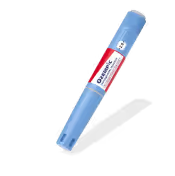
There are three pen sizes, each lasting about one month at the corresponding maintenance dose:
The 2 mg starter pen is used for both the 0.25 mg starting phase and the 0.5 mg maintenance phase.
Once you use a pen for the first time, it expires after 56 days. Discard it after that, even if the medication remains inside.
How to Take Your Ozempic Dose: Step by Step
Step 1: Attach a New Needle
Remove the pen cap. Confirm the solution is clear and colorless. Peel the tab off a new NovoFine needle, push it onto the pen tip, and twist to secure. Never reuse or share needles.
Step 2: Prime the Pen (First Use Only)
Turn the dose selector to the flow check symbol, point the needle up, and press the dose button until the counter shows "0." A drop of liquid should appear at the tip. If not, repeat up to 6 times.
Step 3: Select Your Dose
Turn the dose selector to your prescribed amount (0.25, 0.5, 1.0, or 2.0 mg). If the counter can't reach your dose and there's not enough medication left, start a new pen.
Step 4: Inject, Rotate, and Store
Inject Ozepic under your skin (subcutaneously) into the fat layer of the abdomen, thigh, or upper arm. Insert the needle, press the dose button fully, and count to 6 before withdrawing the needle.
Rotate injection sites weekly to prevent irritation and scar tissue. After injecting, remove and dispose of the needle in a sharps container. Store the pen at room temperature (59–86°F) or refrigerated. Unused pens stay refrigerated until first use.
Key Factors That Affect Your Ozempic Dosing
Ozempic Slows Absorption of Oral Medications
Semaglutide delays gastric emptying, which can change how quickly your body absorbs pills — including blood pressure medications, thyroid drugs, and oral contraceptives.
Your doctor may adjust the timing of any medication you take by mouth. If you're exploring whether Medicaid covers Ozempic, your insurance status can also affect which medications your plan covers.
Results Build Gradually
The 0.25 mg and 0.5 mg doses are the beginning, not the finish line. Meaningful appetite suppression and improvements in blood sugar build over months of consistent use. This gradual transformation is often what fuels the public fascination with celebrities on Ozempic and their visible weight loss results.
For strategies to maximize early progress, see how to lose weight fast on Ozempic.
Ozempic Dosing Side Effects: What Happens When Dosing Goes Wrong
Here are the side effects that may occur if you miss doses, take too much, or increase your dose too quickly.
Blood Sugar Spikes From Missed Doses
Semaglutide's 7-day half-life means one missed dose won't cause a crisis.
But skipping multiple doses or going 10–14 days without an injection can cause rising blood sugar — particularly dangerous with type 2 diabetes.
Rebound Nausea When Restarting
If you've been off Ozempic for more than 1–2 weeks, restarting at your previous dose can trigger GI symptoms as if you're starting from scratch.
Most doctors recommend restarting at half your previous dose and titrating back up.
Severe GI Symptoms From Escalating Too Fast
In clinical trials, 15–20% of patients experienced nausea during dose increases, and most treatment discontinuations happened during escalation.
Skipping the titration phase or jumping dose levels multiplies this risk. Follow the 4-week intervals exactly.
Hypoglycemia From Overdosing
Ozempic on its own rarely causes low blood sugar.
But taking more than prescribed, or injecting two doses too close together, can raise the risk. The risk is higher if you also use insulin or sulfonylureas.
Signs of low blood sugar include dizziness, confusion, sweating, and shakiness.
For more on Ozempic's benefits and side effects at standard doses, and on strategies for a weight-loss plateau on Ozempic, see our dedicated guides.
These are ONLY the possible side effects of incorrect or missed dosing. For general side effects, speak with your doctor.
Alternatives to Ozempic
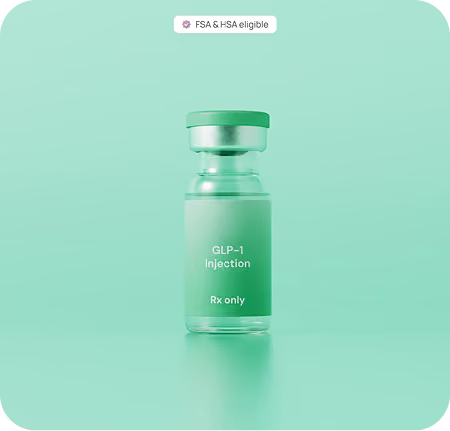
Personalized GLP-1 Injections
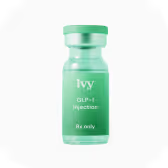
Personalized GLP-1s contain the same active ingredient as semaglutide offers at an accessible price.
Ivy Rx’s personalized GLP-1 injections start at $175 per month and include physician-guided dosing tailored to your needs.
If you are specifically interested in the brand-name medication, you can learn more about qualifying for an Ozempic prescription through a telehealth consultation.
Mounjaro (Tirzepatide)
Mounjaro targets both GLP-1 and GIP receptors. Clinical trials showed up to 22.5% body weight loss, outperforming semaglutide but more likely to cause side effects.
You can read our full breakdown of Mounjaro vs Ozempic to see which might be better for your goals.
Saxenda (Liraglutide)
Saxenda offers modest results of about 8% weight loss, but is now available as a generic, making it one of the most affordable GLP-1 options.
See the difference between Saxenda vs. Ozempic.
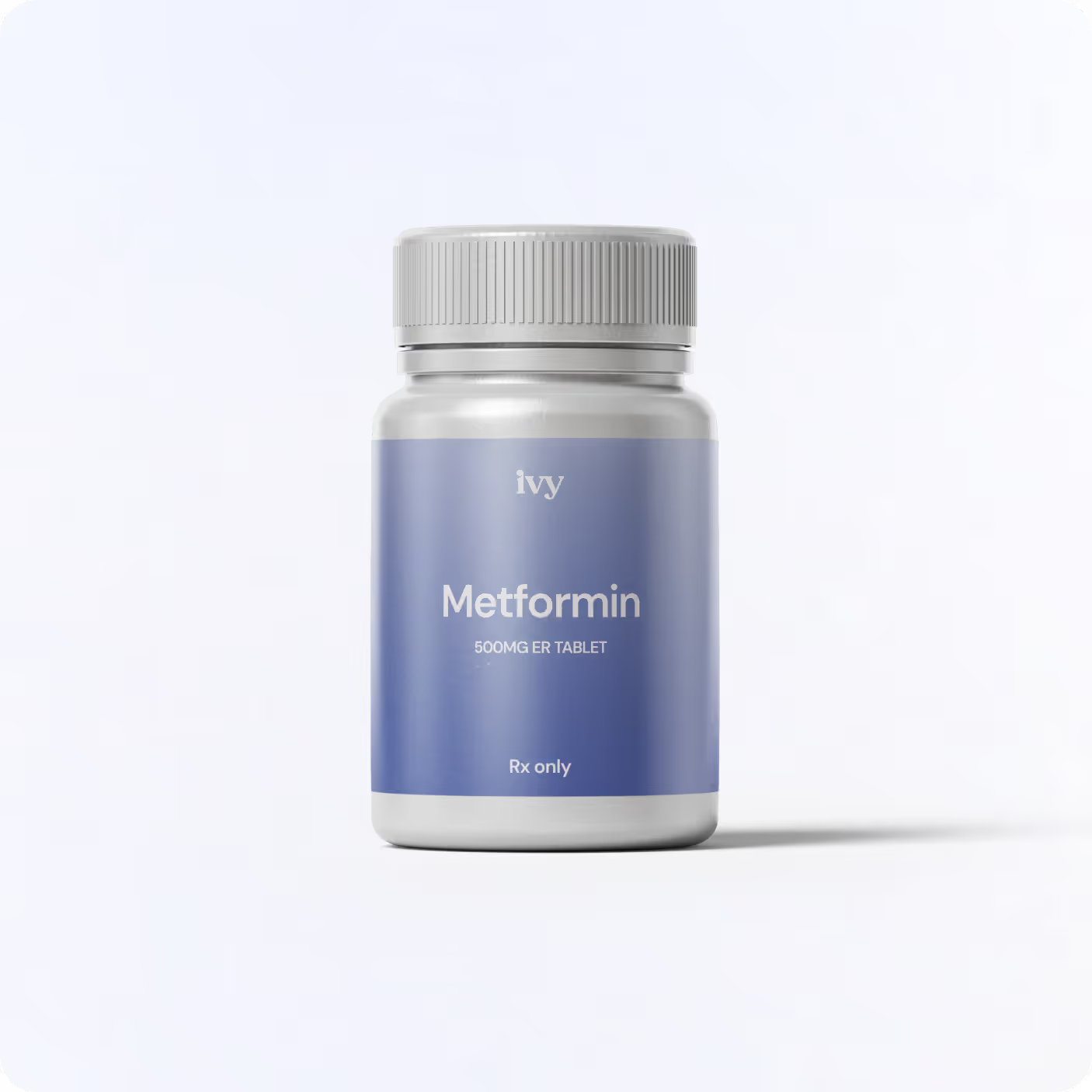
Metformin
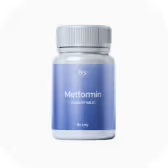
Metformin is an oral medication that produces modest 2.5% weight loss, is well-tolerated, and is inexpensive.
Read our comparison post between Metformin vs. Ozempic to identify the best choice for you.
Wegovy (Semaglutide 2.4 mg)
Same drug as Ozempic at a higher max dose, FDA-approved specifically for weight management. An oral tablet version was launched in January 2026.
When to Speak to a Doctor While Taking Ozempic
Call your provider if you have severe abdominal pain that does not go away, especially if it spreads to your back. This may be a symptom of pancreatitis.
Seek medical care if you have persistent vomiting or diarrhea that causes dehydration, notice vision changes after a dose increase, or develop signs of low blood sugar such as confusion, shakiness, or sweating.
Do not adjust your dose on your own. If side effects become unmanageable, your medical provider may slow the dose increase rather than stopping treatment.
Ivy Rx is not a medical practice and does not provide medical advice. Always use these medications under the supervision of a qualified healthcare professional.
Start Your Personalized Weight Loss Journey With Ivy Rx
Ivy Rx connects you with licensed physicians who determine the right dose, monitor your response, and adjust treatment — 100% online.
Explore Ozempic or Ivy Rx's Personalized GLP-1 Injections starting at $175 per month. No insurance required. Medication delivered to your door.


Ivy RX patients
Members of Ivy RX branded medications were paid for their testimonials.
- https://www.mayoclinic.org/drugs-supplements/semaglutide-subcutaneous-route/description/drg-20406730. Accessed 16th February. 2026.
- https://www.nejm.org/doi/full/10.1056/NEJMoa2032183. Accessed 16th February. 2026.
- Aronne LJ, Horn DB, le Roux CW, Ho W, Falcon BL, Gomez Valderas E, Das S, Lee CJ, Glass LC, Senyucel C, Dunn JP; SURMOUNT-5 Trial Investigators. Tirzepatide as Compared with Semaglutide for the Treatment of Obesity. N Engl J Med. 2025 Jul 3;393(1):26-36. https://pubmed.ncbi.nlm.nih.gov/40353578/. DOI: 10.1056/NEJMoa2416394.
- Pi-Sunyer X, Astrup A, Fujioka K, Greenway F, Halpern A, Krempf M, Lau DC, le Roux CW, Violante Ortiz R, Jensen CB, Wilding JP; SCALE Obesity and Prediabetes NN8022-1839 Study Group. A Randomized, Controlled Trial of 3.0 mg of Liraglutide in Weight Management. N Engl J Med. 2015 Jul 2;373(1):11-22. https://pubmed.ncbi.nlm.nih.gov/26132939/. DOI: 10.1056/NEJMoa1411892.
- https://www.fda.gov/news-events/press-announcements/fda-approves-first-treatment-reduce-risk-serious-heart-problems-specifically-adults-obesity-or. Accessed 16th February. 2026.
- Knowler WC, Barrett-Connor E, Fowler SE, Hamman RF, Lachin JM, Walker EA, Nathan DM; Diabetes Prevention Program Research Group. Reduction in the incidence of type 2 diabetes with lifestyle intervention or metformin. N Engl J Med. 2002 Feb 7;346(6):393-403. https://pubmed.ncbi.nlm.nih.gov/11832527/. DOI: 10.1056/NEJMoa012512.
Related
Resources

Complete Guide to Semaglutide Dosage For Weight Loss: Dosage Schedule & Adjustments (+Chart)
Ensure proper semaglutide usage with our dosage chart, adjustment tips, and helpful advice on what to do when you miss a dose.

What Does Semaglutide Do To Your Body?
Semaglutide is a drug similar to the endogenous GLP-1 peptide secreted from the intestinal L-cells. GLP-1 is released from the intestine and exh...
.avif)
How to Inject Semaglutide: A Step-by-Step Administration Guide
Step-by-step process of administering Semaglutide injections with our easy-to-follow guide. Get tips on dosage, injection sites, and common mistakes to avoid.