







.avif)




Article Outline
Start your personalized GLP-1 program


Saxenda vs Mounjaro Costs & Which Is Better for Weight Loss
Saxenda® vs. Mounjaro® comes down to a clear gap in the trial data and a clear gap in what each drug is approved to treat.
Mounjaro® produced larger average weight loss and is injected once a week. Saxenda® is injected once a day and holds the weight-management approval. In its main weight-management trial, Saxenda® produced an average 7.4% weight loss over 56 weeks. Mounjaro® at 15 mg produced an average loss of 11.2 kg over 40 weeks in adults with type 2 diabetes.
This guide compares the two on results, side effects, dosing, safety, and cost.
Saxenda® vs Mounjaro®: At a Glance
What Is Saxenda®?
Saxenda® is a once-daily injection containing liraglutide, a glucagon-like peptide-1 (GLP-1) receptor agonist. The Food and Drug Administration (FDA) approved it for long-term weight management alongside a reduced-calorie diet and more physical activity.
At a glance:
- Active ingredient is liraglutide
- Approved for adults with obesity and for adults with overweight who have at least one weight-related condition
- Also approved for children aged 12 and older who weigh more than 60 kg, per the 2020 FDA approval
- Injected under the skin of the abdomen, thigh, or upper arm, once every day
- Novo Nordisk has said its last shipments to wholesalers will take place in late January 2027
The discontinuation is a portfolio decision by the manufacturer and is not related to safety or quality. Teva launched a generic liraglutide injection for weight management in August 2025, so the active ingredient remains available.
What Is Mounjaro®?
Mounjaro® is a once-weekly injection containing tirzepatide. It activates two gut hormone receptors, the GLP-1 receptor and the glucose-dependent insulinotropic polypeptide (GIP) receptor.
At a glance:
- Active ingredient is tirzepatide
- Approved for blood sugar control in adults and children aged 10 and older with type 2 diabetes
- Weight reduction was measured as a secondary outcome in its diabetes trials, and it is not an approved use
- Injected under the skin of the abdomen or thigh, once every week
- Maximum adult dose is 15 mg once weekly
If you want a wider view of how these two active ingredients behave, our comparison of liraglutide vs tirzepatide covers the mechanism differences in more depth.
Similarities Between Saxenda® and Mounjaro®
The two medicines share more characteristics than most comparisons suggest. Both act on the GLP-1 pathway, both are self-injected under the skin, and both carry the same boxed warning about thyroid tumors in rodents.
Both also slow how quickly the stomach empties, so both can affect how well tablets taken by mouth are absorbed.
Key Differences That Actually Matter
Four differences change the day-to-day experience: how often you inject, what the medicine is approved to treat, how much weight people lost in trials, and how long the drug stays in the body.
- Injection frequency. Saxenda® is daily. Mounjaro® is weekly, which means 52 injections a year instead of 365.
- Approved use. Saxenda® is approved for weight management. Mounjaro® is approved for type 2 diabetes.
- Receptor targets. Saxenda® acts on one receptor. Mounjaro® acts on two.
- Time in the body. Liraglutide has a half-life of about 13 hours. Tirzepatide has a half-life of about 5 days, which is why how long Mounjaro® stays in your system matters when you plan a switch.
Weight Lost Results Compared
No head-to-head trial has compared Saxenda® against Mounjaro®. The figures below come from separate trials in different populations, so treat the gap as an indication rather than a measured difference.
Saxenda® in adults without type 2 diabetes: In the 56-week SCALE Obesity and Prediabetes trial of 3,731 adults, Saxenda® produced an average weight loss of 7.4% compared with 3.0% for placebo. Around 62.3% of participants lost at least 5% of their starting weight, and 33.9% lost more than 10%.
Saxenda® in adults with type 2 diabetes: In a separate 56-week trial, average weight loss was 5.4% compared with 1.7% for placebo. Weight loss is usually smaller in people with type 2 diabetes across this whole drug class.
Mounjaro® in adults with type 2 diabetes: In the 40-week SURPASS-2 trial, average weight loss was 7.6 kg at 5 mg, 9.3 kg at 10 mg, and 11.2 kg at 15 mg. Average starting weight was around 93 kg, so the 15 mg result works out to roughly 12% of body weight.
What this means for you: The larger trial results with Mounjaro® come from diabetes studies where weight loss was a secondary measure. Your own result depends on your starting weight, your dose, how well you tolerate the medicine, and how long you stay on it.
Side Effects Comparison
Stomach and bowel side effects are the most common problem with both medicines, and both label rates come from placebo-controlled trials. The trial populations are different, so the percentages below should not be read as a direct comparison.
Saxenda®
In adult trials, nausea was reported by 39.3% of people taking Saxenda® compared with 13.8% on placebo, according to the FDA label. Diarrhea affected 20.9%, constipation 19.4%, and vomiting 15.7%.
Injection site reactions were reported by 13.9% of people on Saxenda® compared with 10.5% on placebo. Headache, tiredness, dizziness, and stomach pain also appeared in more than 5% of participants.
About 9.8% of people stopped Saxenda® because of a side effect, compared with 4.3% on placebo. Nausea was the most common reason for stopping. Most stomach symptoms appeared early and eased as treatment continued.
Mounjaro®
In placebo-controlled trials, nausea was reported by 18% of people at the 15 mg dose compared with 4% on placebo, according to the FDA label. Diarrhea affected 17%, decreased appetite 11%, and vomiting 9%.
Constipation, indigestion, and stomach pain each affected 5% to 7% of participants at the 15 mg dose. Injection site reactions were less common than with Saxenda®, at 3.2% compared with 0.4% on placebo.
Stomach side effects led 6.6% of people at 15 mg to stop treatment, compared with 0.4% on placebo. Most reports of nausea, vomiting, and diarrhea happened while the dose was being increased and became less frequent over time.
Our guide on getting rid of nausea from semaglutide covers practical steps that apply across this drug class.
Cost Comparison
Both medicines are expensive without insurance coverage, and neither is reliably covered when the reason for the prescription is weight loss.
Insurance is the largest single factor in what you pay. Plans cover Mounjaro® more readily than Saxenda® because type 2 diabetes is its approved use, and many plans exclude weight-loss medicines entirely. A licensed clinician can review your eligibility for manufacturer savings programs and discuss alternative formulations that fit your situation.
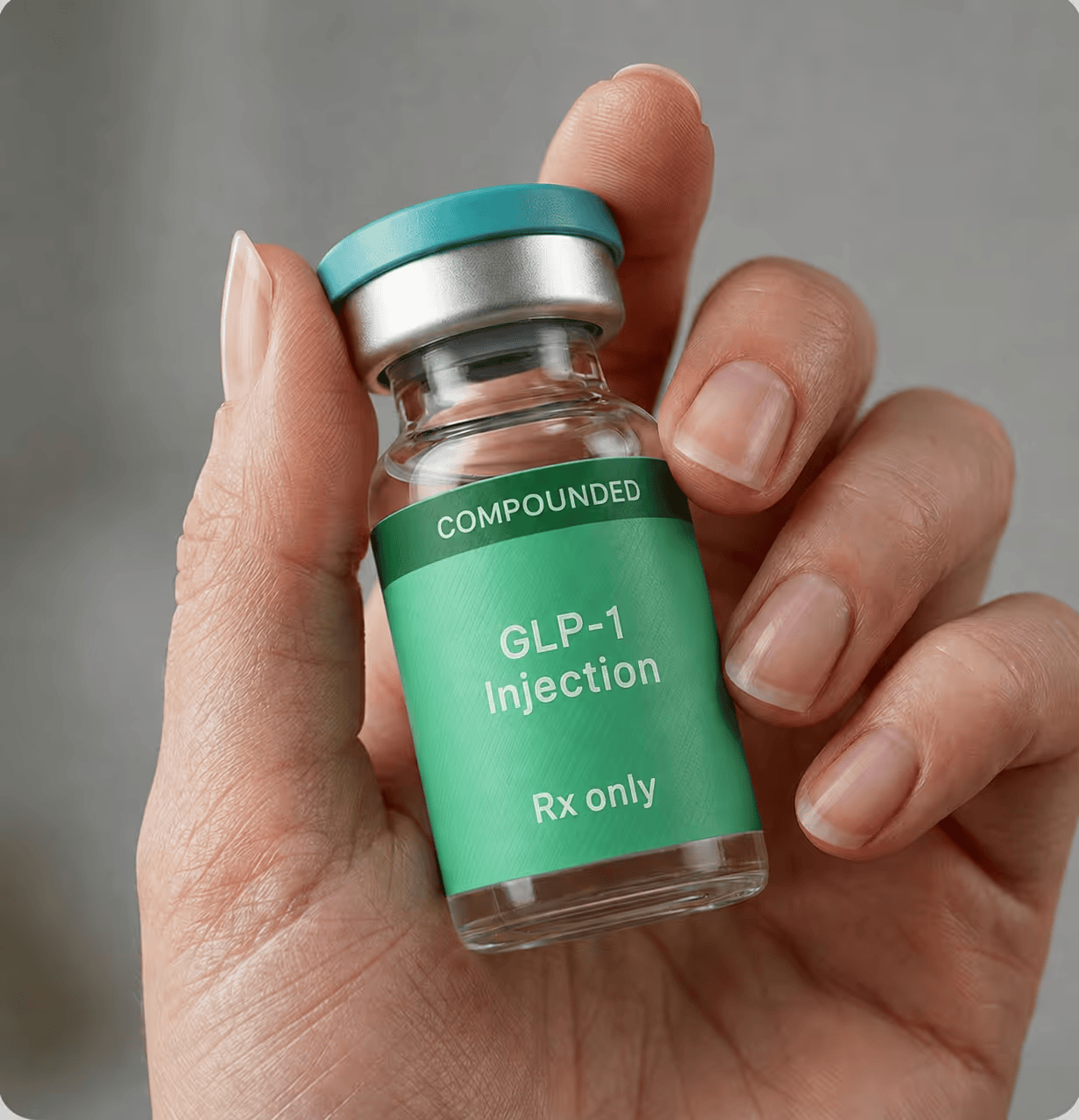
At Ivy Rx, we price our Personalized GLP-1 Injections from $97 per month for four doses per month. Our Rate Lock Guarantee means your price stays the same at every dose, so raising your dose does not raise your bill. Longer plans are billed upfront rather than as rolling monthly charges, and no insurance is required.
Transparent pricing from $97 per month, made in the USA, with a Rate Lock Guarantee that keeps your price steady at every dose. Licensed clinician review, no lab work required, and free temperature-controlled delivery. Explore Personalized GLP-1 Injections.
For a wider view of what people pay, see our guides to tirzepatide cost, weight loss injections cost, and how to get a GLP-1 without insurance.
How Saxenda® and Mounjaro® Are Administered
Both medicines start low and increase in steps. The schedules differ in speed and in how often you inject.
Saxenda®
Inject Saxenda® once a day at any time, with or without food. Rotate the site within the same area each day to lower the risk of lumps under the skin. Store unused pens in the refrigerator, and throw away a pen 30 days after first use even if medicine remains.
Do:
- Take your next dose as normal the following day if you miss one
- Contact your clinician if you miss three or more days, because you will need to restart at 0.6 mg
- Ask your clinician to review progress at 16 weeks, since the label advises stopping if you have not lost at least 4% of your starting weight
Don’t:
- Take an extra dose to make up for a missed one
- Inject into muscle or a vein
- Share a pen with anyone, even with a new needle
Mounjaro®
Inject Mounjaro® once a week on the same day, at any time, with or without food. You can change your injection day as long as at least 72 hours separate two doses. Store pens in the refrigerator or at room temperature for up to 21 days.
Do:
- Take a missed dose as soon as possible within 4 days
- Skip the missed dose and return to your schedule if more than 4 days have passed
- Rotate injection sites with every weekly dose
Don’t:
- Take two doses within 3 days of each other
- Mix Mounjaro® and insulin in the same syringe
- Inject where the skin is bruised, tender, scarred, or hard
Safety Considerations Before Starting Saxenda & Mounjaro
Both medicines carry serious warnings that a clinician should review against your medical history before you start. The considerations below are collected from the current FDA labels.
Saxenda®
1. Thyroid C-Cell Tumor Warning
Liraglutide caused thyroid C-cell tumors in rats and mice at doses relevant to human treatment. It is unknown whether Saxenda® causes these tumors in people.
Saxenda® must not be used by anyone with a personal or family history of medullary thyroid carcinoma (MTC) or by anyone with Multiple Endocrine Neoplasia syndrome type 2 (MEN 2). Tell your clinician about any lump in your neck, hoarseness that lasts, or trouble swallowing or breathing.
2. Pancreatitis and Gallbladder Disease
Acute pancreatitis has been reported with GLP-1 medicines, including Saxenda®. Stop the medicine and contact your clinician if you develop severe stomach pain that does not go away. In adult trials, gallstones were reported by 2.2% of people on Saxenda® compared with 0.8% on placebo, and most of those cases required gallbladder surgery.
3. Heart Rate, Mood, and the 16-Week Review
Saxenda® raised resting heart rate by an average of 2 to 3 beats per minute in trials, so your clinician should check it at regular visits.
The label also advises monitoring for new or worsening depression and mood changes and contacting your clinician promptly if they appear. Your clinician should review your weight at 16 weeks and consider stopping treatment if you have lost less than 4%.
Mounjaro®
1. Thyroid C-Cell Tumor Warning
Tirzepatide caused thyroid C-cell tumors in rats, and the relevance to humans is unknown. The same contraindications apply as with Saxenda®, covering a personal or family history of MTC and a diagnosis of MEN 2. Report neck lumps, persistent hoarseness, or difficulty swallowing to your clinician.
2. Low Blood Sugar and Eye Changes
Taking Mounjaro® alongside insulin or a sulfonylurea raises the risk of low blood sugar, so your clinician may lower those doses first. Mounjaro® has not been studied in people with advanced diabetic eye disease.
If you have a history of diabetic retinopathy, your clinician should monitor your eyes, because rapid improvement in blood sugar can temporarily worsen it.
3. Oral Birth Control May Work Less Well
Mounjaro® slows stomach emptying, which can reduce how well birth control pills are absorbed. The label advises switching to a non-oral method, or adding a barrier method, for 4 weeks after you start Mounjaro® and for 4 weeks after every dose increase.
This effect is strongest after the first dose and eases with later doses. Ivy Rx publishes full warnings for every treatment we offer on our safety information page.
Who Might Choose Saxenda® or Mounjaro®?
- The person who needs an approved weight-loss medicine: Saxenda® holds the weight-management approval, which can make prior authorization easier when a plan covers obesity treatment.
- The teenager aged 12 to 17: Saxenda® is approved for children aged 12 and older who weigh more than 60 kg. Mounjaro® is approved from age 10, but only for type 2 diabetes.
- The adult with type 2 diabetes: Mounjaro® treats blood sugar and reduces weight in the same weekly injection, and coverage is usually more reliable with a diabetes diagnosis.
- The person who wants fewer injections: Mounjaro® requires 52 injections a year. Saxenda® requires one every day.
- The person who did not respond to a single-receptor medicine: Mounjaro® acts on two receptors, which may help when a GLP-1 medicine alone has stalled. Our guide to Mounjaro alternatives covers the other options a clinician may raise.
Who Shouldn't Use Saxenda® or Mounjaro®?
- Anyone with a thyroid cancer history: Both medicines are contraindicated with a personal or family history of MTC and with MEN 2.
- Anyone already taking another GLP-1 medicine: Saxenda® should not be combined with any other GLP-1 receptor agonist, and doubling this activity adds risk without adding benefit.
- People who are pregnant or planning pregnancy: Both labels advise stopping treatment once pregnancy is recognized, and weight loss offers no benefit during pregnancy.
- People with severe gastroparesis: Neither medicine is recommended when stomach emptying is already badly delayed.
- Anyone with a serious allergic reaction to the active ingredient: Serious reactions, including anaphylaxis and swelling, have been reported with both.
Can Saxenda® and Mounjaro® Be Used Together?
No. The Saxenda® label states plainly that it should not be used with any other GLP-1 receptor agonist, and Mounjaro® acts on the GLP-1 receptor. Taking both raises the risk of severe nausea, vomiting, dehydration, and kidney problems without evidence of better results.
Switching between them is a different matter, and it is common. A qualified clinician handles the switch by setting a washout period, choosing a starting dose on the new medicine, and adjusting any insulin or sulfonylurea you take. Liraglutide clears the body in about two to three days, while tirzepatide takes four to five weeks, so the direction of the switch changes the timing.
Insurance adds a second layer. A plan that covers Saxenda® for weight management may not cover Mounjaro® without a type 2 diabetes diagnosis, and prior authorization usually has to be filed again.
At Ivy Rx, our licensed clinicians manage dose titration and follow-up directly, so you are not left to work out timing on your own. Our comparison of semaglutide alternatives covers what a switch involves in more detail.
Get A Tailored Weight Loss Plan from Ivy RX
If list prices or coverage rules are the barrier, a clinician-reviewed plan is worth comparing before you give up on treatment.
Ivy Rx offers Personalized GLP-1 Injections made in the USA, prepared in a state-licensed pharmacy, and independently verified in FDA-registered labs for potency, sterility, endotoxins, and pH.
Treatment starts with an online health questionnaire and same-day clinician review. If you are approved, your medication ships free in temperature-controlled packaging, with unlimited messaging support included.
Transparent pricing from $97 per month, with a Rate Lock Guarantee so your price never changes as your dose goes up. No insurance and no lab work required. Start your Personalized GLP-1 Injections assessment.
FAQs
Is Mounjaro® More Effective Than Saxenda®?
Usually, yes. Mounjaro® produced larger average weight loss in its trials than Saxenda® did in its own, though no head-to-head study has compared them directly.
Can You Switch Directly from Saxenda® to Mounjaro®?
Sometimes. Liraglutide clears the body in a few days, so a clinician can often start Mounjaro® at 2.5 mg soon after the last Saxenda® dose. Your clinician decides the timing.
Is Saxenda® the Same as Mounjaro®?
No. Saxenda® contains liraglutide and acts on one receptor. Mounjaro® contains tirzepatide and acts on two, and the two drugs hold different FDA approvals.
Why Is Mounjaro® More Expensive Than Saxenda®?
It usually is not. Mounjaro® lists at $1,112.16 per 28-day supply and Saxenda® at $1,349.02 per month. What you pay depends far more on your insurance than on the list price.
Does Saxenda® Work the Same Way as Mounjaro®?
Partly. Both slow stomach emptying and reduce appetite through the GLP-1 receptor. Mounjaro® also acts on the GIP receptor, which Saxenda® does not.
Disclaimer: Clinical trial figures, prescribing-label details, approved uses, dosing schedules, side effect rates, discontinuation plans, and pricing in this article were curated in August 2026 and may change. Trial averages do not guarantee individual results, and the two medicines were not compared head to head. Always confirm current prescribing information, coverage, and program terms with a licensed clinician before starting treatment.

%25201.avif)

Ivy RX patients
Members of Ivy RX branded medications were paid for their testimonials.
- https://www.accessdata.fda.gov/drugsatfda_docs/label/2025/206321s020lbl.pdf
- https://www.accessdata.fda.gov/drugsatfda_docs/label/2026/215866s041lbl.pdf
- https://www.nejm.org/doi/full/10.1056/NEJMoa1411892
- https://pubmed.ncbi.nlm.nih.gov/34170647/
- https://www.fda.gov/drugs/news-events-human-drugs/fda-approves-weight-management-drug-patients-aged-12-and-older
Related
Resources

Saxenda vs Ozempic Comparison (Which Should You Choose?)
Compare Saxenda vs Ozempic for weight loss: results, cost, side effects, and how to choose the right GLP-1 for your goals.

Liraglutide vs. Semaglutide: Cost, Side Effects & Results
Choosing between semaglutide and liraglutide? Compare their weight loss benefits, costs, and side effects to see which medication offers better results.

How Much Does Tirzepatide Cost? (With & Without Insurance) 🔎
Get the latest tirzepatide cost breakdown. See how much Mounjaro and Zepbound cost with insurance, without insurance, and through patient assistance programs.