







.avif)



Article Outline
Start your personalized GLP-1 program


Saxenda vs Semaglutide: Differences, Price, & How to Choose
If you have to choose between Saxenda and semaglutide, you need to know which one fits your body, budget, and life.
Both injectable weight-loss medications work through the same pathway. But they differ in dosing frequency, weight loss results, and cost.
This guide breaks down every difference that matters so you can walk into your next provider visit with a clear picture.
Saxenda vs Semaglutide: A Quick Overview
What Is Saxenda?
Saxenda is a once-daily injectable weight-loss medication that mimics the GLP-1 hormone, reducing appetite and slowing gastric emptying.
Its active ingredient is liraglutide, which is a GLP-1 receptor agonist manufactured by Novo Nordisk.
It is FDA-approved for adults with a BMI of 30+ (or 27+ with a weight-related condition) and adolescents aged 12+ with obesity.
What Is Semaglutide?
Semaglutide is a once-weekly GLP-1 injection available under two brand names: Wegovy for chronic weight management and Ozempic for type 2 diabetes.
Its molecular structure keeps it active in the body longer than liraglutide, which is why it requires one injection per week instead of one per day.
Clinical studies reveal that semaglutide may reduce the risk of heart attack, stroke, and cardiovascular death in adults with established heart disease who have obesity or are overweight.
Similarities Between Saxenda and Semaglutide
Key Differences That Actually Matter
While Saxenda and semaglutide share the same drug class, several differences may influence which medication is the better fit for you.
Insurance & Coverage Differences
Insurance coverage for weight loss medications remains inconsistent. Here is what to expect:
- Medications prescribed for diabetes (like Ozempic) are more commonly covered by insurance plans than medications prescribed purely for weight loss.
- Weight loss indications (Saxenda, Wegovy) often face limited coverage. Many plans exclude them entirely, require prior authorisation, or impose step-therapy requirements.
- Employer plan variability adds another layer. Some employer-sponsored plans cover GLP-1 medications for weight loss. Others do not. Your coverage depends on how your specific plan handles obesity treatment.
If cost is a barrier, working with a licensed provider may help you explore savings programs or alternative formulations that meet your needs and are eligible.
Clinical Trial Performance
The (Semaglutide Treatment Effect in People with Obesity) STEP trials enrolled thousands of participants and consistently demonstrated strong weight-loss results with semaglutide 2.4 mg weekly.
Saxenda's approval was based on the (Satiety and Clinical Adiposity — Liraglutide Evidence) SCALE trials, which showed meaningful but more modest results with liraglutide 3 mg daily.
Weight Loss Results Compared
Semaglutide produces roughly double the weight loss of Saxenda in clinical trials.
Semaglutide (STEP 1 trial, 68 weeks):
- 14.9% average body weight loss
- 86% of participants lost at least 5%
- 69% lost at least 10%
- About one-third lost 20% or more
Saxenda (SCALE trials, 56 weeks):
- About half of the participants lost at least 5%
- 6-8% average body weight loss
STEP 8 (head-to-head, 68 weeks):
- Semaglutide: 15.8%
- Liraglutide: 6.4%
Semaglutide tends to produce greater weight loss than liraglutide, but Saxenda still produces clinically meaningful results.
You can study more on how fast semaglutide works or what semaglutide weight loss reviews look like in practice.
Side Effects Comparison
Both medications share a similar side-effect profile because they act on the same GLP-1 pathway. Gastrointestinal issues are the most common, particularly during the dose titration phase.
Common side effects (both medications):
- Vomiting
- Diarrhea
- Constipation
- Abdominal pain
- Nausea (the most frequently reported)
Saxenda-specific considerations:
- Headache, fatigue, and dizziness were reported more frequently
- May increase resting heart rate by 2-3 beats per minute
- Injection site reactions (due to daily injections)
Semaglutide-specific considerations:
- Side effects are similar but may feel more intense initially, given the higher potency
- Weekly dosing means side effects from each dose may last a few days before easing
For both medications, side effects tend to worsen with dose increases and typically improve as your body adjusts.
The gradual titration schedule for each medication is designed to minimize these effects.
If you’re concerned about side effects, talk to your provider. Adjusting the titration pace or starting at a lower dose may help.
Read more about semaglutide withdrawal symptoms if you are considering stopping treatment.
Cost Comparison
Both brand-name medications are priced high at retail.
Here is a general comparison:
Prices change frequently and vary by pharmacy and location. Generic liraglutide may offer a lower-cost option for those interested in Saxenda's active ingredient.
A licensed provider may also help you explore savings programs or alternative formulations depending on your eligibility.
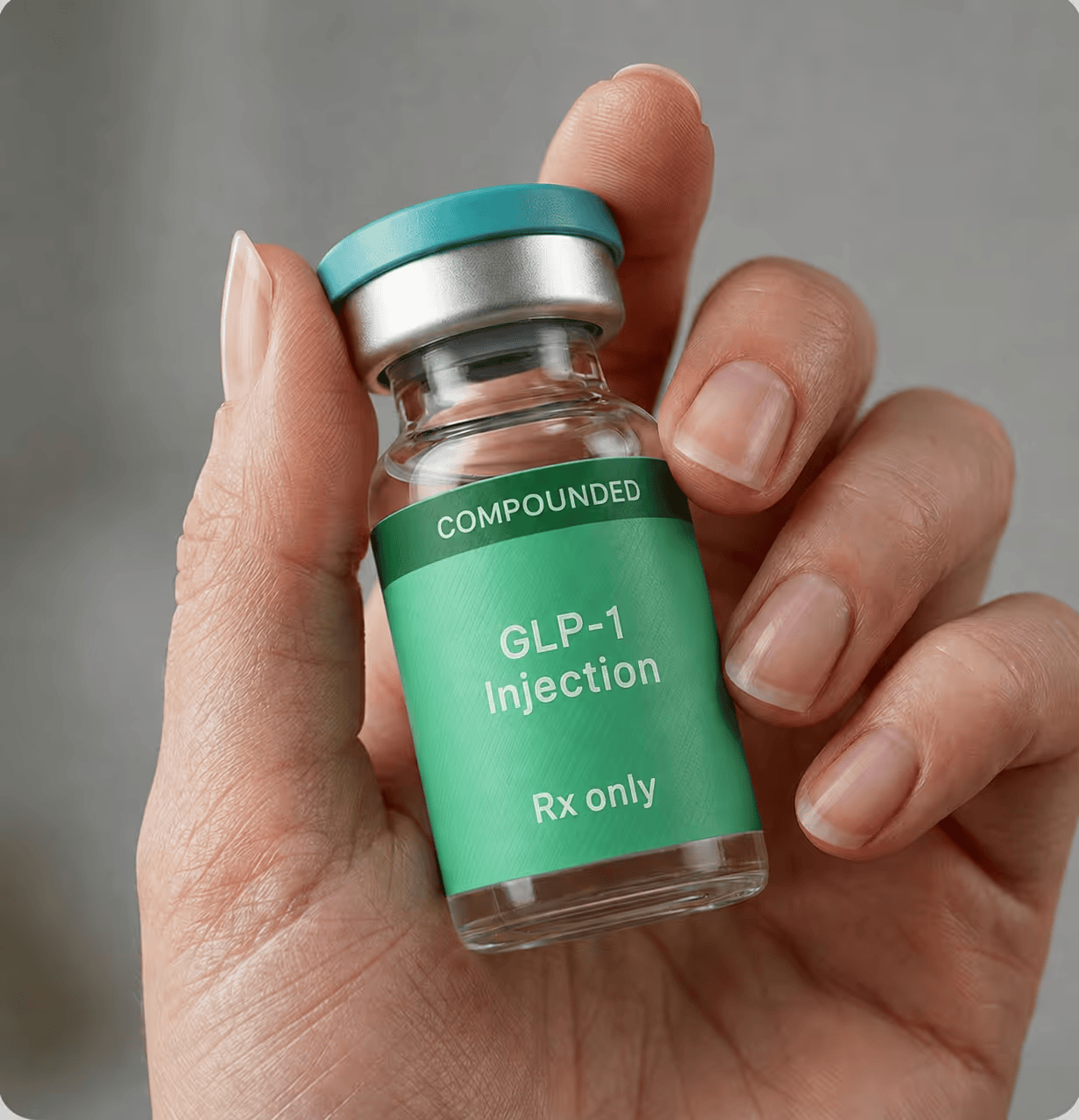
Ivy Rx offers personalized GLP-1 injections starting at $175/month, with a medical evaluation, ongoing support, and dosing guidance included.
For more ways to manage costs, see our guides on getting semaglutide at a lower cost and accessing it without insurance.
How Saxenda and Semaglutide Are Administered
Both medications are subcutaneous injections, meaning the needle goes into the fat layer under your skin. This makes them relatively painless and easy to self-administer at home.
For more on semaglutide dosage, how to inject semaglutide, or microdosing semaglutide, see our detailed guides.
Safety Considerations Before Starting Semaglutide or Saxenda
Both medications carry important safety warnings. Talk to your provider about these before starting treatment.
Semaglutide
- Thyroid C-cell tumors: Semaglutide carries a boxed warning for potential thyroid C-cell tumor risk, including medullary thyroid carcinoma (MTC).
- Pancreatitis: Watch for severe abdominal pain that may radiate to the back. Stop the medication and contact your provider immediately if this occurs.
- Gallbladder problems: Gallbladder-related problems may occur while taking semaglutide.
Saxenda (Liraglutide)
- Thyroid C-cell tumors: The same contraindications apply for Saxenda. Don’t use this medication if you have a personal or family history of MTC or MEN 2.
- Heart rate increase: Saxenda may increase heart rate in some patients. So ensure your provider monitors this regularly. And report any uncomfortable racing heartbeat at rest.
- Kidney injury: Acute kidney injury has been reported, often linked to dehydration from nausea, vomiting, or diarrhea. Stay hydrated, especially during the first weeks when GI side effects are most common.
For more on safety, see our guides on semaglutide safe and liraglutide vs semaglutide.
Who Might Choose Saxenda?
Saxenda may be a better fit if you:
- Need pediatric approval: Saxenda is approved for adolescents aged 12+ who meet specific BMI criteria.
- Can commit to daily dosing: Some people prefer the consistency of a daily routine over remembering a weekly injection.
- Have had difficulty tolerating semaglutide: Switching to liraglutide under provider guidance may reduce side effects for some patients.
Who Might Choose Semaglutide?
Semaglutide may be a better fit if you:
- Want greater average weight loss: Clinical data consistently shows semaglutide produces more weight loss than liraglutide.
- Prefer once-weekly injections: One injection per week is easier to maintain for many people.
- Have type 2 diabetes: Ozempic, which contains semaglutide, is FDA-approved for type 2 diabetes management.
Learn more about how to get semaglutide and your options.
Who Should Not Take Saxenda or Semaglutide?
These medications are not right for everyone. You should not take either medication if you:
- Have a personal or family history of medullary thyroid carcinoma (MTC) or Multiple Endocrine Neoplasia syndrome type 2 (MEN 2).
- Have had a serious allergic reaction to liraglutide, semaglutide, or any of their ingredients.
- Are you pregnant or planning to become pregnant? Both medications should be stopped at least 2 months before a planned pregnancy.
- Have a history of pancreatitis. GLP-1 medications may increase the risk of acute pancreatitis.
Always disclose your full medical history and current medications to your provider before starting treatment.
Can You Switch Between Them?
Yes, but switching should always be guided by a qualified medical provider.
Seek permission from a medical provider to manage the transition. You don’t carry over your current dose. Even if you were on the full Saxenda dose, semaglutide starts at 0.25 mg weekly and titrates up.
If you’re considering a switch, Ivy Rx offers Personalized GLP-1 injections starting at $175/month. The package includes medical evaluation, dosing guidance, and ongoing provider support.
Get a Tailored Weight Loss Plan from Ivy Rx
The right medication is the one that tips the scale in favor of your body, your budget, and your long-term goals.
Not the one with the best average numbers.
Ivy Rx makes that decision easier. Complete a medical evaluation, get matched with a licensed provider, and receive personalized GLP-1 injections delivered to your door, starting at $175/month.
Start your evaluation with Ivy Rx today.
FAQs
Is Saxenda the Same as Semaglutide?
No. Saxenda contains liraglutide, while semaglutide is a different molecule. Both are GLP-1 receptor agonists, but they differ in dosing frequency, potency, and clinical results.
When Is Liraglutide Used to Treat Diabetes?
Liraglutide, under the brand name Victoza, treats type 2 diabetes at a lower dose (up to 1.8 mg daily). Saxenda uses the same ingredient at 3 mg specifically for weight management.
Are Saxenda and Semaglutide Covered by Insurance?
Sometimes. Coverage varies widely by plan. Weight loss indications are less commonly covered than diabetes indications. Check with your insurer and ask about prior authorization requirements.

%25201.avif)

Ivy RX patients
Members of Ivy RX branded medications were paid for their testimonials.
- https://www.fda.gov/drugs/news-events-human-drugs/fda-approves-weight-management-drug-patients-aged-12-and-older. Accessed 25th of April, 2026.
- Lincoff AM, Brown-Frandsen K, Colhoun HM, Deanfield J, Emerson SS, Esbjerg S, Hardt-Lindberg S, Hovingh GK, Kahn SE, Kushner RF, Lingvay I, Oral TK, Michelsen MM, Plutzky J, Tornøe CW, Ryan DH; SELECT Trial Investigators. Semaglutide and Cardiovascular Outcomes in Obesity without Diabetes. N Engl J Med. 2023 Dec 14;389(24):2221-2232. https://pubmed.ncbi.nlm.nih.gov/37952131/. DOI: 10.1056/NEJMoa2307563.
- Wilding JPH, Batterham RL, Calanna S, Davies M, Van Gaal LF, Lingvay I, McGowan BM, Rosenstock J, Tran MTD, Wadden TA, Wharton S, Yokote K, Zeuthen N, Kushner RF; STEP 1 Study Group. Once-Weekly Semaglutide in Adults with Overweight or Obesity. N Engl J Med. 2021 Mar 18;384(11):989-1002. https://pubmed.ncbi.nlm.nih.gov/33567185/. DOI: 10.1056/NEJMoa2032183.
- Pi-Sunyer X, Astrup A, Fujioka K, Greenway F, Halpern A, Krempf M, Lau DC, le Roux CW, Violante Ortiz R, Jensen CB, Wilding JP; SCALE Obesity and Prediabetes NN8022-1839 Study Group. A Randomized, Controlled Trial of 3.0 mg of Liraglutide in Weight Management. N Engl J Med. 2015 Jul 2;373(1):11-22. https://pubmed.ncbi.nlm.nih.gov/26132939/. DOI: 10.1056/NEJMoa1411892.
- https://www.accessdata.fda.gov/drugsatfda_docs/label/2023/206321s016lbl.pdf. Accessed 25th of April, 2026.
Related
Resources

Saxenda vs Ozempic Comparison (Which Should You Choose?)
Compare Saxenda vs Ozempic for weight loss: results, cost, side effects, and how to choose the right GLP-1 for your goals.

Saxenda vs Wegovy: Differences, Price, and How to Choose
Deciding between Saxenda vs Wegovy? Learn about the costs, side-effects, effectiveness, and more in our in-depth comparison.

Liraglutide vs. Semaglutide: Cost, Side Effects & Results
Choosing between semaglutide and liraglutide? Compare their weight loss benefits, costs, and side effects to see which medication offers better results.