










Article Outline
Start your personalized GLP-1 program


Semaglutide 2.5 mg vs 5 mg: Dose vs Concentration Explained
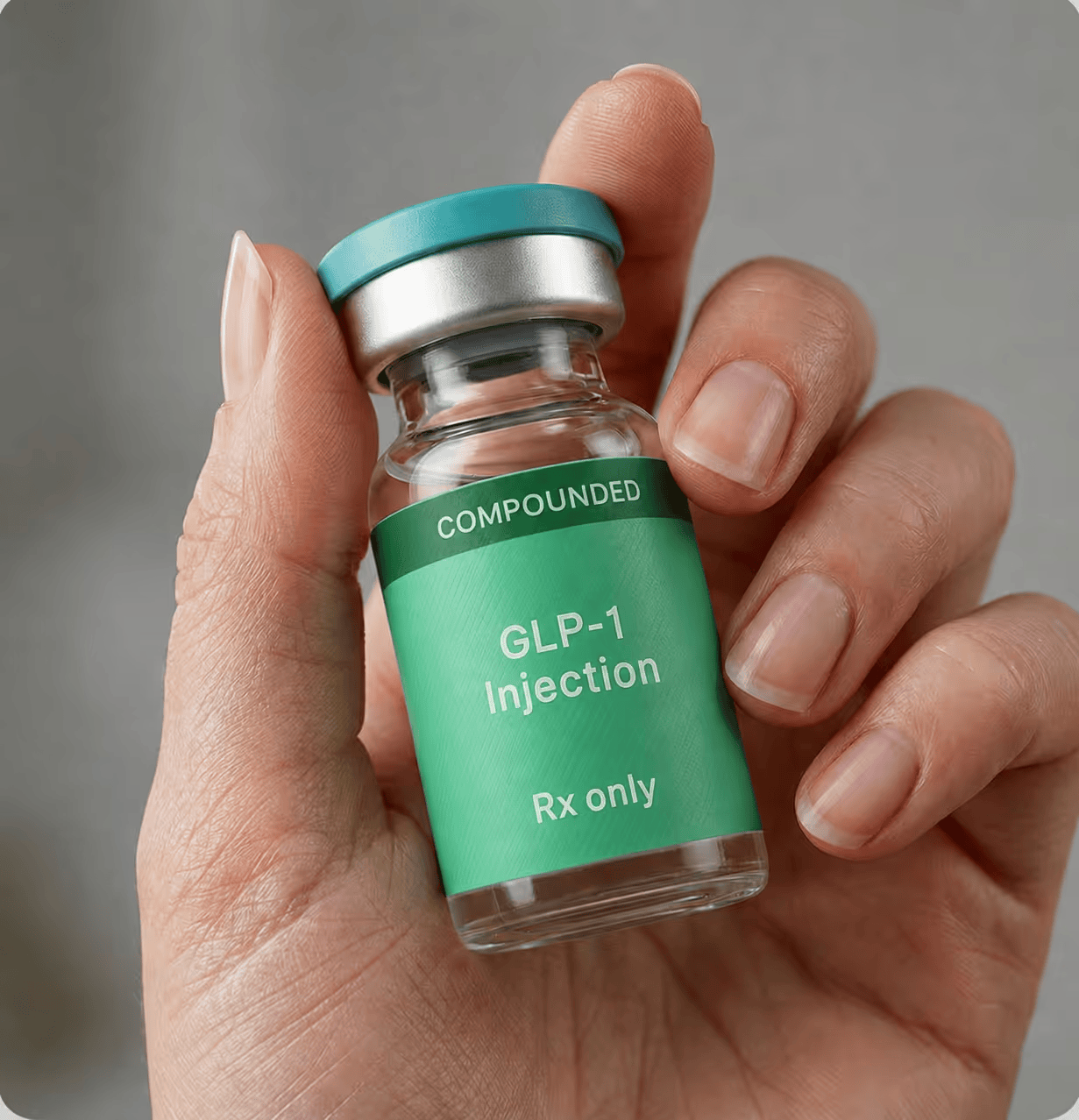
If your vial says 2.5 mg or 5 mg, you might wonder whether that is how much semaglutide you inject each week.
In the semaglutide 2.5 mg vs 5 mg question, both numbers usually describe vial strength, measured in milligrams per milliliter. Your weekly dose is much smaller, and it follows the same schedule whichever vial you have.
This matters for safety. The FDA has received reports of patients taking five to twenty times their intended dose because of confusion about units of measurement. This guide explains what the numbers mean, how to convert a dose into units, and when doses usually go up.
What 2.5 mg/mL and 5 mg/mL Actually Mean
A concentration of 2.5 mg/mL means each milliliter of liquid in the vial holds 2.5 mg of semaglutide. A concentration of 5 mg/mL means each milliliter holds 5 mg, so the liquid is twice as strong. These numbers tell you how strong the medicine is, but not how much to inject.
Your weekly dose is the amount of semaglutide your clinician prescribes for each injection. On the Wegovy® label, it starts at 0.25 mg per week and rises every four weeks to 0.5 mg, 1 mg, 1.7 mg, and then 2.4 mg. This schedule stays the same whether your vial is 2.5 mg/mL or 5 mg/mL.
Compounded vials come in different strengths. The FDA notes that concentrations can vary from one compounder to another, so the same dose may need a different amount of liquid. Brand-name Wegovy® comes in prefilled pens with the dose already set, so pen users do not measure units.
For the full weekly schedule, see the semaglutide dosage guide and the semaglutide B12 dosage chart. If you want to start below the usual first dose, microdosing semaglutide explains how that works.
Semaglutide 2.5 mg vs. 5 mg: Side-by-Side Comparison
The main difference between the two vials is how much semaglutide sits in each syringe unit. The table below assumes a standard U-100 insulin syringe, where 100 units equal 1 mL.
1. How Much Semaglutide Is in Each Unit
Each unit on a U-100 syringe holds 0.01 mL of liquid. The FDA's alert describes a U-100 syringe as a 1 mL syringe, with 5 units equal to 0.05 mL. This means one unit from a 2.5 mg/mL vial holds 0.025 mg of semaglutide. One unit from a 5 mg/mL vial holds 0.05 mg, which is twice as much.
The unit markings on your syringe look the same for both vials. The amount of medicine behind each mark is what changes.
2. How Many Units You Draw for the Same Dose
Because the 5 mg/mL vial is twice as strong, you draw half as many units for the same dose. A 1 mg weekly dose is 40 units from a 2.5 mg/mL vial and 20 units from a 5 mg/mL vial.
Both draws give you the same 1 mg of semaglutide. The 5 mg/mL draw is a smaller amount of liquid, which some people find more comfortable to inject.
3. How Much Room for Error Each Draw Leaves
A small misreading of the syringe matters more with a stronger vial. Drawing 5 extra units from a 5 mg/mL vial adds 0.25 mg, which equals a full starting dose. The same 5-unit mistake from a 2.5 mg/mL vial adds 0.125 mg.
Mix-ups between vials cause larger errors. If you use the unit count for a 2.5 mg/mL vial with a 5 mg/mL vial, you get double your prescribed dose.
In the FDA report, patients told to draw 5 units drew 50 units by mistake, which gave them 10 times the intended dose. Reported effects included nausea, vomiting, fainting, dehydration, pancreatitis, and gallstones.
4. How Much Semaglutide the Vial Holds in Total
A 1 mL vial at 2.5 mg/mL holds 2.5 mg of semaglutide in total. A 1 mL vial at 5 mg/mL holds 5 mg. How many weeks a vial lasts depends on the vial size, the strength, and your weekly dose.
Always check the beyond-use date on your pharmacy label. Do not use a vial past that date, even if liquid remains.
If you are comparing forms of semaglutide, the guides on semaglutide pills vs injection, Rybelsus® vs Wegovy®, and semaglutide vs tirzepatide cover those comparisons.
How to Convert Your Dose to Units (2.5 mg/mL vs 5 mg/mL)?
To convert a dose to units, divide your dose in mg by the vial strength in mg/mL. Then multiply by 100. The answer is the number of units to draw on a U-100 syringe.
Example: A 0.5 mg dose from a 2.5 mg/mL vial is 0.5 ÷ 2.5 = 0.2 mL. Multiplying by 100 gives 20 units.
This table only works with a U-100 syringe. Use the syringe your pharmacy provides, and confirm the unit count with your clinician or pharmacist before your first dose. The FDA recommends that clinicians and compounders provide a syringe that fits the dose and show patients how to measure it.
Semaglutide injections are subcutaneous, meaning they go into fatty tissue under the skin, not into muscle. A clinician or pharmacy team should explain the process before your first dose.
For injection steps, see how to inject semaglutide.
Which Concentration Is Better: 2.5 mg/mL or 5 mg/mL?
Neither strength works better than the other, because the dose of semaglutide is what affects your results. The right vial is the one your clinician prescribed, paired with the right syringe and clear unit instructions.
- A 2.5 mg/mL vial gives you a larger amount of liquid for each dose. Small doses are easier to measure, but a 2.4 mg dose nearly fills a 1 mL syringe.
- A 5 mg/mL vial gives you a smaller amount of liquid for each dose. Each unit carries more medicine, so a small misreading changes your dose more.
The safest choice is the strength you understand and can measure accurately. Ask your pharmacy to write the unit count for each dose on your instructions. The guide on semaglutide compounding pharmacy cost explains how strength and dose can affect price.
When Do You Move Up to a Higher Dose?
Most people start at 0.25 mg per week and move up about every four weeks, if they tolerate each step. The Wegovy® label lists this schedule:
- Weeks 1 to 4: 0.25 mg per week
- Weeks 5 to 8: 0.5 mg per week
- Weeks 9 to 12: 1 mg per week
- Weeks 13 to 16: 1.7 mg per week
- Week 17 onward: 2.4 mg per week, or 1.7 mg
Not everyone needs the top dose. The label allows 1.7 mg as a maintenance dose, and it suggests waiting four more weeks before a step up if side effects are hard to manage. Your clinician's goal is the lowest dose that gives you steady results with side effects you can handle.
Novo Nordisk also sells a higher-strength Wegovy® HD 7.2 mg pen. Only a clinician can decide whether any dose above 2.4 mg fits your care.
How Ivy RX Helps You Navigate Your Dose
Ivy Rx uses a simple approach to reduce dosing mistakes. The Ivy Rx Help Center explains that its pharmacy raises the strength of the medication as your dose goes up. Your injection amount usually stays at 0.25 mL, or 25 units, at every step.
This means you draw the same number of units each week, even as your dose rises. Your new vial carries the higher dose. Always follow the unit count printed on your current prescription, because instructions can differ from one patient to another.
FAQs
Is tirzepatide more effective than liraglutide for weight loss?
We could not confirm a head-to-head trial. In its own 72-week trial, 15 mg Zepbound®-branded tirzepatide produced 20.9% average weight loss, compared with 3.1% on placebo. Liraglutide trials used a different design, so a clinician can help you compare options.
Is 2.5 mg of semaglutide enough to lose weight?
It depends on what the 2.5 mg refers to. On a vial, 2.5 mg/mL is the strength of the liquid. Your weekly dose is set by your clinician and usually starts at 0.25 mg.
How long do most patients stay at 2.5 mg before moving to 5 mg?
These are usually vial strengths, so no set timeline exists. Weekly doses rise about every four weeks. Your pharmacy may change your vial strength as your dose rises.
Will side effects get worse at 5 mg?
Not because of vial strength alone. Side effects depend on your weekly dose in milligrams. Stomach side effects are most common in the weeks after each dose increase.
Can I stay at 2.5 mg long-term if it's working?
Yes, if your clinician agrees. Many people stay at one dose once it works. The Wegovy® label allows 1.7 mg or 2.4 mg as a maintenance dose.
Is 2.5 mg the same as a "microdose"?
No. Microdosing uses weekly doses below the usual 0.25 mg starting dose. A 2.5 mg/mL label describes vial strength and says nothing about dose size on its own.
Disclaimer: Research findings, regulatory details, prescribing-label information, safety guidance, product availability, pricing, and treatment expectations in this article were reviewed in September 2026 and may change. This article is for informational purposes only and does not replace medical advice. Always confirm current product details, eligibility, dosing instructions, pharmacy or supplement sourcing, and program terms with a licensed clinician before starting treatment.


Ivy RX patients
Members of Ivy RX branded medications were paid for their testimonials.
- https://www.fda.gov/drugs/human-drug-compounding/fda-alerts-health-care-providers-compounders-and-patients-dosing-errors-associated-compounded
- https://www.accessdata.fda.gov/drugsatfda_docs/label/2026/215256s033lbl.pdf
- https://www.novocare.com/pharmacy/wegovy.html
- https://support.ivyrx.com/en/articles/10173677-semaglutide-dosing-schedule
- https://zepbound.lilly.com/hcp/clinical-data
Related
Resources

Complete Guide to Semaglutide Dosage For Weight Loss: Dosage Schedule & Adjustments (+Chart)
Ensure proper semaglutide usage with our dosage chart, adjustment tips, and helpful advice on what to do when you miss a dose.

Compounded Semaglutide with B12: Dosage Chart for Weight Loss
Get the Compounded Semaglutide with B12 Dosage Chart for weight loss. Access the PDF guide for accurate dosing information and effective weight loss tips.

Semaglutide Compounding Pharmacy Cost: 2026 Price Guide
Wondering about compounded semaglutide costs? Get exact pricing, insurance coverage details, and money-saving tips in our complete guide.