





.avif)


Article Outline
Take your supplements with


Best BPC-157 Form, Dosage & How to Choose (2026)
Searching for the best BPC-157 can quickly lead to research-chemical websites promising specific healing effects, purity percentages, and dosing schedules. The problem is that the science is much less settled than the marketing.
There is currently no human evidence proving that one BPC-157 form is superior for a particular condition. A wiser way to compare options is to look at the quality of the evidence, formulation, source, testing, and regulatory status before considering claims about convenience or possible benefits.
This guide breaks down what we actually know about BPC-157 forms, dosing, potential benefits, safety, and sourcing in 2026.
What Makes a “Best” BPC-157?
The best BPC-157 cannot currently be ranked by proven clinical effectiveness because there are no approved formulations or head-to-head human trials comparing products.
Instead, use these criteria to evaluate what you are looking at:
- Clear regulatory status: BPC-157 is not FDA-approved. Be cautious of any seller presenting it as an approved treatment for tendon injuries, gut disease, inflammation, or another condition.
- Accurate ingredient identity: “BPC-157” can refer to different bulk substances, including the free base and acetate forms. The FDA notes that different forms can have different physical, chemical, pharmacokinetic, safety, or efficacy characteristics.
- Meaningful quality documentation: A Certificate of Analysis can be useful, but a single HPLC purity percentage does not establish sterility, potency, identity, endotoxin levels, or clinical safety.
- Transparent formulation and instructions: You should know exactly what form you are receiving, what it contains, and how it is intended to be used.
- Professional guidance: Because human safety, dosing, and drug-interaction information remain limited, discuss use with a licensed clinician rather than relying on a research vendor’s protocol.
The FDA has raised concerns about peptide-related impurities, immunogenicity, and characterization of BPC-157 bulk substances. Its current guidance says available safety information is insufficient to determine whether BPC-157 could cause harm when administered to humans.
So “99% pure” should never be the only reason you trust a product.
For a similar framework around evaluating peptide sources, see our guide to the best place to buy sermorelin.
What Is BPC-157 and What Does It Do?
BPC-157 is a synthetic peptide made up of 15 amino acids. It has been investigated primarily in laboratory and animal models for possible effects on tissue repair, inflammation, blood-vessel signaling, and gastrointestinal injury.
Preclinical research suggests several possible mechanisms. In one animal and cell study, BPC-157 was associated with increased vascular endothelial growth factor expression and changes in angiogenesis during muscle and tendon healing.
Other animal studies have explored its relationship with nitric oxide signaling, fibroblast activity, collagen organization, and tendon-cell migration.
Those findings are interesting, but they are not the same as established benefits in humans.
A 2026 scientific review identified fewer than 30 total participants across three published uncontrolled human studies. It concluded that the evidence remains insufficient to support evidence-based clinical recommendations for any indication.
That evidence gap is the most important thing to understand before comparing forms or advertised benefits.
Best BPC-157 by Form: Injectable vs. Oral vs. Capsule
There is no good human evidence showing that injectable, oral-liquid, or capsule BPC-157 is the “best” route for a particular goal.
You will often see injections promoted for tendon or joint recovery and oral BPC-157 promoted for gastrointestinal health. Current research does not establish those route-specific recommendations in humans.
Is injectable BPC-157 more bioavailable?
It is reasonable to expect a parenteral route to avoid some of the absorption barriers associated with an oral peptide, but we do not have the human data needed to assign injectable BPC-157 a reliable bioavailability percentage.
Animal pharmacokinetic research found intramuscular bioavailability of approximately 14% to 19% in rats and 45% to 51% in dogs. Those figures cannot be applied directly to subcutaneous injections in humans.
A recent scientific review specifically notes that human subcutaneous absorption kinetics remain uncharacterized.
So the brief’s proposed hierarchy of “highest,” “moderate-to-low,” and “lowest” bioavailability would create more certainty than the evidence supports.
Does oral BPC-157 only work in the gut?
No evidence shows that oral BPC-157 acts exclusively in the gastrointestinal tract.
Animal studies have reported effects after oral administration in musculoskeletal models. For example, BPC-157 given orally in drinking water was associated with improved ligament healing in rats in one study.
That does not prove oral BPC-157 works for ligament injuries in humans. It does show why describing oral BPC-157 as purely “local to the gut” is too simplistic.
What about BPC-157 capsules?
Capsules may be the most convenient option for someone who does not want to self-inject, but convenience should not be confused with proven effectiveness.
There are currently no high-quality human trials demonstrating that BPC-157 capsules produce predictable systemic exposure or clinically meaningful outcomes for tendon, joint, muscle, or gastrointestinal conditions.
That makes the most accurate comparison straightforward: route differences are plausible, but no BPC-157 formulation has enough human evidence to be declared clinically superior.
Best BPC-157 for Your Goal
There is no evidence-based BPC-157 form that can currently be recommended as clinically “best” for a specific condition. Instead, the practical choice comes down to route, convenience, and how much uncertainty you are comfortable with.
The key point is to avoid treating route-specific marketing claims as proven treatment guidance. If you are considering BPC-157 for a diagnosed injury, gastrointestinal condition, or another medical problem, discuss the goal with a licensed clinician first and compare it with better-studied treatment options.
If convenience is your main priority, oral products may be easier to use. If you are comparing injectable peptide treatments more broadly, our guide to anti-aging injections explains how different options are administered.
BPC-157 Dosage: How Much Is Right?
There is no FDA-approved or clinically validated BPC-157 dosage for humans.
You will find specific microgram ranges, such as injectable about 250 to 500 mcg daily (often split), oral liquid about 500 to 1,000 mcg daily, capsules about 250 to 1,000 mcg, along with 4-to-6-week “cycles” repeated across peptide websites, blogs, and online communities.
The caveat: those schedules are not established treatment standards, and current human evidence is too limited to determine a clinically effective or safe dose for a particular condition.
The distinction is important:
Animal studies have used many different doses, routes, and experimental models. Converting those doses into a consumer protocol would not establish safety or effectiveness in humans.
The available human research is also too small to solve the problem. One 2025 intravenous pilot study involved only two participants. Although no adverse effects were reported during that small study, two people are not enough to establish a safe dosing range for routine use.
If you are considering BPC-157, discuss the product, formulation, amount, your medical history, and the limits of the evidence with a licensed healthcare professional rather than using an online “BPC-157 dosage calculator” or research protocol.
BPC-157 Benefits: What Research Actually Shows
BPC-157 has produced promising results in laboratory and animal research, but its potential benefits have not been established in well-controlled human trials.
The strongest evidence remains preclinical, so it is more accurate to think of these as research areas rather than proven treatment outcomes.
Tendon and Ligament Repair
BPC-157 has been studied extensively in animal models of tendon and ligament injury.
A 2025 systematic review found improvements in structural, biomechanical, and functional outcomes across multiple preclinical musculoskeletal studies. Researchers have reported effects on tendon-cell migration, collagen organization, vascular signaling, and healing after experimentally induced injuries.
Human evidence is much thinner. The same review identified only one qualifying human musculoskeletal study, involving 12 people with chronic knee pain.
That makes tendon and ligament repair one of BPC-157’s better-studied research areas, but not an established human indication.
Muscle and Tissue Repair
Animal research has also examined BPC-157 after muscle injury, including models involving tears, crush injuries, and impaired healing.
Proposed mechanisms include effects on vascular endothelial growth factor, angiogenesis, nitric oxide signaling, and cellular migration. Those mechanisms could help explain why BPC-157 has attracted interest in recovery-focused settings.
But mechanistic plausibility does not prove that BPC-157 speeds muscle recovery in people.
If recovery is your main goal, compare the evidence across other anti-aging peptides rather than assuming every peptide marketed for repair has equivalent human support.
Joint and Bone Research
BPC-157 has also been investigated in preclinical models involving bone defects, fractures, and joint-related injury.
Animal findings suggest possible effects on bone formation, tissue organization, and repair. However, there are no large randomized human trials showing that BPC-157 improves fracture healing, osteoarthritis, or joint function.
The limited human knee-pain data are interesting, but they are far too small to establish BPC-157 as an evidence-based treatment for joint pain.
Gut and Inflammatory Research
Gastrointestinal research is another major part of the BPC-157 literature.
Animal studies have explored ulcers, intestinal injury, inflammatory bowel disease models, and mucosal protection. These findings helped drive interest in BPC-157 for digestive health.
Human evidence remains insufficient. In 2026, the FDA evaluated BPC-157 free base and acetate specifically for potential compounding use related to ulcerative colitis. The FDA staff concluded that there was insufficient evidence to determine effectiveness and substantial gaps in safety and product characterization.
So gut-related findings remain an area of research interest, not proof that BPC-157 treats ulcers, inflammatory bowel disease, or another gastrointestinal condition.
BPC-157 Side Effects and Safety
BPC-157 does not have a well-established human side-effect profile.
That distinction is important. Statements that BPC-157 side effects are “usually mild” are difficult to support because there have been too few controlled human studies to know how often adverse effects occur or which effects are caused by the peptide itself.
A small 2025 intravenous pilot study involved only two adults. Neither participant reported side effects and the laboratory markers measured after treatment did not show concerning changes, but a two-person study cannot establish overall safety.
The FDA’s 2026 review identified adverse-event reports involving injection-site reactions, shortness of breath, diffuse skin darkening, and gum darkening. The FDA also emphasized that it could not determine whether BPC-157 caused those events because the reports contained limited information and potential confounding factors.
Other uncertainties include:
- Long-term human safety has not been established.
- Reliable drug-interaction data are lacking.
- There is no FDA-approved labeling establishing contraindications.
- Safety during pregnancy or breastfeeding has not been established.
- Preclinical effects on angiogenesis create unanswered questions for people with active cancer or certain cancer risks.
If you are pregnant, breastfeeding, undergoing cancer treatment, taking multiple medications, or managing a significant medical condition, discuss BPC-157 with the clinician responsible for your care rather than self-experimenting.
BPC-157 and TB-500: Should You Stack Them?
BPC-157 and TB-500 are often discussed together in peptide communities, but there is no established human evidence showing that combining them improves recovery.
Both peptides have been studied for tissue-repair pathways, which is why the combination has gained attention. Until recently, however, much of the “stacking” discussion was based on theory, animal research, and anecdotal protocols.
A 2026 rat study directly compared BPC-157, TB-500, and the combination after Achilles tendon injury.
Both peptides were associated with some improvements in tendon-healing measures. However, combining BPC-157 and TB-500 did not provide an additional benefit over either peptide alone in that model.
That makes it especially important not to treat a BPC-157/TB-500 stack as an evidence-based human recovery protocol.
TB-500 is also not FDA-approved, and the FDA staff recommended against adding both TB-500 free base and acetate to the 503A Bulks List during its July 2026 review. The Pharmacy Compounding Advisory Committee later voted to recommend inclusion, but that recommendation is advisory and does not itself establish approval, safety, effectiveness, or final compounding status.
If you are considering more than one peptide, discuss the combination with a licensed healthcare professional rather than combining products based on an online stack.
Is BPC-157 Legal? How to Buy It Safely
BPC-157 is not FDA-approved for any medical indication in the United States.
Its compounding status is also more nuanced than simply calling it “legal” or “illegal.”
In July 2026, the FDA’s scientific review recommended against adding BPC-157 free base or BPC-157 acetate to the Section 503A Bulks List, citing gaps in characterization, human safety, immunogenicity, and evidence of effectiveness.
The Pharmacy Compounding Advisory Committee subsequently recommended inclusion. That recommendation is advisory and does not make BPC-157 FDA-approved or automatically authorize compounding. As of September 2026, the FDA has not issued a final rule adding BPC-157 to the 503A Bulks List.
Competitive athletes have an additional restriction. The 2026 WADA list includes BPC-157 under S0, Non-Approved Substances, which means it is prohibited at all times for athletes subject to WADA rules.
With that in mind, here are the steps to buying BPC-157 safely.
Step 1: Identify What You Are Actually Buying
Start with the product category.
BPC-157 sold online may appear as capsules, oral liquids, injectable preparations, or powders marketed for laboratory research.
A product labeled “research use only” or “not for human consumption” should not be repurposed as a treatment product simply because a dosing protocol appears online.
Check the exact form, amount per serving, ingredient list, manufacturer information, and intended use before considering anything else.
Step 2: Look Beyond the Purity Percentage
A high HPLC purity percentage can provide one piece of analytical information, but it does not prove that a product is safe for human use.
Depending on the formulation, meaningful quality considerations can include:
- Ingredient identity
- Assay or potency
- Peptide-related impurities
- Microbial contamination
- Endotoxins
- Sterility for injectable products
- Stability
- Storage conditions
- Lot-specific documentation
The FDA has specifically highlighted concerns around BPC-157 characterization, peptide impurities, and possible immunogenicity.
So a vial advertised as “99% pure” should not automatically be treated as pharmaceutical quality.
Step 3: Check the Current Regulatory Status
BPC-157 regulation is evolving.
The FDA’s July 2026 advisory process is a good example. The advisory committee recommended placing BPC-157 free base and acetate on the 503A Bulks List, even though FDA’s own scientific staff recommended against inclusion.
Neither position amounts to FDA approval.
Before considering a compounded BPC-157 drug, confirm the current FDA status rather than relying on an older article, seller claim, or social-media post.
Step 4: Discuss It With a Healthcare Professional
The lack of an FDA-approved dose, limited human safety data, and uncertain interactions make professional review especially important.
A clinician can help you consider whether the goal you are trying to address already has a better-studied treatment, whether your medications or health history add risk, and whether BPC-157 makes sense to consider at all.
This is particularly important if your goal is treating a diagnosed tendon injury, gastrointestinal disease, chronic pain, or another condition that already has established medical options.
The Safer, Prescriber-Backed Choice: IvyRx BPC-157
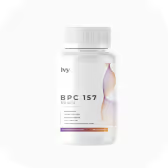
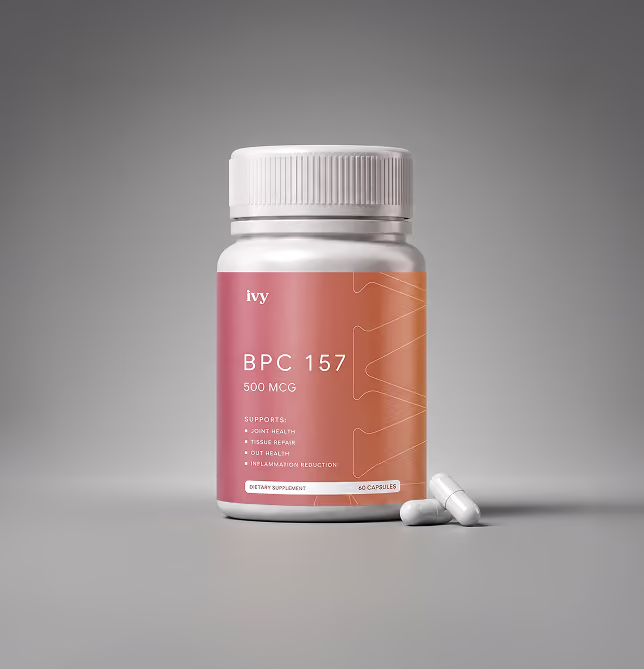
At Ivy Rx, we currently offer BPC-157 in our supplement range as convenient oral capsules rather than an injectable product.
Each capsule contains 500 mcg of BPC-157. The current price (as of September 2026) is $129, with no hidden fees and temperature-controlled delivery. The product directions are one capsule up to twice daily with food, or as directed.
We keep the evidence distinction clear. BPC-157 is not FDA-approved for any medical indication, and human research remains limited. The capsule format avoids self-injection, and you know the exact ingredients, directions, and safety information upfront.
If you are considering BPC-157 for a specific health goal, or you take other medications or supplements, discuss it with a healthcare professional before starting.
Explore BPC-157 With Ivy Rx
If you are interested in BPC-157, start with the evidence and regulatory status rather than falling for the most aggressive healing claim.
Ivy Rx currently offers BPC-157 capsules at $129 (as of September 2026), with clearly listed ingredients, directions, and safety information.
You can review the product details before ordering and speak with a licensed clinician if you are unsure whether BPC-157 is appropriate for your health goals.
And if weight loss is your primary goal, BPC-157 is not an FDA-approved weight-loss treatment. Instead, a compounded GLP-1 plan, carefully reviewed by a licensed clinician, is a better fit.
Ivy Rx’s program combines transparent pricing with no insurance required and a Rate Lock Guarantee, so your price stays the same across prescribed dose titrations. Medication is made in the USA, prepared through a state-licensed pharmacy, quality tested, and delivered directly to your door with ongoing care support.
Explore Compounded GLP-1 Injections today.
FAQs
What Is the Best Form of BPC-157?
No single form has been proven best in humans. Current evidence does not establish injectable, oral liquid, or capsule BPC-157 as clinically superior for a particular goal.
Is Injectable or Oral BPC-157 Better?
There is no evidence to suggest injectable is better than oral or vice versa.
What Is the Typical BPC-157 Dosage?
No standardized human dosage exists. Ivy Rx capsules contain 500 mcg each and are labeled for one capsule to be taken up to twice daily with food, or as otherwise directed.
Can You Stack BPC-157 With TB-500?
While possible, there isn’t established human evidence supporting the combination. A 2026 rat study found that combining BPC-157 and TB-500 did not provide additional benefit over either peptide alone.
Disclaimer: Evidence, regulatory information, product availability, and pricing were reviewed in September 2026 and may change. BPC-157 is not FDA-approved for any medical indication. This article is educational and does not replace individualized medical advice.

.png)

Ivy RX patients
Members of Ivy RX branded medications were paid for their testimonials.
- https://pubmed.ncbi.nlm.nih.gov/40756949/
- https://pubmed.ncbi.nlm.nih.gov/20388964/
- https://pmc.ncbi.nlm.nih.gov/articles/PMC13210877/
- https://pubmed.ncbi.nlm.nih.gov/36588717/
- https://pubmed.ncbi.nlm.nih.gov/20225319/
- https://pubmed.ncbi.nlm.nih.gov/40131143/
- https://pubmed.ncbi.nlm.nih.gov/42542926/
- https://www.fda.gov/media/193343/download
- https://www.fda.gov/advisory-committees/advisory-committee-calendar/july-23-24-2026-meeting-pharmacy-compounding-advisory-committee-07232026
- https://www.fda.gov/drugs/human-drug-compounding/certain-bulk-drug-substances-use-compounding-may-present-significant-safety-risks
- https://www.fda.gov/drugs/human-drug-compounding/bulk-drug-substances-used-compounding-under-section-503a-fdc-act
- https://www.wada-ama.org/sites/default/files/2025-09/2026list_en_final_clean_september_2025.pdf
Related
Resources

BPC 157 Pills vs Injections: Benefits & Safety Compared
BPC 157 pills avoid needles, while injections skip digestion. Neither form is FDA-approved, and human evidence for both forms is limited.
.jpg)
BPC-157 Before and After: Realistic Results & Timeline
BPC-157 before and after results are functional, not visual. Most users report less pain within 1-3 weeks and better mobility by weeks 4-8.

Sermorelin vs BPC-157 Benefits, Differences & How to Choose
Sermorelin stimulates growth hormone release while BPC-157 promotes tissue and gut repair, both are peptides used off-label, with no FDA approval for either.