






.avif)




Article Outline
Start your personalized GLP-1 program


Does Microdosing GLP-1 Work? What the Evidence Shows (2026)
GLP-1 medications work. But for some people, the side effects, cost, or pace of standard dosing make treatment difficult to maintain.
But microdosing GLP-1 means taking smaller amounts than typical prescribing schedules. The goal is to reduce side effects, lower cost, or ease into treatment more gradually.
Our guide explains what microdosing actually means, what evidence exists today, where the limits are, and when a lower-dose approach may or may not make sense.
What "Microdosing GLP-1" Means
Microdosing with GLP-1 means using doses below the standard prescribing schedule or spacing dose increases more gradually than in clinical trials.
It is typically provider-guided or patient-driven, often chosen to improve tolerability, manage side effects, reduce cost, or support weight maintenance.
And the common motivator for considering this treatment is that people want GLP-1 receptor agonist effects, less appetite, weight loss, better metabolism, without committing to the full schedule from GLP-1 injections.
Understanding how semaglutide works in your body helps explain why dose matters. These medications activate specific receptors in your digestive system and brain.
Check our detailed guide on GLP-1 microdosing schedules or explore our medical consultant-led microdose GLP-1 injections.
Does Microdosing GLP-1 Actually Work?
Large clinical trials have not specifically studied microdosing GLP-1 medications. The trials that established safety and effectiveness followed standardized dosing schedules, not the lower doses people often try on their own.
That said, smaller clinical observations suggest some patients tolerate treatment better at reduced doses.
For example, a study published in Diabetes Care reported that lower-than-standard dosing helped certain patients manage side effects and remain on therapy.
But let’s see what other patients think, in their own words.
What real people experience:
Communities online share their experiences microdosing GLP-1, and from the results, we discovered the good, the bad, and the ugly.
Let’s start with the negatives before getting to exciting results from microsing GLP-1
Story #1 - Steady progress, zero side effects.
One Reddit user wanted to avoid side effects altogether. She started semaglutide at 0.0025mg, which is a very low dose.
A week later, she reports:
“What’s your dose? I started out super low, .0025, I think. It wasn’t great for me, I didn’t feel much, so a week later at my appt, they bumped it up a tiny bit. (Semaglutide) I think that’s the dose, but this week I’m going to have it bumped up slightly a bit more. I’m still learning about the microdose scale. I’d like to make this sustainable - and as slow as it takes - and NOT have any negative side effects.”

Story #2 - Requires long-term maintenance to see results
A 54-year-old woman lost 38 pounds over 10 months on microdosed tirzepatide. She started at 0.25mg every four days and gradually worked up to 3mg.
Her weight plateaued for a month before she adjusted her approach. The lesson? "It's better to listen to your body than the scale," she writes.
This isn't passive weight loss. It requires meal planning, exercise, and patience.
Story #3 - May be effective for maintaining a weight loss plateau
Some patients have just the exact BMI they desire; they don’t want to gain or lose any weight going forward. So microdosing GLP-1 keeps them at the sweet spot.
Kimmie commented under an interview video from the Today show (where the patient who microdoses a GLP-1 lost 13lbs), and mentioned…
“I’m microdosing to maintain since I’ve been at my weight goal for quite some time and not losing more, which is what I want and keep the food noise down, along with keeping a healthy lifestyle. This helps many other health issues for me as well.”

The pattern across microdosing GLP-1 reviews reveals that people accept more steady results so they may see results, live normally, work without nausea, keep their energy, and feel like themselves.
When microdosing GLP-1 works, you’ll notice improved appetite control, gradual weight loss, or metabolic improvements without the more severe side effects.
Explore the common reasons why your weight loss may plateau on semaglutide. And review the microdosing GLP-1 cost when weighing this financially.
What Microdosing GLP-1 May Help With
Microdosing shows promise; you may need to set your expectations differently from those on standard doses:
Quieter Appetite Without Complete Shutdown
Microdosing may reduce "food noise.” Which is the constant mental chatter in your mind that has you hyperfocussed on eating, without completely eliminating hunger.
Some users feel less drawn to snacks between meals while still enjoying normal dinners.
This gentler effect helps you build a sustainable eating habit rather than relying solely on medication.
This suppression varies between people. Some may notice big changes in how long it takes for semaglutide to suppress appetite, while others feel minimal difference.
This appetite suppression will also vary, depending on the GLP-1 used and the microdose.
Small Weight Loss Goals
One user lost 5 pounds in the first month while adjusting her doses to match her menstrual cycle.
The pace works for people who may not want or require fast results or prefer subtle changes. See realistic expectations for semaglutide before and after 1 month.
Keeping Weight Off
Some patients describe microdosing as their long-term maintenance plan. After achieving weight loss goals on higher doses, users may drop to a microdose that prevents regain without ongoing side effects.
Fewer Side Effects
The most consistent microdosing benefit is tolerability. A user starting at very low levels and increasing slowly reports minimal nausea, constipation, or exhaustion compared to standard schedules.
However, it is still important to monitor how your body reacts; you can learn more about the specific side effects of microdosing GLP-1 to know what to watch for.
See more prescription weight-loss medication options and read real reviews of semaglutide at various doses.
Where Microdosing GLP-1 May Not be Suitable
Microdosing may have some limitations worth understanding.
Too Little Might Mean Nothing Happens
Amounts that are too low for too long might not activate the biological pathways that drive weight loss.
You could waste months with zero results if your dose stays below the threshold that actually works for you.
There is potentially the risk of spending time and money on treatment that can't deliver because you're below what your body mechanism needs.
This can be discussed with your medical provider to reduce this risk.
No Proven Dosing Schedules
Some people may be "super responders" to GLP-1’s and see results at small amounts. Others may need the higher doses. It is difficult to predict which camp you fall into without trying.
The lack of guidelines also means understanding the maximum dose of semaglutide becomes relevant; you may eventually need standard doses or doses in the upper range.
The flip-side to this is that titrating your dose more slowly means you may avoid side effects on the way to finding your effective dose.
Hunger Could Mean Dose Is Too Low
If you're still really hungry on a microdose, you're probably below the threshold where GLP-1 medications actually affect appetite.
This creates a frustrating spot where you're taking medication, with potential risks and costs, but not getting the benefits that make standard doses work.
Compounded Medication Quality Varies
Most microdosing uses compounded GLP-1s because brand-name pens provide fixed doses.
These compounded versions don't receive the same level of oversight as pharmaceutical products.
So quality may vary between compounding pharmacies. The potency, purity, and sterility may not match pharmaceutical standards. However, this isn’t an issue with Ivy Rx.
Ivy Rx treatments are all compounded in pharmacies compliant with 503B/USP <797> standards. This ensures a high level of quality and safety throughout the entire process
If you're worried about the semaglutide shortage affecting access, know that compounded options are an option, but researching your provider thoroughly is required.
Unknown Long-Term Effectiveness
The extensive research showing GLP-1 medications protect patients with type-2 diabetes heart and kidneys used standard doses.
But there is no clinical long-term data that shows microdosing provides the same protection against heart disease, kidney damage, and metabolic syndrome.
Hence the risk-benefit calculation changes when you're experimenting instead of following proven protocols.
Understanding semaglutide withdrawal symptoms also matters if microdosing isn't working and you need to stop or switch treatments.
Who Microdosing GLP-1 May Make Sense For
Microdosing isn't right for everyone, but certain situations create a strong case for trying lower doses.
- You stopped GLP-1s because of bad side effects: If you quit because nausea made everyday life difficult, microdosing gives you another shot. Starting with small amounts and increasing over months might make it tolerable enough to stick with the treatment.
- You're maintaining the weight you've already lost: Switching to microdoses for long-term maintenance could reduce costs and side effects while preventing regain. Understanding how long you stay on semaglutide for weight loss helps set realistic expectations.
- You're sensitive to medications: People with Hashimoto's, IBS, or documented medication sensitivities often need gentler approaches. Microdosing might be the right medical choice when standard schedules feel too aggressive.
- You want metabolic benefits, not major weight loss: If your main goal is better insulin sensitivity, less inflammation, or managing PCOS rather than losing lots of weight, microdosing might deliver these benefits at lower doses.
- You can't afford standard doses: Stretching supplies makes treatment possible when insurance won't pay. Learn how to get GLP-1 without insurance and explore cheaper options.
- You prefer going slow: If you value gradual progress with greater control, microdosing fits that preference better than a rigid schedule.
Learn how to choose a medical weight-loss clinic.
Who Is Unlikely to See Results From Microdosing
Certain situations make microdosing a bad fit.
- You need fast weight loss for medical reasons: If your doctor says you need to lose weight quickly before surgery or to manage severe diabetes, microdosing's slow pace could delay necessary treatment.
Check our guide on what the best injection for weight loss which lays out all of your options.
- You have significant obesity: People in need of a chronic weight loss solution higher doses to activate the biological pathways that drive significant weight reduction.
- You expect results without changing anything else: Microdosing boosts diet and exercise efforts, but it doesn't replace them. Without a willingness to modify eating or activity, even standard doses may disappoint.
- You're uncomfortable with uncertainty: If you want tested, evidence-based treatment with predictable timelines, standard dosing offers more certainty.
- You can't work closely with a doctor: Successful microdosing needs frequent check-ins, dose adjustments, and medical oversight. Without this support, you're just guessing about amounts and timing.
Considering Microdosing GLP-1? Get Personalized Options with IvyRx
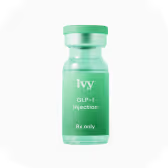
IvyRx offers microdose GLP-1 injections through doctor-led care.
With Ivy Rx you get medical oversight from experienced providers, flexible dosing adapted to your tolerance and goals, and transparent pricing without insurance headaches.
All injections are subcutaneous (delivered into the fat layer beneath the skin), making them painless and easy to do at home.
Start your consultation today and understand whether a microdose GLP-1 treatment or a clinical dose of personalized GLP-1 injections would be more suitable for you.

%25201.avif)

Ivy RX patients
Members of Ivy RX branded medications were paid for their testimonials.
- Anne M. Komé, Mary M. Chandran, Shelby S. Tungate Lopez, John B. Buse, Klara R. Klein; One Size Does Not Fit All: Understanding Microdosing Semaglutide for Diabetes in Multidose Pens. Diabetes Care 20 February 2025; 48 (3): e25–e27. https://diabetesjournals.org/care/article/48/3/e25/157716/One-Size-Does-Not-Fit-All-Understanding. https://doi.org/10.2337/dc24-2575.
- https://www.nejm.org/doi/full/10.1056/NEJMoa1607141. Accessed 1st of February, 2026.
Related
Resources

13 Benefits of Microdosing GLP-1 (Is it Really Better?)
Curious about microdosing GLP-1? Learn what it is, potential benefits, how it works, and if smaller, personalized doses can improve results and reduce side effects.
.avif)
Microdosing Semaglutide 101: How it Works, Benefits & Risks
Microdosing semaglutide explained: understand effects, benefits, and precautions, plus how telehealth platforms like IvyRx support safe access.

Microdosing Tirzepatide 101: Risks, Safety & Alternatives
Understand why microdosing tirzepatide can be dangerous and explore safe alternatives like licensed GLP-1 programs from IvyRx.