






.avif)


Article Outline
Explore Peptide Treatments


5 Best Peptides for Energy & Fatigue Relief in 2026
For many people, the issue isn’t effort or motivation. It’s how efficiently the body produces and stores energy at the cellular level.
That’s where peptides like NAD+, glutathione, and sermorelin enter the picture. Each supports a different part of the body’s energy system, from mitochondrial function to recovery and sleep regulation.
This guide walks through how these peptides work, who may benefit from each, and what current research shows about safety, effectiveness, and realistic expectations.
What Are Peptides and How Do They Influence Energy?
Peptides are short chains of amino acids that act as messengers in the body. They signal cells to regulate energy-related processes like adenosine triphosphate (ATP) production, hormone release, and antioxidant defense.
Your body naturally produces these peptides, but levels can decline with age and ongoing stress. When signaling slows, fatigue becomes more noticeable, and recovery may take longer.
Peptides support these pathways when natural production no longer keeps pace.
But not all peptides affect energy. Some target immune function, tissue repair, or skin health.
Best Peptides for Energy & Fatigue
Below are peptides used to support energy and fatigue. We grouped these peptides by mechanism of action and the strength of available evidence.
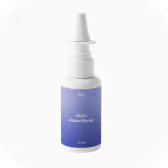
NAD+
NAD+ plays a central role in cellular energy production. It enables mitochondria to generate adenosine triphosphate (ATP), which is the molecule cells rely on for energy.
As your NAD+ levels decline with age and ongoing metabolic stress, cells become less efficient at producing energy and repairing damage. This decline has been linked to persistent fatigue, even when sleep, nutrition, and lifestyle are addressed.
But by supporting mitochondrial function and cellular repair pathways, NAD+ therapy may improve energy levels and reduce fatigue associated with low cellular energy.
NAD+ injection benefits may include improved brain health, anti-aging effects, and skin improvements.
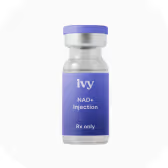
The standard NAD+ dosage may range from 25mg to 100mg per injection. Depending on your dosage schedule.
NAD+ injections show clear absorption advantages over oral forms. And the cost of NAD+ injections through Ivy Rx is significantly less expensive than IV drips.
Access at-home NAD+ injections through Ivy Rx today.
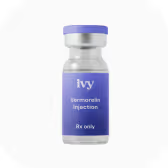
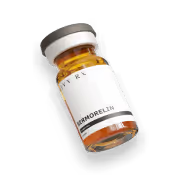
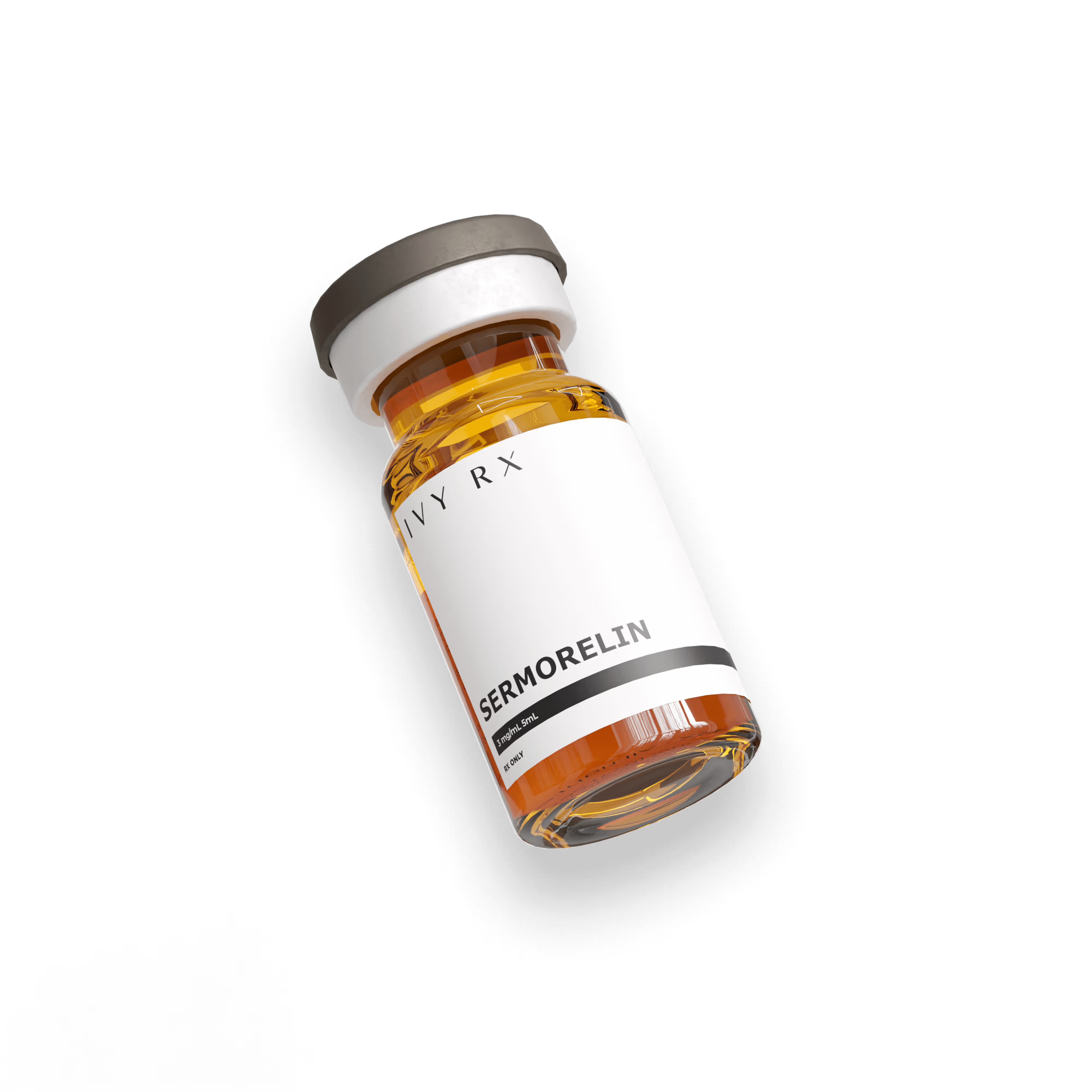
Sermorelin
Sermorelin signals the pituitary gland to release growth hormone through the body’s natural pathway.
The growth hormone released by Sermorelin may provide benefits like improved energy metabolism, tissue repair, sleep, and the body's maintenance of muscle and fat.
Standard Sermorelin dosage ranges from 100 to 500 mcg daily, administered subcutaneously before bedtime.
IvyRx offers physician-guided Sermorelin injection therapy at a lower cost than most HGH clinics, without requiring in-person visits.
Glutathione
Glutathione is a key antioxidant that protects mitochondria from oxidative stress and supports efficient energy production.
In a clinical trial, healthy adults who took glutathione daily for two weeks showed reduced exercise-related fatigue.
During exertion, their lactate levels were lower, and they felt less fatigued during prolonged activity.
Glutathione injections deliver the peptide directly into your bloodstream at doses of 200-400mg. Oral forms break down in digestion.
If you’re deciding between options, our Glutathione vs NAD+ comparison breaks down how each works at the cellular level.
Thymosin Alpha-1
Thymosin Alpha-1 is a peptide often considered when fatigue is driven by chronic inflammation rather than low sleep, poor nutrition, or reduced cellular energy. Its purpose is immune regulation.
The peptide works by enhancing how T cells recognize threats and coordinate immune responses. This allows the immune system to respond when needed and return to baseline once the threat has passed.
As immune strain decreases, some patients report improved overall energy; not because energy production increases, but because the immune system is no longer under constant stress.
MOTS-c
MOTS-c is a mitochondrial hormone peptide showing promise in preclinical research.
It regulates energy metabolism, improves insulin sensitivity, and enhances physical performance. However, human clinical data remain extremely limited.
Animal studies show MOTS-c improves physical performance across all age groups and reverses age-related insulin resistance.
If you’re considering a peptide therapy, many of the options discussed here are available through Ivy Rx.
Care begins with a medical consultation to see whether NAD+ injections, Sermorelin, or Glutathione may be appropriate.
Is Using Peptides for Energy Safe?
Whether peptides used to boost energy depends on multiple factors. Many peptides used for energy are safe when prescribed appropriately and monitored by a medical provider.
That said, safety depends on proper dosing, strength of clinical evidence and data, reputable sourcing, and individual health factors:
- NAD+: NAD+ injections may cause short-term effects like flushing, nausea, or headache, especially at higher doses. These typically ease as your body adjusts. More detail is covered in our guide to NAD+ injection side effects.
- Sermorelin: Sermorelin may be associated with injection-site reactions such as redness or tenderness. Less commonly, people may report headache or mild drowsiness, particularly if dosing is too high. This is discussed further in our in-depth guides looking at Sermorelin reviews and Sermorelin dosages for muscle growth.
- Glutathione: Glutathione in its injectable forms may cause mild local irritation, while systemic side effects are uncommon.
- Thymosin Alpha-1: Thymosin Alpha-1’s reported side effects are usually mild and limited to injection-site discomfort. It is not typically used for energy unless fatigue appears inflammation-driven.
- MOTS-c: While early research is promising, MOTS-c's long-term effects are not well established, so approach with caution. Take notes of changes at the early stages of consumption and document your experience.
All peptides should be prescribed under medical supervision and sourced from reputable pharmacies.
It is worth bearing in mind that research into many peptides, including energy boosting peptides in this guide, are in their very early stages and don’t have much long-term clinical data around them.
Who May Benefit from Peptides for Energy?
Adults 40+ with Age-Related Fatigue
Natural declines in NAD+, growth hormone, and glutathione accelerate after 40. You notice reduced stamina, longer recovery, and persistent exhaustion despite adequate sleep.
Chronic Fatigue and Metabolic Disorder Patients
Conditions like chronic fatigue syndrome and fibromyalgia involve mitochondrial dysfunction. Your cells can't produce adequate ATP despite normal rest and nutrition.
Professionals with High Cognitive Demands
Mental fatigue and brain fog often accompany physical exhaustion. Your brain consumes 20% of your body's energy despite representing only 2% of body weight.
Besides energy, patients often show interest in anti-aging peptides, too, since they are often complimentary goals.
How to Choose the Right Peptides for Your Goals
- Start with a medical evaluation. Blood work can assess NAD+ status, hormone levels, inflammation, and metabolic health to guide peptide selection.
- Match peptides to your goals. Poor sleep and recovery may indicate a need for Sermorelin. Exercise-related fatigue may respond to glutathione. Ongoing fatigue with brain fog may suggest NAD+. And fatigue tied to frequent illness may warrant Thymosin Alpha-1.
- Prioritize quality sourcing. Peptides should come from reputable, regulated telehealth providers under medical supervision to reduce safety risks.
- Set realistic timelines. Depending on the peptide, energy improvements may work on different timelines.
- Consider combinations carefully. Some peptides target complementary pathways, but combinations should be guided by a provider rather than trial and error.
Get Personalized Peptide Therapy at Ivy RX
Ivy Rx provides physician-supervised peptide protocols tailored to your fatigue profile.
Care starts with a medical evaluation, followed by clear guidance on whether options like NAD+ injections, Sermorelin, or Glutathione may be appropriate.
When prescribed, injections are subcutaneous, meaning they’re administered into the fat layer under the skin. Most people find this method straightforward to manage and administer at home with proper instruction.
Pricing is transparent, with plans starting around $175 per month and medications delivered directly to your door.
So if you’re exploring peptide therapy, you can start your evaluation today.


Ivy RX patients
Members of Ivy RX branded medications were paid for their testimonials.
- Yusri K, Jose S, Vermeulen KS, Tan TCM, Sorrentino V. The role of NAD+ metabolism and its modulation of mitochondria in aging and disease. NPJ Metab Health Dis. 2025 Jun 18;3(1):26. https://pmc.ncbi.nlm.nih.gov/articles/PMC12177089/.
- Hirata, M., Tominari, T., Ichimaru, R., Takiguchi, N., Tanaka, Y., Takatoya, M., Arai, D., Yoshinouchi, S., Miyaura, C., Matsumoto, C., Ma, S., Suzuki, K., Grundler, F. M. W., & Inada, M. (2023). Effects of 4′-Demethylnobiletin and 4′-Demethyltangeretin on Osteoclast Differentiation In Vitro and in a Mouse Model of Estrogen-Deficient Bone Resorption. Nutrients, 15(6), 1403. https://doi.org/10.3390/nu15061403.
- Walker RF. Sermorelin: a better approach to management of adult-onset growth hormone insufficiency? Clin Interv Aging. 2006;1(4):307-8. https://pmc.ncbi.nlm.nih.gov/articles/PMC2699646/. PMID: 18046908.
- Zaffanello M, Pietrobelli A, Cavarzere P, Guzzo A, Antoniazzi F. Complex relationship between growth hormone and sleep in children: insights, discrepancies, and implications. Front Endocrinol (Lausanne). 2024 Jan 24;14:1332114. https://pmc.ncbi.nlm.nih.gov/articles/PMC10847528/. doi: 10.3389/fendo.2023.1332114.
- Aoi W, Ogaya Y, Takami M, Konishi T, Sauchi Y, Park EY, Wada S, Sato K, Higashi A. Glutathione supplementation suppresses muscle fatigue induced by prolonged exercise via improved aerobic metabolism. J Int Soc Sports Nutr. 2015 Feb 6;12:7. https://pmc.ncbi.nlm.nih.gov/articles/PMC4328900/. doi: 10.1186/s12970-015-0067-x.
- Dominari A, Hathaway Iii D, Pandav K, Matos W, Biswas S, Reddy G, Thevuthasan S, Khan MA, Mathew A, Makkar SS, Zaidi M, Fahem MMM, Beas R, Castaneda V, Paul T, Halpern J, Baralt D. Thymosin alpha 1: A comprehensive review of the literature. World J Virol. 2020 Dec 15;9(5):67-78. https://pmc.ncbi.nlm.nih.gov/articles/PMC7747025/. doi: 10.5501/wjv.v9.i5.67.
- Zheng Y, Wei Z, Wang T. MOTS-c: A promising mitochondrial-derived peptide for therapeutic exploitation. Front Endocrinol (Lausanne). 2023 Jan 25;14:1120533. https://pmc.ncbi.nlm.nih.gov/articles/PMC9905433/. PMID: 36761202.
- Raichle ME, Gusnard DA. Appraising the brain's energy budget. Proc Natl Acad Sci U S A. 2002 Aug 6;99(16):10237-9. https://pmc.ncbi.nlm.nih.gov/articles/PMC124895/. PMID: 12149485.
Related
Resources

7 Best Anti-Aging Peptides for Youthful, Firm Skin in 2026
Discover the top anti-aging peptides for reducing wrinkles, boosting collagen, and improving skin texture. Science-backed options reviewed here.

Top Sermorelin Therapy Benefits for Anti-Aging & Weight Loss
Discover the full-body benefits of Sermorelin in 2026—from muscle gain and fat loss to better sleep, skin, and energy. Learn how it supports natural HGH.

5 Best Peptides for Weight Loss: Top Options for 2026
Discover the most effective peptides for weight loss, including semaglutide, tirzepatide, and more. Learn how they work and who they’re best for.