








.avif)



Article Outline
Explore Weight Loss Treatments


Switching from Liraglutide to Semaglutide Safely & Effectively: Step-by-Step 2026 Guide
If your weight loss has stalled on liraglutide, you’re not alone. Many people reach this same point, and that’s usually when a stronger option like semaglutide begins to feel like the right next step.
But it’s not always a simple change. Some people see renewed progress, while others face new side effects or worry about how long a weekly injection stays in their system.
This guide walks you through that decision with clarity. You’ll learn what research says about the switch, how to do it safely, and how to find the right balance between results, comfort, and long-term success.
Can You Switch from Liraglutide to Semaglutide?
Yes, you can safely switch from liraglutide to semaglutide under medical supervision.
Clinical studies show that many patients who make this change experience greater weight loss and improved blood sugar control.
Both medications belong to the GLP-1 receptor agonist class, which means they work through similar mechanisms in your body.
They may help regulate blood sugar, suppress appetite, and slow gastric emptying. Because of these shared properties, healthcare providers can transition patients between these medications with appropriate medical oversight.
The decision to switch usually comes down to a few things: hitting a weight-loss plateau, wanting stronger appetite control, or simply preferring the convenience of a weekly shot over daily injections.
Sometimes, your doctor may also recommend semaglutide after seeing its stronger clinical results for both blood sugar and weight management.
Patients who switched from once-daily liraglutide to once-weekly semaglutide 0.5 mg achieved larger A1C drops and greater weight loss than those switched to once-weekly dulaglutide 0.75 mg.
Liraglutide vs Semaglutide: Key Differences
Before switching, it helps to understand how these two GLP-1 medications differ across major factors:
See which medication might work better for you by reading our detailed Liraglutide vs Semaglutide comparison.
Why Switch from Liraglutide to Semaglutide?
Oftentimes, people switch from liraglutide to semaglutide because it delivers stronger weight-loss results.
Let’s see other reasons why you may consider switching from liraglutide to semaglutide.
Reason #1: Better Weight Loss Results
If you’re doing everything right but progress is slow and it feels like your body has hit a wall. That’s where semaglutide often changes the story.
Most of the time, people who switch from liraglutide to semaglutide continue to see weight, HbA1c, and BMI reductions.
Like a user on Reddit testified to “seeing a huge difference between the two.” After switching, accidentally, from liraglutide to semaglutide.

Semaglutide simply delivers more potent effects, which is why so many people who plateau on liraglutide start seeing progress again after the switch.
Reason #2: Convenient Once-Weekly Dosing
If you’ve been on liraglutide for a while, you already know the mental load of a daily injection. Some days you remember. Some days you don’t. And some days, you just don’t feel like doing it.
This is where semaglutide often feels like a breath of fresh air.
Switching from a daily shot to a once-weekly dose removes a lot of that pressure.
Fewer injections mean fewer interruptions to your routine and a treatment schedule that’s easier to stick with long-term. That ease alone can make a meaningful difference in your results.
If you’re anxious to see how Semaglutide can help you lose weight, you can read our semaglutide weight loss reviews.
Reason #3: Better Blood Sugar Control for Many People
Some patients do everything right on liraglutide, yet their A1C eventually stops improving.
They stay consistent, adjust their diet, stay active, and still see no movement. When progress stalls like this, providers often recommend semaglutide because research shows it can deliver a stronger glucose-lowering effect.
Clinical trials back this up. People who switch from liraglutide to semaglutide see a larger drop in HbA1c, about 0.4% greater improvement on average, compared with those who remain on liraglutide.
Semaglutide isn’t automatically “better” for everyone, but for those who feel stuck on liraglutide, this extra boost in metabolic control can feel like real progress again.
Reason #4: Potential Long-Term Cost Advantages
Cost-effectiveness research shows that semaglutide delivers greater weight loss for every dollar you spend.
The analysis found that it costs about $1,845 per 1% of body weight lost with semaglutide, compared with $3,256 with liraglutide.
So even though semaglutide has a higher monthly price, the value is better. In practical terms, you reach your goals faster, and each percentage of progress costs you less.
And this is an essential consideration for your weight-loss journey, because you need to factor in the time it takes to stay on medication before you see meaningful results.
If you wish to discover more about affordable semaglutide options, read our article on the semaglutide compounding pharmacy cost guide. You can also see our article on the cheapest semaglutide options.
How to Safely Transition from Liraglutide to Semaglutide
If you’re sure about making the switch, follow these steps to avoid unforeseen mistakes:
Step 1: Consult Your Healthcare Provider
Never switch GLP-1 medications without medical guidance.
Your health provider will review your medical history, current medications, weight loss goals, and potential contraindications before recommending a switch.
This is to help you minimize the severity and duration of potential side effects after the switch.
Step 2: Stop Liraglutide and Start Semaglutide Appropriately
Next, discontinue liraglutide and begin semaglutide at the standard starting dose of 0.25 mg once weekly, regardless of your previous liraglutide dose.
This allows your body to adjust to the new medication's more prolonged duration of action and also reduces the side effects you may encounter.
Step 3: Follow the Standard Titration Schedule
The standard semaglutide titration follows this protocol:
- Weeks 1-4: 0.25 mg once weekly.
- Weeks 5-8: 0.5 mg once weekly.
- Weeks 9-12: 1.0 mg once weekly (if needed).
- Week 13+: Up to 2.4 mg once weekly for maximum weight loss.
Personalization of the titration schedule should be based on your tolerance and efficacy level to ensure maximum therapeutic benefit with minimal side effects.
Learn proper technique on how to inject semaglutide or any other peptides.
Step 4: Monitor Your Response
Track your weight, blood sugar levels (if you have diabetes), and how you feel at each dose level. Regular monitoring allows healthcare providers to assess patient response and make necessary adjustments to the titration schedule.
Keep a journal of:
- Weekly weight measurements
- Blood glucose readings
- Side effects and their severity
- Your energy levels and appetite change
Step 5: Adjust Diet and Hydration
Eating smaller, more frequent meals and staying well-hydrated can help manage gastrointestinal symptoms that commonly occur during the initial transition period.
Also, focus on protein-rich foods, avoid high-fat meals, and eat slowly to reduce nausea. Check out guide on semaglutide diet plan for more informaiton.
Step 6: Plan for Long-Term Success
Clinical evidence shows that improvements in HbA1c and weight become evident by 3 months and continue through 6 months of treatment.
So set realistic expectations and commit to the full titration schedule to achieve your desired results.
See our semaglutide dosage chart or our article on semaglutide timelines to know exactly what to expect at each step.
If you still don't see any progress, check out our article on common reasons why semaglutide might not be working work for you.
Possible Side Effects When Switching GLP-1s
Nausea
Nausea is the most common adverse effect of GLP-1 receptor agonists, affecting up to 50% of patients, though most episodes are mild to moderate and diminish with ongoing treatment.
But eating smaller meals and choosing bland, easily digestible foods can help manage nausea.
Diarrhea
Gastrointestinal side effects, including diarrhea, are common during the initial treatment phase.
But stay hydrated, avoid fatty foods, and consider over-the-counter remedies if symptoms persist.
Abdominal Pain
Abdominal discomfort occurs in a relatively common subset of patients during GLP-1 therapy. This typically resolves as your body adjusts to the medication.
But severe or worsening pain warrants immediate medical evaluation.
Fatigue
Some people report feeling tired during the initial weeks of treatment. This often improves as your body adapts to the new medication. Prioritize sleep, stay hydrated, and maintain balanced nutrition.
Injection Site Reactions
Minor redness, swelling, or itching at injection sites can occur. Rotate injection sites between the abdomen, thigh, and upper arm to prevent skin irritation.
For more in-depth information, read about compounded semaglutide safety, and what semagalutide actually does to your body.
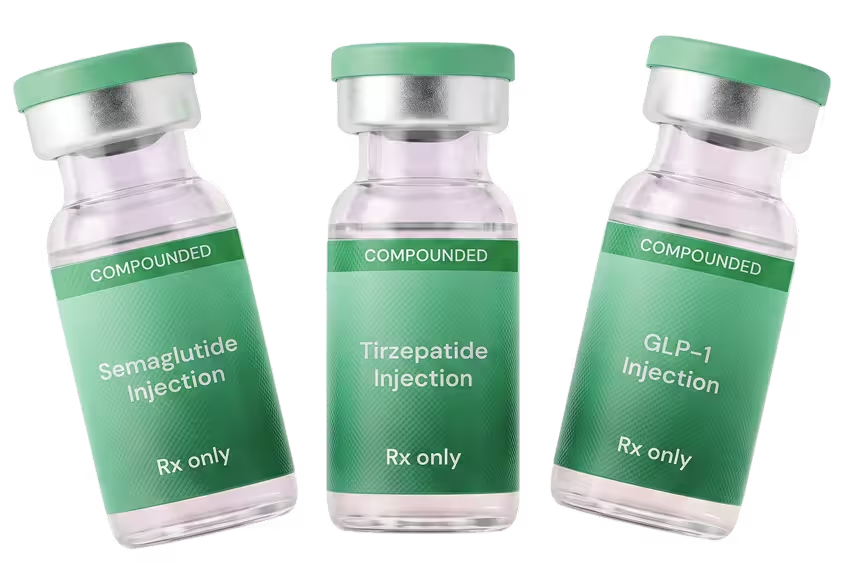
Start Your Personalized GLP-1 Weight Loss Journey with Ivy Rx
Ready to move from liraglutide to semaglutide? Ivy Rx offers personalized GLP-1 that is just as effective as semaglutide and is built around your weight loss goals, your treatment pace, and your lifestyle.
Our licensed providers help you choose the right treatment, adjust your dose safely, and stay on track with ongoing support.
You’ll access affordable, personalized GLP-1 injections, transparent pricing, and a treatment plan designed to deliver strong results.
Contact us today to take the next step towards a healthier, more consistent, and more effective weight-loss journey.
And for additional insights into your weight-loss timeline, explore our results-driven guide on Semaglutide’s before-and-after 1 Month results.



Ivy RX patients
Members of Ivy RX branded medications were paid for their testimonials.
References
- Semaglutide versus dulaglutide once weekly in patients with type 2 diabetes (SUSTAIN 7): a randomised, open-label, phase 3b trial Pratley, Richard E et al. The Lancet Diabetes & Endocrinology, Volume 6, Issue 4, 275 - 286. https://www.thelancet.com/journals/landia/article/PIIS2213-8587(18)30024-X/abstract.
- Iijima T, Shibuya M, Ito Y, Terauchi Y. Effects of switching from liraglutide to semaglutide or dulaglutide in patients with type 2 diabetes: A randomized controlled trial. J Diabetes Investig. 2023 Jun;14(6):774-781. doi: 10.1111/jdi.14000. Epub 2023 Mar 5. Erratum in: J Diabetes Investig. 2023 Dec;14(12):1423-1424. https://pmc.ncbi.nlm.nih.gov/articles/PMC10204181/. doi: 10.1111/jdi.14000.
- Liraglutide versus semaglutide for weight reduction—a cost needed to treat analysis - Azuri - 2023 - Obesity - Wiley Online Library https://onlinelibrary.wiley.com/doi/full/10.1002/oby.23752.
- Hepprich, M., Zillig, D., Florian-Reynoso, M.A. et al. Switch-to-Semaglutide Study (STS-Study): a Retrospective Cohort Study. Diabetes Ther 12, 943–954 (2021). https://link.springer.com/article/10.1007/s13300-021-01016-y.
- Filippatos TD, Panagiotopoulou TV, Elisaf MS. Adverse Effects of GLP-1 Receptor Agonists. Rev Diabet Stud. 2014 Fall-Winter;11(3-4):202-30. https://pmc.ncbi.nlm.nih.gov/articles/PMC5397288/. doi: 10.1900/RDS.2014.11.202.
Related
Resources

What Does Semaglutide Do To Your Body?
Semaglutide is a drug similar to the endogenous GLP-1 peptide secreted from the intestinal L-cells. GLP-1 is released from the intestine and exh...
%2520(5).png)
Is Ozempic (Semaglutide) Safe? Benefits & Risks in 2026
Want to know if Ozempic (Semaglutide) is safe for weight loss? Understand how semaglutide works, benefits & common side effects.

Liraglutide vs. Semaglutide: Cost, Side Effects & Results
Choosing between semaglutide and liraglutide? Compare their weight loss benefits, costs, and side effects to see which medication offers better results.