





.avif)


Article Outline
Start your personalized GLP-1 program


Victoza vs Ozempic: Differences, Price, & How to Choose
Victoza and Ozempic are both injectable GLP-1 medications made by Novo Nordisk. They lower blood sugar, reduce cardiovascular risk, and share the same drug class.
But the similarities end there. They differ in how often you inject, how well they control blood sugar, what the FDA approves them for, and what they cost.
This guide breaks down each difference so you can see which one fits your situation.
Victoza vs Ozempic: A Quick Overview
What Is Victoza?
Victoza is a once-daily GLP-1 injection for the treatment of type 2 diabetes. Its active ingredient is liraglutide, and it was manufactured by Novo Nordisk.
Victoza is one of the earliest GLP-1 medications to hit the market. It was FDA-approved as a type 2 diabetic medication in 2010.
Seven years later (2017), it earned a second approval based on the LEADER trial, which showed that it reduced cardiovascular risk in adults with type 2 diabetes and heart disease.
What Is Ozempic?
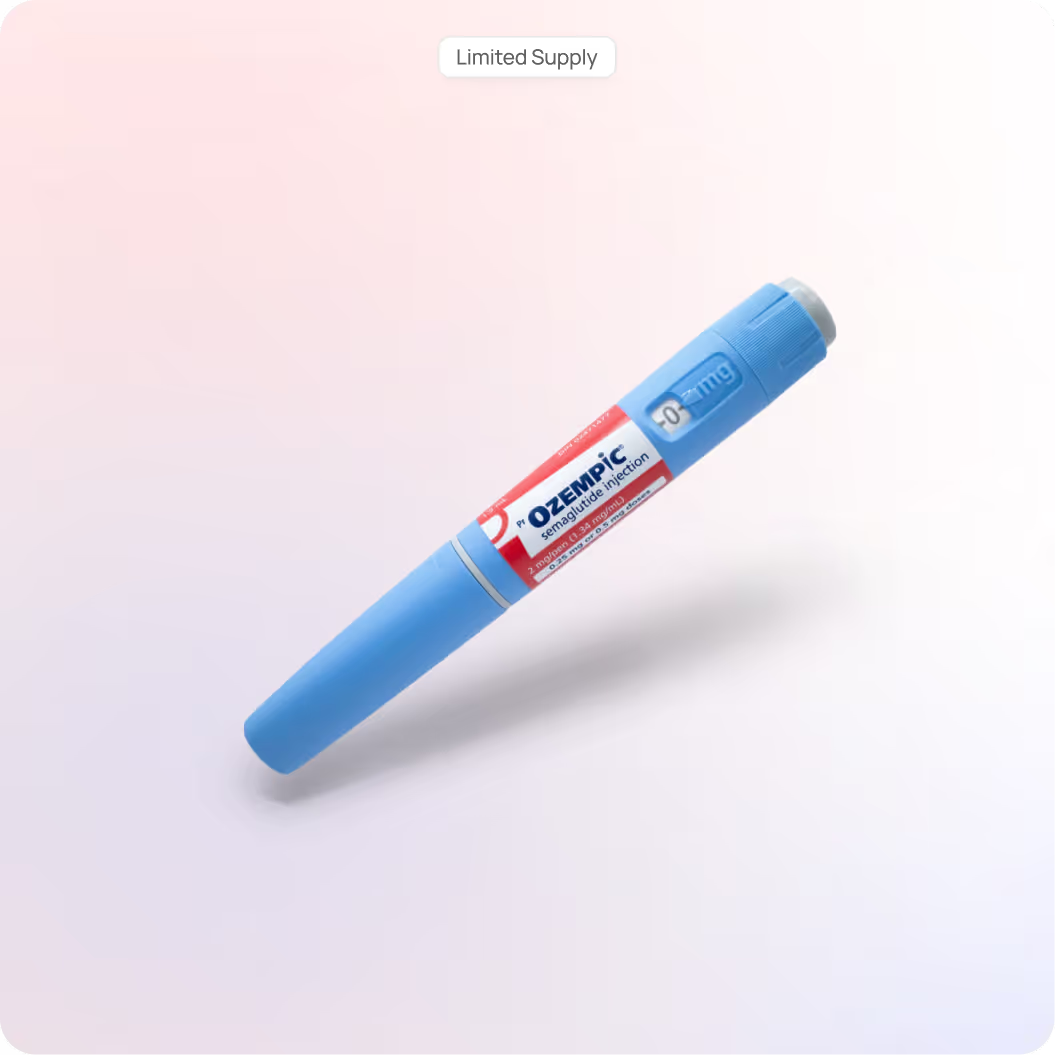
Ozempic is a once-weekly GLP-1 injection. Its active ingredient, semaglutide, has a modified molecular structure that keeps it active in the body longer than liraglutide.
That longer duration is why it requires one injection per week instead of one per day.
The FDA also approved Ozempic to reduce the risk of worsening kidney disease in adults with type 2 diabetes and chronic kidney disease, based on the FLOW trial.
You can learn more about Ozempic and how it fits into your treatment options.
FDA Approval & Intended Use
Victoza is FDA-approved for type 2 diabetes in adults and children aged 10+, plus cardiovascular risk reduction in adults with T2D and heart disease.
Meanwhile, Ozempic holds the same diabetes and cardiovascular approvals (adults only) plus an additional indication for reducing the risk of chronic kidney disease.
Insurance & Coverage Differences
Both medications are FDA-approved for diabetes, so coverage is generally more accessible than for weight loss medications.
Although Ozempic tends to have broader commercial coverage in practice, partly due to its indication for kidney disease.
A licensed provider may help you explore savings programs or alternative formulations based on your eligibility.
Clinical Trial Performance
From the SUSTAIN 10 clinical head-to-head trial between semaglutide (Ozempic) and liraglutide (Victoza), semaglutide showed stronger results on both primary measures.
It lowered A1C by nearly twice as much (1.7% vs 1.0%) and produced three times the weight loss (5.8 kg vs 1.9 kg).
But the stronger results with semaglutide came with a higher rate of GI side effects and treatment discontinuation.
The GI side effects were slightly more common with semaglutide, and roughly twice as many patients stopped treatment because of them. Semaglutide delivered more, but liraglutide was easier on the stomach for more patients.
See our detailed guide to discover how GLP-1 medications compare to Ozempic.
Side Effects Comparison
Both medications share a similar side effect profile. GI issues are the most common, particularly during titration.
- Common side effects (both): nausea, vomiting, diarrhea, constipation, abdominal pain.
- Victoza-specific: may increase resting heart rate by 2-3 bpm; more frequent injection site reactions due to daily dosing; lower discontinuation rate from side effects in SUSTAIN 10 (6.6% vs 11.4%).
- Ozempic-specific: slightly higher rate of GI side effects; higher discontinuation rate due to GI events; weekly dosing means side effects from each dose may last a few days before easing.
Here’s a table that explains further:
Important note: For both medications, side effects tend to improve as your body adjusts.
Cost Comparison
Here’s how Victoza and Ozempic compare in terms of cost.
If brand-name pricing is a barrier, Ivy Rx offers personalized GLP-1 injections in a package that includes a free medical evaluation, dosing guidance, and ongoing support.
How Victoza and Ozempic Are Administered
Both are subcutaneous injections into the fat layer under your skin, making them relatively painless to self-administer at home.
- Victoza: Start at 0.6 mg daily for one week, then increase to 1.2 mg. May increase to 1.8 mg if needed. Inject at the same time each day. Do not double up on missed doses.
- Ozempic: Start at 0.25 mg weekly for four weeks, then increase every four weeks. Inject on the same day each week. If you miss a dose, take it within five days. If more than five days have passed, skip it.
For more on Ozempic dosing or microdose GLP-1 injections, see our guides.

Safety Considerations
Both medications carry important safety warnings. Discuss these with your provider before starting treatment.
Semaglutide (Ozempic):
- Thyroid C-cell tumors. Boxed warning. Do not use it if there is a personal or family history of MTC or MEN 2.
- Pancreatitis. Watch for severe abdominal pain radiating to the back. Stop and contact your provider immediately.
- Diabetic retinopathy. Patients with existing retinopathy should be monitored closely.
Liraglutide (Victoza):
- Thyroid C-cell tumors. Same boxed warning as Ozempic.
- Heart rate increases. May raise resting heart rate. Report any racing heartbeat at rest.
- Kidney injury. Linked to dehydration from GI side effects. Stay hydrated, especially during the first weeks.
For more, see our guides on Ozempic benefits and side effects and weight loss plateau on Ozempic and semaglutide.
Who Might Choose Victoza?
People who:
- Need pediatric approval. Victoza is approved for children aged 10 and older. Ozempic is for adults only.
- Want a generic option. Generic liraglutide may lower your out-of-pocket costs.
- Tolerated liraglutide better. Fewer patients discontinued Victoza due to GI side effects in head-to-head data.
Who Might Choose Ozempic?
People who:
- Want stronger A1C reduction. 1.7% vs 1.0% in SUSTAIN 10.
- Prefer weekly injections. Less frequent dosing is easier for many people.
- Have chronic kidney disease. Ozempic is the only GLP-1 with a kidney disease indication.
- Want greater weight loss. Roughly three times the weight loss of liraglutide at diabetes doses.
Who Should Not Take Either Medication?
- Personal or family history of medullary thyroid carcinoma (MTC) or MEN 2.
- Serious allergic reaction to liraglutide or semaglutide.
- Already taking another GLP-1 receptor agonist.
- Pregnant or planning to become pregnant.
- History of pancreatitis.
Can You Switch Between Them?
Yes, but always under provider guidance. There is no direct dose conversion between liraglutide and semaglutide.
Your provider will manage the transition and adjust titration accordingly. Confirm insurance coverage before switching, as formulary placement varies by plan.
Ivy Rx providers can evaluate your options and help coordinate the transition. Personalized GLP-1 injections start at $175/month with medical evaluation and ongoing support.
Get Your Personalized Weight Loss Plan With Ivy Rx
You know the differences, the costs, and the trade-offs. If brand-name pricing or insurance is the barrier, you still have options.
Ivy Rx offers personalized GLP-1 injections starting at $175/month. A licensed provider evaluates your health, guides your dosing, and stays with you throughout. Everything online. No insurance required.
FAQs
1. Is Victoza the Same as Ozempic?
No. Victoza contains liraglutide, and Ozempic contains semaglutide. Both are GLP-1 receptor agonists for type 2 diabetes, but they differ in active ingredient, dosing frequency, and clinical performance.
2. Are Victoza and Ozempic Covered by Insurance?
Usually, when prescribed for type 2 diabetes. Most commercial plans and Medicare Part D cover both, though prior authorization is often required.
3. Can I Use Victoza or Ozempic for Weight Loss?
Sometimes, off-label. Neither is FDA-approved for weight loss. Their weight loss counterparts are Saxenda (liraglutide 3 mg) and Wegovy (semaglutide 2.4 mg).
4. Is Generic Victoza as Effective as Brand-Name?
Yes. Generic liraglutide contains the same active ingredient at the same dose. It is considered equally safe and effective.

%25201.avif)

Ivy RX patients
Members of Ivy RX branded medications were paid for their testimonials.
- Marso SP, Daniels GH, Brown-Frandsen K, Kristensen P, Mann JF, Nauck MA, Nissen SE, Pocock S, Poulter NR, Ravn LS, Steinberg WM, Stockner M, Zinman B, Bergenstal RM, Buse JB; LEADER Steering Committee; LEADER Trial Investigators. Liraglutide and Cardiovascular Outcomes in Type 2 Diabetes. N Engl J Med. 2016 Jul 28;375(4):311-22. https://pubmed.ncbi.nlm.nih.gov/27295427/. DOI: 10.1056/NEJMoa1603827.
- Capehorn MS, Catarig AM, Furberg JK, Janez A, Price HC, Tadayon S, Vergès B, Marre M. Efficacy and safety of once-weekly semaglutide 1.0mg vs once-daily liraglutide 1.2mg as add-on to 1-3 oral antidiabetic drugs in subjects with type 2 diabetes (SUSTAIN 10). Diabetes Metab. 2020 Apr;46(2):100-109. https://pubmed.ncbi.nlm.nih.gov/31539622/. DOI: 10.1016/j.diabet.2019.101117.
Related
Resources

Semaglutide and Birth Control Safety & Pregnancy Risks
A clear breakdown of semaglutide and birth control use, including effectiveness concerns, pregnancy safety, and key medical considerations.

Tesofensine vs Semaglutide Which Is Better for Weight Loss
Tesofensine vs semaglutide: semaglutide is FDA-approved with stronger trial data, while tesofensine remains investigational. Compare results and safety.

Sermorelin vs CJC 1295 Differences, Cost, & Benefits
Compare Sermorelin vs CJC-1295 with Ivy Rx, understand key differences in dosing, duration, and effects to choose the right peptide therapy with provider guidance.