





.avif)


Article Outline
Take your supplements with


BPC 157 Dosage Guide Timelines & Side Effects
Searching for a BPC 157 dosage can feel confusing, because websites list numbers that no official source supports.
The direct answer is that no approved or clinically established BPC-157 dose exists for people. FDA reviewers found no human studies that gave BPC-157 by mouth, by injection under the skin, or through the nose.
This guide explains which product strengths are sold, what doses studies tested, how long studies lasted, and the safety steps to take first.
Is There an Official BPC 157 Dosage?
No, there is no official BPC 157 dosage for humans. BPC-157 is not an ingredient in any FDA-approved drug, and the U.S. Pharmacopeia has no quality standard for it.
The numbers you see online come from animal research, product labels, and community forums. None of those sources show what dose is safe or effective in people.
BPC-157 Dosage Strengths Sold in the U.S.
The most accurate BPC-157 dosage chart lists product strengths, because no study has set a recommended human dose. The table below shows the strengths that pharmacies asked the FDA to allow for compounding.
A product strength is the amount in each unit, and it is not a dose recommendation. If you are asking how much BPC-157 to take, a licensed clinician has to decide, because research has not set a number.
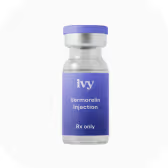
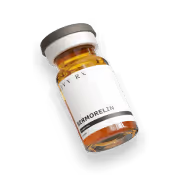
Other peptides have published ranges, and a sermorelin dosage plan is still set by a clinician for each patient. BPC-157 has less guidance than that, so the clinician's review matters more.
BPC-157 Dosage by Form
Each form reaches the body by a different route, so a strength in one form cannot be swapped for a strength in another. The FDA found no human data on how much BPC-157 the body absorbs from oral, nasal, skin, or under-the-skin products. The same route question applies to sermorelin pills vs. injections, where the two forms differ in absorption.
BPC-157 Capsules
Capsules are swallowed and pass through the stomach, where BPC-157 resisted breakdown in lab tests. Rats given BPC-157 in drinking water were protected against drug-induced gut and liver damage, but no study has measured absorption from capsules in people.
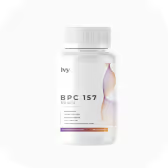
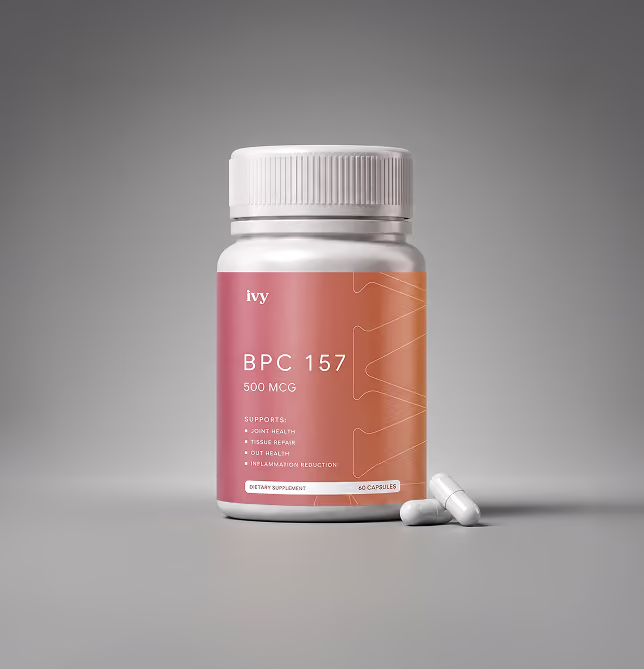
Our BPC-157 Capsules contain 500 mcg per capsule, and the label directs one capsule up to twice a day with food or as directed. Follow your label and your clinician, because research has not set a BPC 157 oral dosage for adults. We offer capsules as part of our peptide treatments, and we do not sell injectable BPC-157.
BPC-157 Injections
Subcutaneous injections go into the fatty tissue under the skin, and they do not go into muscle. Pharmacies proposed a 2,000 mcg per mL injection to the FDA, but no human study has tested this route.
FDA staff said injected peptides carry a higher risk of immune reactions, especially when impurities or clumped peptides are present. This guide gives no injection or mixing instructions, because BPC-157 injections have no approved use.
Nasal Sprays and Creams
Nasal sprays deliver BPC-157 through the lining of the nose, and creams apply it to the skin. FDA reviewers had strong concerns about nasal sprays because no information showed that the spray devices deliver a consistent amount.
The FDA also noted that nasal use may raise the risk of immune reactions compared with oral use. No human studies have tested either form.
How Long BPC-157 Has Been Studied
There is no tested BPC-157 cycle length for people, because no study has followed users for months. The longest human studies gave BPC-157 for two weeks or less.
Animal research was also short. A rat study on colon fistula healing lasted 28 days, and toxicity studies in rats and dogs also ran for 28 days. Scientists have not run longer toxicity studies or cancer studies.
Those 28-day toxicity studies found changes in blood clotting times and in liver-related blood markers. Researchers do not know whether longer use adds new risks.
What the Research Actually Tested
Most BPC-157 research used rats given 10 ng/kg or 10 mcg/kg a day. The doses were injected into the belly cavity or mixed into drinking water. Both doses produced about the same effect, so researchers could not find a dose that worked best.
That lack of a dose-response pattern makes animal numbers hard to apply to people. FDA reviewers said they could not estimate safe dose limits for oral or nasal routes, because absorption from those routes is unknown.
These are the doses the few human studies tested:
No study has set a BPC 157 dosage for gut health. The only trial in people with a gut condition tested an 80 mg daily enema for ulcerative colitis, and FDA reviewers found its results too limited to judge.
A 2025 systematic review found 36 studies on BPC-157 for muscle and bone healing, and only one of them studied people. BPC-157 often appears on lists of anti-aging peptides, but its human dosing evidence is limited to the studies above.
Safety Tips Before You Start
Talk with a licensed clinician before you take BPC-157, and use only products that list the strength and ingredients on the label.
- Share your full health history. Tell your clinician about every medication, supplement, and condition before you start.
- Choose clearly labeled products. FDA reviewers found that many BPC-157 certificates of analysis list purity without naming specific impurities.
- Avoid "research use only" products. These products are not made or labeled for use in people.
- Know the reported side effects. Reports include injection-site reactions, stomach upset, allergic reactions, and changes in mood or energy. Enema studies most often reported headache and gas.
- Check sport rules. WADA lists BPC-157 as prohibited, so athletes tested under its rules cannot use it.
- Stop and get help if something feels wrong. Seek emergency care for trouble breathing, chest pain, major swelling, or sudden confusion.
Side effect profiles differ across peptides, and NAD+ injection side effects and sermorelin side effects each include their own injection-site reactions.
Ivy Rx BPC-157 Capsules give you a defined strength instead of an unlabeled vial. Every capsule lists 500 mcg of BPC-157, a vegetable capsule, and rice powder, with directions printed on the label. We make BPC-157 capsules under our Made in the USA label for $129 as of September 2026. Complete a short online assessment, and your order ships with free expedited delivery.
Get BPC-157 Capsules With Clear Label Directions From Ivy Rx
If you decide to try BPC-157, your main choice is between a labeled capsule reviewed with a clinician and a research product with unknown contents. A licensed clinician can also tell you whether BPC-157 suits your health history at all.
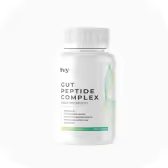
If your main interest is digestive support, Gut Peptide Complex combines BPC with KPV and an 11-strain probiotic blend. If your goals include recovery and sleep, review sermorelin vs BPC-157 with your clinician.
FAQs
Can You Take BPC-157 With Other Supplements?
Sometimes, but ask a clinician first. Interactions between BPC-157 and other medications, supplements, or herbs are poorly understood.
Is BPC-157 Safe During Pregnancy?
No safety data exist. Our safety information advises against BPC-157 during pregnancy or breastfeeding without specific medical advice.
Can Athletes Take BPC-157?
No, not in tested sport. WADA lists BPC-157 as prohibited because no health authority has approved it.
Should You Get Blood Tests While Taking BPC-157?
Ask your clinician. Animal studies showed clotting and liver marker changes, and follow-up visits may be advised to check how you tolerate it.
Research findings, regulatory details, prescribing-label information, safety guidance, product availability, pricing, and treatment expectations in this article were reviewed in September 2026 and may change. This article is for informational purposes only and does not replace medical advice. Always confirm current product details, eligibility, dosing instructions, pharmacy or supplement sourcing, and program terms with a licensed clinician before starting treatment.

.png)

Ivy RX patients
Members of Ivy RX branded medications were paid for their testimonials.
Related
Resources
.jpg)
BPC-157 Before and After: Realistic Results & Timeline
BPC-157 before and after results are functional, not visual. Most users report less pain within 1-3 weeks and better mobility by weeks 4-8.

Sermorelin vs BPC-157 Benefits, Differences & How to Choose
Sermorelin stimulates growth hormone release while BPC-157 promotes tissue and gut repair, both are peptides used off-label, with no FDA approval for either.

7 Best Anti-Aging Peptides for Youthful, Firm Skin in 2026
Discover the top anti-aging peptides for reducing wrinkles, boosting collagen, and improving skin texture. Science-backed options reviewed here.