








Article Outline
Start your personalized GLP-1 program


Zepbound® vs Ozempic®: Cost, Results, Dosing & Side Effects
People often compare Zepbound® vs Ozempic® as if they are the same weekly shot under different names. They are not.
Zepbound® is tirzepatide. Ozempic® is semaglutide. They are related medications, but they have different active ingredients, different FDA-approved uses, and different weight-loss data.
This guide compares how they work, which tends to produce more weight loss, how approvals and costs differ, what side effects to expect, and how to think through the decision with a licensed clinician.
Key Differences Between Zepbound® vs Ozempic®: At a Glance
The most basic difference is this: Zepbound® is a weight-management brand that contains tirzepatide, while Ozempic® is a diabetes brand that contains semaglutide. Both can affect appetite and weight, but they are not interchangeable.
For a deeper ingredient comparison, check out tirzepatide vs Ozempic®, semaglutide vs Mounjaro®, and semaglutide vs tirzepatide for weight loss.
Is Zepbound® the Same as Ozempic®?
No. Zepbound® is not the same as Ozempic®.
Zepbound® contains tirzepatide, a dual GIP and GLP-1 receptor agonist from Eli Lilly. Ozempic® contains semaglutide, a GLP-1 receptor agonist from Novo Nordisk. Both are injectable medications that can affect appetite, digestion, and blood sugar, but they are different molecules.
The confusion usually comes from related brand families.
Zepbound® and Mounjaro® both contain tirzepatide. Zepbound® is the weight-management brand, while Mounjaro® is used for type 2 diabetes-related care.
Ozempic® and Wegovy® both contain semaglutide. Ozempic® is used for type 2 diabetes-related care, while Wegovy® is the semaglutide brand approved for chronic weight management.
So a direct ingredient-level comparison is tirzepatide vs semaglutide. And a cleaner brand-level weight-loss comparison is Zepbound® vs Wegovy®. But people search Zepbound® vs Ozempic® because they want to understand the practical difference between two widely discussed GLP-1 options.
For more context, read Zepbound® vs tirzepatide and Zepbound® vs Mounjaro®.
How Zepbound® and Ozempic® Work
Both medications work through incretin hormone pathways. These pathways help regulate appetite, fullness, digestion, insulin release, and blood sugar.
The main difference is how many hormone pathways each medication activates. Ozempic® works through GLP-1. Zepbound® works through both GIP and GLP-1, which is one likely reason tirzepatide has produced stronger average weight-loss results in trials.
Zepbound®
Zepbound® contains tirzepatide. Tirzepatide activates both glucose-dependent insulinotropic polypeptide, or GIP, and glucagon-like peptide-1, or GLP-1, receptor pathways.
In plain English, Zepbound® can help reduce appetite, increase fullness, improve blood sugar regulation, and support lower calorie intake when used with nutrition and physical activity changes.
Tirzepatide acts on two hormone pathways instead of one. That may help explain why Zepbound® produced greater average weight loss than Wegovy® in SURMOUNT-5, although researchers are still studying the reasons for the difference. In a head-to-head obesity trial, tirzepatide led to greater average weight loss than semaglutide 1.7 or 2.4 mg after 72 weeks.
That does not mean Zepbound® is automatically the right choice for everyone. Side effects, diagnosis, coverage, medical history, pregnancy plans, diabetes status, and contraindications all affect the decision.
Ozempic®
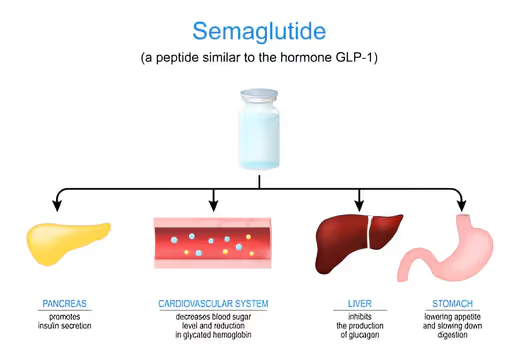
Ozempic® contains semaglutide. Semaglutide is a GLP-1 receptor agonist, which means it mimics GLP-1 activity in the body.
GLP-1 helps regulate blood sugar, slows stomach emptying, increases fullness, and reduces appetite. These effects are why many people lose weight while taking semaglutide.
But Ozempic® is not FDA-approved as a primary weight-loss medication. It is approved for type 2 diabetes-related uses. When people talk about semaglutide for weight loss, the most direct brand-name comparison is usually Wegovy®, which uses semaglutide at a weight-management dose.
That distinction is important for expectations. Ozempic® may help with weight loss, but Zepbound® has direct on-label weight-management data, while Ozempic® has stronger diabetes-specific labeling.
For safety context across this medication class, read GLP-1 side effects.
Weight-Loss Effectiveness
For weight loss, Zepbound® has the stronger evidence base in this comparison.
Zepbound®
Zepbound® tends to be the stronger option if the primary goal is weight loss and the patient is clinically eligible.
In SURMOUNT-1, adults with obesity or overweight without diabetes lost about 15.0%, 19.5%, and 20.9% of body weight at 72 weeks with Zepbound® (tirzepatide) 5 mg, 10 mg, and 15 mg, respectively. In SURMOUNT-5, Zepbound® (tirzepatide) also outperformed semaglutide 1.7 or 2.4 mg head-to-head, with 20.2% average loss versus 13.7%.
Those are averages, not promises. Results vary based on dose reached, side effects, nutrition, movement, sleep, adherence, and follow-up. Some patients do not tolerate higher doses. Some respond better than expected. Others need a different plan.
Ozempic®
Ozempic® can support weight loss, but it should be described accurately.
Ozempic® is a semaglutide medication approved for type 2 diabetes-related uses. Its dose range goes up to 2 mg weekly. The best-known semaglutide weight-loss trial data comes from semaglutide 2.4 mg, which is the Wegovy® weight-management dose, not Ozempic®.
In STEP 1, Wegovy® (semaglutide 2.4 mg) produced 14.9% average body-weight loss after 68 weeks when paired with lifestyle intervention. That is strong evidence for semaglutide as an ingredient, but it is not the same as saying Ozempic® is approved or dosed as a weight-loss medication.
A practical way to think about it: Zepbound® is usually the clearer on-label choice for weight-loss treatment. Ozempic® is usually the way to go when type 2 diabetes management is the main clinical reason for prescribing.
For more detail, read semaglutide vs tirzepatide for weight loss and how much weight you can lose on semaglutide in 3 months.
FDA Approvals
The biggest practical difference is label fit. Zepbound® is typically the on-label choice when the main goal is chronic weight management. Ozempic® is the on-label choice when the main goal is type 2 diabetes care, especially when heart or kidney risk is part of the medical picture.
Zepbound®
Zepbound® is FDA-approved, along with a reduced-calorie diet and increased physical activity, to reduce excess body weight and maintain weight reduction long term in adults with obesity or adults with overweight and at least one weight-related condition.
It is also approved to treat moderate to severe obstructive sleep apnea in adults with obesity.
That makes Zepbound® an on-label weight-management medication. For many patients comparing Ozempic® vs Zepbound® for weight loss, this is the first important distinction. Zepbound® is designed and labeled for chronic weight management. Ozempic® may affect weight, but weight loss is not its primary FDA-approved use.
Ozempic®
Ozempic® is FDA-approved for type 2 diabetes-related uses. It is used with diet and exercise to improve blood sugar in adults with type 2 diabetes.
Its current label also includes reducing the risk of major cardiovascular events in adults with type 2 diabetes and established cardiovascular disease, and reducing the risk of certain kidney and cardiovascular outcomes in adults with type 2 diabetes and chronic kidney disease.
That is why Ozempic® may be a better fit when diabetes, cardiovascular risk, or kidney-risk reduction is the reason for treatment. But if the goal is weight loss without type 2 diabetes, a clinician may discuss Zepbound®, Wegovy®, or another weight-management pathway instead.
For prescription basics, read how to get an Ozempic® prescription.
Cost Comparison
Cost is not as simple as the list price. The real number depends on diagnosis, insurance, savings-card eligibility, dose, pharmacy, whether you use a pen or a vial, and whether the prescription is for an FDA-approved use.
Below is a cost comparison table, accurate as of September 2026.
Zepbound®
Zepbound® can be expensive at list price, but Lilly’s self-pay programs have changed the cash-pay picture.
Current Zepbound® savings terms list self-pay pricing for eligible patients using Zepbound® single-patient-use KwikPen® as low as $299 for the 2.5 mg dose, $399 for the 5 mg dose, and $449 for 7.5 mg, 10 mg, 12.5 mg, or 15 mg, subject to eligibility and program terms.
Eligible commercially insured patients with coverage may pay as little as $25, but savings cards do not work the same way for everyone. Government insurance rules, diagnosis, dose, presentation, and whether the plan covers Zepbound® all affect the final price.
For more detail, read tirzepatide cost.
Ozempic®
Ozempic® pricing depends heavily on whether it is covered for type 2 diabetes-related care.
NovoCare® current self-pay offer terms list $199/month for each of the first two monthly fills of the 0.25 mg and 0.5 mg pen for new patients, then $349/month for 0.25 mg, 0.5 mg, or 1 mg pens and $499/month for 2 mg pens, subject to eligibility and program terms.
With commercial insurance and savings-card eligibility, some patients may pay as little as $25. But if Ozempic® is being requested mainly for weight loss, coverage may be harder because Ozempic® is not the semaglutide weight-loss brand.
Dosing and Administration
Both Zepbound® and Ozempic® are once-weekly subcutaneous injections. Subcutaneous means the medication goes into fatty tissue under the skin, not muscle.
Both are started low and increased slowly. The slow ramp is important because nausea, vomiting, diarrhea, constipation, and reflux are more likely during dose escalation.
Zepbound®
Zepbound® starts at 2.5 mg once weekly. After 4 weeks, the dose increases to 5 mg once weekly. A clinician may then increase the dose in 2.5 mg increments after at least 4 weeks at the current dose, based on response and tolerability.
For weight reduction and long-term maintenance, the recommended maintenance doses are 5 mg, 10 mg, or 15 mg once weekly. For moderate to severe obstructive sleep apnea in adults with obesity, the recommended maintenance doses are 10 mg or 15 mg once weekly. The maximum dose for all indications is 15 mg once weekly.
Zepbound® is available in different presentations, including pens and vials, depending on the product pathway and current availability. The right option depends on prescription, cost, pharmacy access, and clinician guidance.
For food and dosing support, read the Zepbound® diet plan.
Ozempic®
Ozempic® starts at 0.25 mg once weekly for 4 weeks. This starting dose is used to help the body adjust. It is not intended as the main blood-sugar control dose.
After 4 weeks, the dose usually increases to 0.5 mg once weekly. If more blood sugar control is needed, a clinician may increase to 1 mg and then up to 2 mg once weekly.
Do not use a dose-conversion chart to switch from Ozempic® to Zepbound® on your own. The milligram numbers are not interchangeable because the medications are different molecules.
If injections make you nervous, remember that GLP-1 injections are subcutaneous. A clinician or pharmacy team should explain the process before your first dose.
For switching context, read this Ozempic® to Mounjaro® conversion chart.
Side Effects and Tolerability
Zepbound® and Ozempic® have similar side-effect categories because both affect GLP-1 pathways. The most common issues are digestive, especially during the first weeks and dose increases.
Zepbound®
Zepbound® side effects are usually digestive. Nausea, diarrhea, vomiting, constipation, abdominal discomfort, burping, reflux, and reduced appetite can happen, especially while the dose is increasing.
In the SURMOUNT-5 head-to-head trial, gastrointestinal events were the most common adverse events in both groups, and most were mild to moderate and occurred mainly during dose escalation.
Zepbound® can also reduce the effectiveness of oral hormonal contraceptives. Its current label advises using a non-oral contraceptive method or adding a barrier method for 4 weeks after starting Zepbound® and for 4 weeks after each dose increase.
The key is not to push through severe symptoms. Call a clinician if you have severe abdominal pain, repeated vomiting, signs of dehydration, yellowing of the skin or eyes, fainting, or symptoms that keep worsening.
For more detail, read tirzepatide side effects.
Ozempic®
Ozempic® also commonly causes GI side effects. Nausea is especially common early on or after dose increases. Some people also report diarrhea, constipation, vomiting, abdominal pain, reflux, or fatigue.
Because Ozempic® is often used in people with type 2 diabetes, there are a few extra considerations. The label includes diabetic retinopathy complications as a warning, especially relevant for patients with a history of diabetic retinopathy. Blood sugar medications may also need review if there is hypoglycemia risk with other diabetes treatments.
Do not stop, restart, or increase Ozempic® without guidance if it is part of your diabetes plan. Your clinician may need to review blood sugar patterns, other medications, and dose timing.
For class-wide safety context, read GLP-1 side effects.
Can You Switch Between Ozempic® and Zepbound®?
Yes, many people switch between Ozempic® and Zepbound® under clinician guidance. Common reasons include stronger weight-loss goals, side effects, cost, insurance coverage, supply, or a change in diagnosis.
But there is no exact dose-for-dose conversion. Ozempic® milligrams and Zepbound® milligrams do not mean the same thing because semaglutide and tirzepatide are different medications.
A clinician may restart at a lower dose or choose a cautious titration schedule, especially if you had side effects before. They may also consider how long it has been since your last dose, whether you have diabetes, and whether your blood sugar needs closer monitoring.
Do not overlap medications, stretch leftover pens, or copy a conversion from online forums. Switching should be planned, prescribed, and monitored.
For more on switching, check out the Ozempic® to Mounjaro® conversion chart and Mounjaro® vs Ozempic®.
Who Should Choose Zepbound® vs Ozempic®?
The right choice depends on your diagnosis, goals, insurance coverage, medical history, side effects, and what your clinician thinks is appropriate.
The Simple Verdict
Zepbound® is usually the stronger fit when weight loss is the main goal and an on-label obesity medication is appropriate.
Ozempic® is usually the stronger fit when type 2 diabetes management is the main goal, especially when heart or kidney benefit data are relevant.
There is no universal winner. A person without diabetes seeking maximum weight loss may lean toward Zepbound®. A person with type 2 diabetes, established cardiovascular disease, or chronic kidney disease may have a stronger reason to discuss Ozempic®.
For another brand-level comparison, check out Wegovy® vs Mounjaro®.
Start Your Weight Loss Journey with Ivy Rx
Zepbound® and Ozempic® can both play important roles, but the right path depends on your goals, diagnosis, coverage, budget, and medical history.
Ivy Rx gives eligible patients an online way to explore compounded GLP-1 injections, including Ozempic® and Mounjaro®, with licensed clinician review, licensed pharmacy dispensing, transparent monthly pricing, no insurance requirement, and a Rate Lock Guarantee.
Start your online visit to see whether compounded GLP-1 injections are appropriate for your goals.
FAQs
Is Zepbound® stronger than Ozempic®?
Usually, for weight loss. In SURMOUNT-5, Zepbound® produced greater average weight loss than Wegovy®, but that study did not compare Zepbound® with Ozempic® dosing. Individual results vary.
Is Zepbound® the same as Ozempic®?
No. Zepbound® contains tirzepatide, while Ozempic® contains semaglutide. They are related GLP-1-family medications, but they are different drugs.
Which is cheaper, Zepbound® or Ozempic®?
It depends. Zepbound® self-pay programs may start lower for some doses, while Ozempic® may be cheaper if covered for type 2 diabetes.
How does Wegovy® compare to Zepbound® and Ozempic®?
Wegovy® contains semaglutide and is approved for chronic weight management. It is a better weight-loss comparison to Zepbound® than Ozempic® is.
Can you switch from Ozempic® to Zepbound®?
Yes, but only with clinician guidance. There is no exact dose conversion, so your clinician may restart titration carefully.
Disclaimer: Clinical trial figures, FDA-approved indications, prescribing-label details, side effect information, dosing information, savings-card terms, self-pay prices, insurance coverage, Medicare coverage, Ivy Rx product availability, pricing, and program terms in this article were reviewed in September 2026 and may change. This article is for informational purposes only and does not replace medical advice. Always confirm current medication availability, pricing, insurance coverage, eligibility, dosing instructions, pharmacy details, and program terms with a licensed clinician before starting, stopping, or switching treatment.


Ivy RX patients
Members of Ivy RX branded medications were paid for their testimonials.
- https://dailymed.nlm.nih.gov/dailymed/drugInfo.cfm?setid=487cd7e7-434c-4925-99fa-aa80b1cc776b
- https://dailymed.nlm.nih.gov/dailymed/drugInfo.cfm?setid=42bdd912-2393-44c4-b7e0-47672ca28991
- https://pubmed.ncbi.nlm.nih.gov/40353578/
- https://pmc.ncbi.nlm.nih.gov/articles/PMC9130404/
- https://www.nejm.org/doi/full/10.1056/NEJMoa2206038
- https://www.nejm.org/doi/full/10.1056/NEJMoa2032183
- https://www.cms.gov/medicare/coverage/prescription-drug-coverage/medicare-glp-1-bridge
- https://zepbound.lilly.com/savings
- https://www.novocare.com/diabetes/products/ozempic/savings-offer.html
Related
Resources
Semaglutide vs Tirzepatide for Weight Loss: Pros, Cons, and Side Effects
Semaglutide vs Tirzepatide: Which one offers the best weight loss results? Explore key differences in side effects, cost, and effectiveness.

Zepbound vs Mounjaro: Key Differences, Cost, & Uses (2026)
Compare Zepbound vs Mounjaro, including uses, weight loss results, & side effects. Learn which option fits your health goals.

How Much Does Tirzepatide Cost? (With & Without Insurance) 🔎
Get the latest tirzepatide cost breakdown. See how much Mounjaro and Zepbound cost with insurance, without insurance, and through patient assistance programs.