





.avif)


Article Outline
Start your personalized GLP-1 program


What Is the Strongest Weight Loss Prescription Pill in 2026?
If you're asking which prescription weight loss pill actually works, the answer depends on what you can afford and tolerate.
Rybelsus, an oral Semaglutide, delivers the strongest results among pills, up to 13.6% weight loss over a year, but costs over $900 monthly without insurance.
Qsymia comes close, with 5-10% weight loss, for $200-$300 monthly.
Phentermine suppresses appetite faster than any other medication and costs under $80. Some people need that speed. Others respond better to Contrave when emotional eating drives weight gain.
But many do well with Metformin, a gentler option that doesn't raise heart rate and costs little.
This guide breaks down how each pill works, who benefits most, and how to match your health goals and budget to the proper medication for your weight-loss journey.
What Does "Strongest" Mean for Weight Loss Pills?
When doctors talk about the "strongest" pill, they mean how much weight people lose in research studies.
Since weight loss pills work the same way, researchers measure:
- How much weight do people lose after a year?
- How many people lose at least 5% of their starting weight?
- How fast does the weight come off?
- And how the medication works in your body.
The 5 Strongest Weight Loss Pills Ranked by Effectiveness
Research shows apparent differences in how much weight each pill helps you lose:
#1: Strongest: Rybelsus (Oral Semaglutide) - Up to 13.6% of Weight Loss
Rybelsus is the first GLP-1 medication available as a pill. It mimics a hormone your gut releases after you eat, signalling to your brain that you're full and slowing digestion, the exact mechanism as Ozempic and Wegovy, but just in pill form. To understand how these GLP-1s stack up against other glucose-lowering drugs, read our comparison of Farxiga vs. Ozempic. You can check out our detailed Rybelsus vs Wegovy comparison for more information.
What happens: Most people lose up to 13.6% of their starting weight after a year on the 14mg dose.
This puts Rybelsus in a different league from traditional weight-loss pills. It delivers injectable-level results without needles.
How it feels: You feel full faster and stay satisfied longer. Cravings fade. Your stomach empties more slowly, so you naturally eat less without feeling deprived.
Who gets it: Doctors prescribe Rybelsus for adults with a BMI of 30 or higher, or for those with a BMI of 27 and weight-related conditions such as high blood pressure or diabetes.
What to expect: Nausea during the first month, especially when increasing doses. Some get heartburn, diarrhea, or constipation. Following a proper Rybelsus diet can help ease these side effects and improve your results.
The cost problem: Brand-name Rybelsus costs $900-$1,000 per month without insurance. Insurance rarely covers it for weight loss.
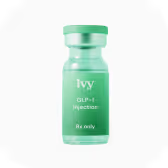
Ivy Rx offers a GLP-1 boost for $72 per month, with an exact oral GLP-1 mechanism and a 92% lower cost than other GLP-1 therapies. No insurance battles. No four-figure bills.
#2: Qsymia - up to 5-10% of Weight Loss
Qsymia combines two older medications that work better together than alone. One suppresses appetite. The other reduces cravings. Together, they create the most potent weight loss pill available.
What happens: Most people lose about 5-10% of their starting weight after a year. If you weigh 200 pounds, that's 20 pounds. Seven out of ten people on the highest dose lose at least 5% of their weight.
How your body responds: The phentermine part tells your brain you're not hungry. The topiramate part makes you feel satisfied with less food. You eat smaller portions without feeling deprived.
Who gets it: Your doctor may prescribe Qsymia if your BMI is 30 or higher, or 27 with conditions like high blood pressure or diabetes. It's approved for long-term use.
What to expect: Tingling in your hands and feet. Foods may taste different, cause dry mouth or dizziness. Most side effects fade after a few weeks.
Important note: Do not take Qsymia if pregnant or planning pregnancy due to birth defect risks.
#3: Phentermine (Adipex-P, Lomaira) - 3-7% Weight Loss
Phentermine has helped people lose weight since 1959. It's sold under brand names like Adipex-P and Lomaira, and it remains one of the most prescribed weight-loss medications in America because it works and costs less than $80 monthly.
What happens: Studies show phentermine produces an average weight loss of 3.6 kg (about 8 pounds) more than a placebo over several weeks.
Real-world data from Kaiser Permanente tracking over 13,000 patients found that people who used phentermine continuously for more than a year maintained about 7% weight loss at the 2-year mark.
How it feels: Phentermine suppresses your appetite by releasing norepinephrine in your brain. Most people notice reduced hunger within days. You feel less interested in food and are satisfied with smaller portions.
Who gets it: The FDA approved phentermine for adults with a BMI of 30 or higher, or 27 with weight-related conditions like high blood pressure or diabetes. It's officially approved for only 12 weeks, but many doctors prescribe it off-label for more extended periods with careful monitoring.
Side effects: Your heart may beat faster. You might feel jittery, have trouble sleeping, or get dry mouth. Because it's a stimulant, phentermine isn't safe for people with heart disease, uncontrolled high blood pressure, anxiety disorders, or a history of substance abuse.
If you have any of these conditions, you can also consider a Phentermine alternative.
#4: Contrave - Up to 5-6% of Weight Loss
Contrave takes a different approach. Instead of just killing your appetite, it targets the reward centers in your brain that make you crave food.
What happens: Most people lose 5-6% of their starting weight after a year. That's 10-12 pounds if you weigh 200.
How your body responds: Contrave medication blocks the pleasure signals you get from eating. That emotional satisfaction you feel when you eat comfort food? It dulls that response. Food becomes less rewarding. Cravings fade.
Who gets it: Contrave helps people who struggle with emotional eating or food addiction. It also makes sense if you have depression or want to quit smoking, since one of the ingredients treats both conditions.
What to expect: Many people feel nauseated during the first month, especially as the dose increases. Headaches are common. Some people get constipated or dizzy. The medication may cause seizures in rare cases. You cannot take it if you use pain medications that contain opioids.
If you are prone to these side effects, check out some Contrave alternatives, or learn more about how it compares to other leading treatments in our Contrave vs Semaglutide guide our in-depth look at Contrave vs Zepbound.
#5: Metformin - Up to 2-3% of Weight Loss
Metformin treats diabetes, but doctors increasingly prescribe it for weight loss. It offers something the other pills don't: a gentle approach without stimulant side effects.
What happens: Most people lose 2-3% of their starting weight over a year. That's 4-6 pounds if you weigh 200. While that's less than stronger pills, metformin provides meaningful results for the right person with decades of safety data behind it.
How your body responds: Metformin helps your body use insulin better. This regulates your blood sugar and may naturally reduce your appetite. Unlike stimulants, it doesn't speed up your heart or make you feel wired. Your gut bacteria change in ways that support gradual weight loss.
Who gets it: Metformin makes sense if you have prediabetes, PCOS, or insulin resistance. It works well when modest weight loss may prevent you from developing diabetes. It's also the right choice if you:
- Cannot take stimulants due to heart problems or anxiety.
- Want an affordable option ($10-$40/month).
- Prefer a medication with extensive safety data.
- Need something gentler than the stronger pills.
What to expect: Your stomach may feel upset during the first few weeks. Some people get nausea or diarrhea. Taking it with food and starting at a low dose helps. Most people adjust within a month.
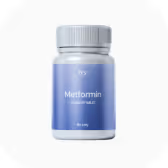
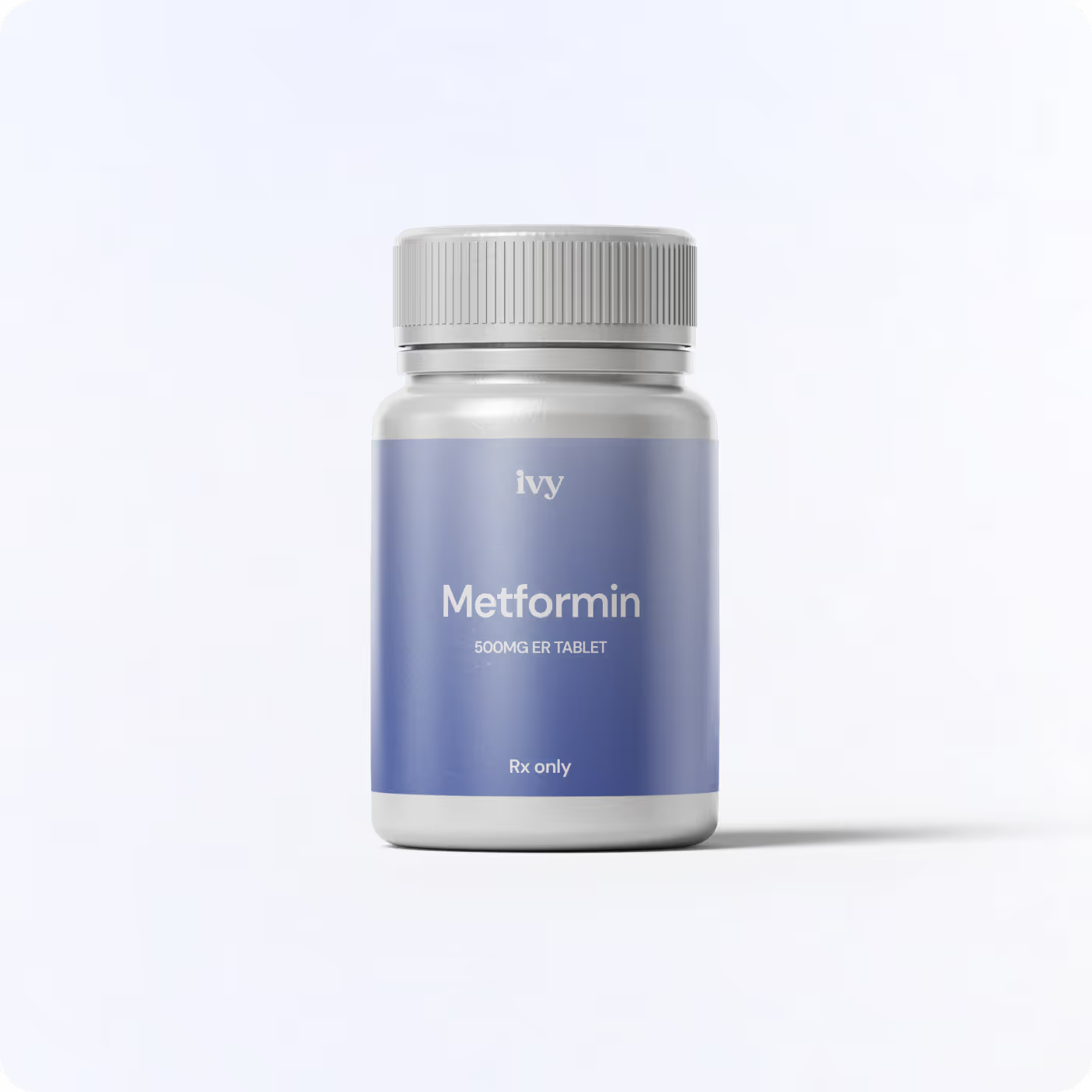
Ivy Rx offers metformin with medical evaluation and dosing guidance. For $30 monthly, you can get a personalized metformin prescription to support your weight-loss journey.
How Weight Loss Pills Compare to GLP-1 Injections
When it comes to the effectiveness of getting weight loss results, pills cannot match injectable medications.
GLP-1 injections, like semaglutide and tirzepatide, help people lose 14-16% of their body weight. And that's roughly double what the most potent pill produces.
If you weigh 200 pounds, you're looking at 30-44 pounds with injections versus 10-20 pounds with pills.
So why would you choose pills?
Reason #1: Cost matters
Pills cost $30- $300 per month. Brand-name injectable medications run for over $1,000 per month without insurance.
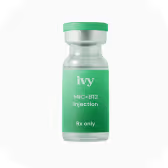
Ivy Rx offers personalized GLP-1 injections starting at $175/month, making them more accessible. But metformin from Ivy Rx costs just $90 for a 90 day supply.
Reason #2: Needles aren't for everyone
Pills go down easy. Injections require you to stick yourself with a needle once a week. Some people cannot get past that mental barrier.
Reason #3: Your weight loss goal matters
Need to lose 15-30 pounds? Pills may get you there. Need to lose 50+ pounds? Injections typically work better.
Reason #4: Health conditions change the equation
Heart problems or anxiety may prevent you from taking stimulant pills. That's when metformin becomes valuable; it doesn't affect your heart rate or blood pressure.
Whether you want a gentler start or stronger results, you can explore personalized GLP-1 injections, microdose GLP-1 injections, semaglutide alternatives, Wegovy alternatives, or Ozempic alternatives and choose what fits your body and budget.
Who Should and Shouldn’t Use Prescription Weight Loss Pills?
Your doctor considers three main factors before prescribing weight-loss pills: your BMI, your health history, and whether lifestyle changes alone have worked. These help determine both safety and effectiveness.
Good Candidates for Weight Loss Pills
You may benefit from prescription weight loss pills if you:
- Have a BMI of 30 or higher.
- Have a BMI of 27–29 with weight-related conditions like high blood pressure, diabetes, or sleep apnea.
- Have tried diet and exercise without enough success.
- Can tolerate side effects, which vary by medication.
- Want medical structure and accountability to stay consistent.
People Who Should Avoid Weight Loss Pills
Some conditions make weight loss pills unsafe or inappropriate:
- Pregnant or nursing: Weight loss drugs carry risks during pregnancy. Qsymia is linked to an increased risk of birth defects.
- Eye or thyroid conditions: Phentermine and Qsymia may be unsafe for people with glaucoma or thyroid disorders.
- Seizure history: Contrave lowers the seizure threshold and may increase risk.
- Opioid use: Contrave blocks opioid pain medications, which may trigger withdrawal or reduce pain control.
Beyond Pills: What Else Works for Weight Loss?
Pills represent one tool in the toolbox. Here are other proven approaches:
- Injectable GLP-1 medications: Semaglutide and tirzepatide produce bigger results than pills. They slow down digestion and suppress appetite through brain pathways.
- Structured lifestyle programs: Diet counseling plus exercise guidance plus behavioural therapy produces 5-10% weight loss without medication. Programs with frequent check-ins work better than going it alone.
- Weight loss surgery: Gastric bypass and sleeve gastrectomy produce 20-30% weight loss. Makes sense for people with a BMI of 40+ or 35+ with severe health conditions. Results are better than medications, but surgery carries risks.
Learn about the best injection for weight loss or explore the best peptides for weight loss.
Find Your Weight Loss Solution with Ivy Rx
Ivy Rx provides medical evaluation and support for all approaches. Our providers prescribe based on what fits your situation: personalized GLP-1 injections, microdose GLP-1 injections, or metformin.
Treatment includes medical evaluation, dosing guidance, and transparent pricing starting at $175 per month for GLP-1s or $90 for 3 months of metformin.
Ready to get started? Connect with Ivy Rx today.

%25201.avif)

Ivy RX patients
Members of Ivy RX branded medications were paid for their testimonials.
- https://journals.sagepub.com/doi/10.1345/aph.1R501. Accessed 17th December, 2025.
- https://www.drugs.com/pregnancy/phentermine-topiramate.html. Accessed 17th December, 2025.
- Li Z, Maglione M, Tu W, Mojica W, Arterburn D, Shugarman LR, Hilton L, Suttorp M, Solomon V, Shekelle PG, Morton SC. Meta-analysis: pharmacologic treatment of obesity. Ann Intern Med. 2005 Apr 5;142(7):532-46. https://pubmed.ncbi.nlm.nih.gov/15809465/. DOI: 10.7326/0003-4819-142-7-200504050-00012.
- https://onlinelibrary.wiley.com/doi/10.1002/oby.22430. Accessed 17th December, 2025.
- https://www.accessdata.fda.gov/drugsatfda_docs/label/2012/085128s065lbl.pdf. Accessed 17th December, 2025.
- https://med.stanford.edu/news/all-news/2024/03/metformin-weight-diabetes.html. Accessed 17th December, 2025.
- Apovian CM, Aronne L, Rubino D, Still C, Wyatt H, Burns C, Kim D, Dunayevich E; COR-II Study Group. A randomized, phase 3 trial of naltrexone SR/bupropion SR on weight and obesity-related risk factors (COR-II). Obesity (Silver Spring). 2013 May;21(5):935-43. https://pubmed.ncbi.nlm.nih.gov/23408728/. DOI: 10.1002/oby.20309.
- Drew BS, Dixon AF, Dixon JB. Obesity management: update on orlistat. Vasc Health Risk Manag. 2007;3(6):817-21. https://pmc.ncbi.nlm.nih.gov/articles/PMC2350121/. PMID: 18200802.
- https://www.ahajournals.org/doi/pdf/10.1161/circulationaha.111.039453. Accessed 17th December, 2025.
Maciejewski ML, Arterburn DE, Van Scoyoc L, Smith VA, Yancy WS Jr, Weidenbacher HJ, Livingston EH, Olsen MK. Bariatric Surgery and Long-term Durability of Weight Loss. JAMA Surg. 2016 Nov 1;151(11):1046-1055. doi: 10.1001/jamasurg.2016.2317. https://pmc.ncbi.nlm.nih.gov/articles/PMC5112115/. PMID: 27579793.
Related
Resources

Liraglutide Cost in 2026 Prices With & Without Insurance
Liraglutide costs $500 to $1,700 per month without insurance. Generic versions and discount cards can cut costs to under $500 per month.
.jpg)
Glutathione Injections Benefits, Risks & Side Effects (2026)
Do glutathione injections really work? Explore the evidence behind their proposed skin, antioxidant, anti-aging, and wellness benefits.

Ro Weight Loss Review 2026 Cost, Legitimacy & Verdict
Ro weight loss review: the Ro Body program is a legit brand-name GLP-1 service, but a $149/mo membership plus separate medication means $4,000+ a year