







Article Outline
Start your personalized GLP-1 program


Side Effects of Peptides and How to Lower Your Risk in 2026
If you have started a peptide or are thinking about one, it is normal to worry about how your body will react. The most common side effects of peptides are injection site redness, nausea, diarrhea or constipation, headache, and fatigue. Most are mild and happen in the first weeks or after a dose increase.
The numbers depend on the peptide. For example, 44% of adults on Wegovy® (semaglutide) had nausea in trials, compared with 16% on placebo, according to the Wegovy® label. The label says these stomach side effects were most often reported while the dose was being raised.
Serious side effects are rare, and most of the long-term data come from FDA-approved peptides such as GLP-1 medicines. This guide covers common and serious side effects, how they differ by peptide and delivery method, who should avoid peptides, and five steps that lower your risk.
What Are Peptides and How Do They Affect the Body?
Peptides are short chains of amino acids, the building blocks of proteins, and they can have a range of effects on the body, according to Harvard Health. Because each peptide acts on a different system, side effects depend on which peptide you use.
For example, GLP-1 peptides act on your gut and appetite signals, so most of their side effects are stomach-related. Growth hormone peptides act on your pituitary gland, so their side effects include flushing, joint pain, and swelling.
Where a peptide comes from matters as much as which peptide it is. The table below shows the three sources and what each one tells you about side effects.
Popular options such as the best anti-aging peptides and sermorelin act on different systems. Knowing what sermorelin is used for helps you predict its likely side effects.
Common Side Effects of Peptides
Most common side effects of peptides are mild and short-lived. They usually show up in the first weeks or right after a dose increase, and the GLP-1 labels say stomach side effects decrease over time for most people.
Sources: Ozempic®, Wegovy®, Zepbound®, and Egrifta WR™ prescribing information, and the Geref® product information for sermorelin. When-to-call guidance follows the Ozempic® Medication Guide and our safety information.
1. Injection Site Reactions
Injection site reactions are redness, pain, swelling, or itching where the needle went in. How often they happen depends on the peptide. They affected 0.2% of people on Ozempic® but 17% of people on tesamorelin in trials, compared with 6% on placebo.
For sermorelin, facial flushing and injection site pain occasionally occur and usually disappear within a few minutes, according to the Geref® product information.
The simplest way to manage them is to rotate where you inject. The Ozempic® label tells patients to use a different injection site each week within the same body area.
2. Nausea and Vomiting
Nausea is the most common side effect of GLP-1 peptides. It can feel like a mild queasy stomach after meals, and some people vomit. On Zepbound® (tirzepatide), nausea affected 25% to 29% of people depending on the dose, compared with 8% on placebo, according to the label.
The Zepbound® label says most nausea, vomiting, and diarrhea happened during dose increases and decreased over time. That is why GLP-1 doses start low and rise in steps, which the Ozempic® label says reduces the risk of stomach side effects.
If nausea makes it hard to eat, ask your clinician about slowing your dose increases or about anti-nausea medicine. Our Anti-Nausea Tablets contain ondansetron and are prescribed after clinician review.
3. Diarrhea and Constipation
GLP-1 peptides slow how fast food leaves your stomach, which can cause diarrhea, constipation, bloating, or burping. On Wegovy®, diarrhea affected 30% of people and constipation affected 24%, compared with 16% and 11% on placebo.
Diarrhea and vomiting can cause dehydration, which can lead to kidney problems. The Ozempic® Medication Guide says to drink fluids to lower your chance of dehydration. It also says to tell your clinician right away if nausea, vomiting, or diarrhea does not go away.
Stomach problems are the most common GLP-1 side effects, and most can be managed with your clinician's help.
4. Headache and Dizziness
Headaches and dizziness show up across several peptide types. On Wegovy®, headache affected 14% of people and dizziness affected 8%, compared with 10% and 4% on placebo. On Vyleesi® (bremelanotide), a peptide for low sexual desire, headache affected 11.3% of people.
If you have diabetes and also take insulin or a sulfonylurea, dizziness can be a sign of low blood sugar. The Ozempic® Medication Guide lists dizziness, shakiness, sweating, and confusion as possible signs, so check your blood sugar if these appear together.
Tell your clinician if headaches continue, especially if you also feel dizzy, because a semaglutide headache can have several causes.
5. Fatigue
Fatigue is a feeling of low energy or tiredness that rest does not fully fix. On Wegovy®, it affected 11% of people, compared with 5% on placebo. On Zepbound®, it affected 5% to 7%, compared with 3% on placebo.
The labels do not say how long fatigue lasts. Keep a short daily note of your energy, meals, and sleep for the first month, and share it with your clinician if the tiredness does not improve.
Serious and Rare Side Effects of Peptides
Serious side effects of peptides are rare, but they need medical attention. The GLP-1 labels list allergic reactions, pancreatitis, gallbladder disease, and kidney problems, and the FDA warns that some unapproved injectable peptides may trigger immune reactions.
This section covers only the risks that a label or the FDA supports. Our safety information page lists the full warnings for each treatment we offer.
1. Allergic and Immune Reactions
Your immune system can react to a peptide as if it were a threat. Serious allergic reactions, such as anaphylaxis and swelling of the face or throat, have been reported with Wegovy®, according to its label.
On Zepbound®, allergic reactions within one day of a dose affected 2.1% of people, compared with 0.4% on placebo. In tesamorelin trials, allergic reactions affected 4% of people, according to the Egrifta WR™ label.
The FDA says several unapproved peptides may pose a risk of immune reactions, including BPC-157, TB-500, and injectable GHK-Cu. Clumping of peptide molecules and impurities can raise this risk.
2. Pancreatitis and Gallbladder Problems
Pancreatitis is inflammation of the pancreas, and it is a known risk of GLP-1 peptides. In Wegovy® trials, it affected 4 patients, or 0.2 cases per 100 patient-years, compared with 1 patient on placebo.
Gallstones were also more common, affecting 1.6% of adults on Wegovy® compared with 0.7% on placebo. Some gallbladder problems need surgery.
Signs of pancreatitis include severe stomach pain that does not go away, sometimes spreading to your back, with or without vomiting. Signs of gallbladder problems include pain in your upper stomach, fever, yellow skin or eyes, and clay-colored stools.
3. Dehydration, Kidney Problems, and Severe Stomach Problems
Vomiting and diarrhea can cause dehydration, and dehydration can damage your kidneys. In Wegovy® trials, sudden kidney injury affected 7 adults, or 0.4 cases per 100 patient-years, compared with 4 adults on placebo.
Severe stomach side effects affected 4.1% of people on Wegovy®, compared with 0.9% on placebo. The Ozempic® label says it is not recommended for people with severe gastroparesis, a condition where the stomach empties very slowly.
If you cannot keep fluids down, contact your clinician the same day. Our safety information lists severe nausea or vomiting that causes dehydration as a reason to seek in-person care.
4. Thyroid Tumor Warning and Faster Heart Rate
GLP-1 labels carry a boxed warning, the FDA's strongest, because semaglutide and tirzepatide caused thyroid C-cell tumors in rodents. It is unknown whether this happens in people, but anyone with a personal or family history of medullary thyroid carcinoma (MTC) or with MEN 2 should not use them.
Your resting heart rate can also rise on a GLP-1. On Wegovy®, the average rise was 1 to 4 beats per minute. At some point, 26% of people had a rise of 20 beats or more, compared with 16% on placebo.
Tell your clinician if you notice a racing heartbeat at rest, because semaglutide heart palpitations should always be checked.
Side Effects by Peptide Type
Side effects differ a lot by peptide type, so grouping all peptides together gives a misleading picture. The table below compares the five types people ask about most.
GLP-1 Peptides
GLP-1 peptides have the most side-effect data of any peptide type. Their side effects are mostly stomach-related, and they are most common while the dose is going up.
On Wegovy®, 6.8% of people stopped treatment because of side effects, compared with 3.2% on placebo. On Zepbound®, most people who stopped did so in the first few months, mostly because of stomach side effects.
These rates come from branded Wegovy® and Zepbound®, and they do not establish what to expect from compounded GLP-1 injections. If you take tirzepatide, compare the tirzepatide side effects seen in weight-loss trials with the Mounjaro® side effects reported in people with type 2 diabetes.
We offer compounded GLP-1 injections with licensed clinician review and dispensing from a state-licensed pharmacy.
Growth Hormone Peptides
Growth hormone peptides cause fewer stomach problems than GLP-1s but more injection site reactions, joint pain, and swelling. In tesamorelin trials, joint pain affected 13% of people, leg swelling 6%, and tingling 5%, compared with 11%, 2%, and 2% on placebo.
Tesamorelin can also raise blood sugar. By week 26, an HbA1c of 6.5% or higher, a level used to diagnose diabetes, affected 5% of people on tesamorelin, compared with 1% on placebo.
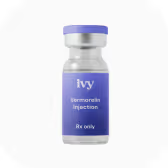
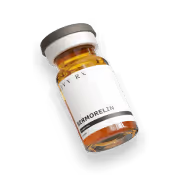
For sermorelin, the most reported side effects are injection site reactions, flushing, headache, lightheadedness, and nausea. We prescribe sermorelin injections after licensed clinician review, and your clinician can explain which sermorelin side effects to watch for.
Healing Peptides: BPC-157 and TB-500
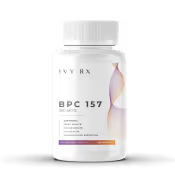
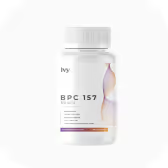
BPC-157 and TB-500 have almost no human side-effect data. The FDA’s 2026 review found only five small human studies of BPC-157, most without control groups. No serious side effects were reported, but the studies were short and safety monitoring was often unclear, so they cannot show that BPC-157 is safe.
In July 2026, the FDA proposed that BPC-157 should not be added to the list of substances pharmacies can use in compounding. The FDA said BPC-157 may pose a significant risk of immune reactions and that clinical safety data are insufficient, according to its briefing.
For TB-500, the FDA says it has no data on human exposure. Both peptides are banned in sport at all times by the World Anti-Doping Agency (WADA). Because human data are so limited, no BPC-157 dosage has been tested for safety in controlled trials.
Sexual Health Peptides: Bremelanotide
Bremelanotide is sold as Vyleesi®, an FDA-approved injection for low sexual desire in premenopausal women. In trials, 40% of women on Vyleesi® had nausea, compared with 1.3% on placebo, and 8% stopped treatment because of it.
Vyleesi® also caused flushing in 20.3% of women and a short rise in blood pressure of up to 6 mmHg, according to its label. About 1% developed darker patches of skin, and people with uncontrolled high blood pressure or heart disease should not use it.
The same peptide is sold online as "PT-141" for "research use only." In August 2026, the FDA sent a warning letter to one such seller, stating its products were drugs meant for people.
Collagen Peptides
Oral collagen peptides have a much shorter list of reported problems than injectable peptides. A 2023 review of 14 trials with 967 participants found no reported side effects from collagen in those trials.
The same review notes that some people report an unpleasant taste or stomach complaints. People can also be allergic to the source of the collagen, and one case report describes a severe allergic reaction to a supplement made from fish collagen.
Collagen is sold as a dietary supplement, and the FDA does not approve dietary supplements for safety or effectiveness before they are sold. Check the label for the collagen source if you have a fish or shellfish allergy.
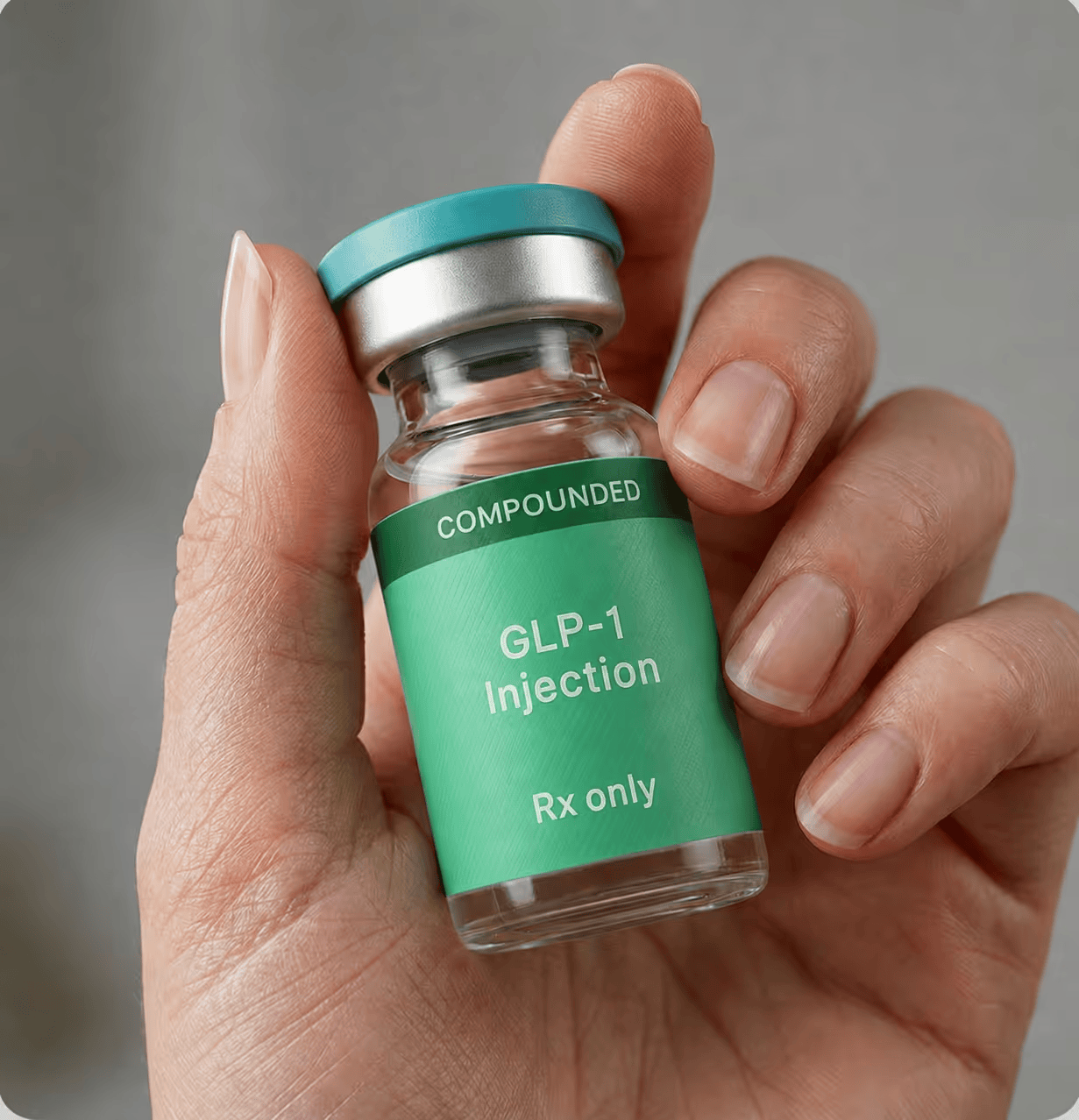
The best peptides for weight loss differ in how much evidence supports them, so compare their side effects before you choose.
Side Effects by Delivery Method
The way you take a peptide changes both how much reaches your blood and which side effects you get. Injections cause injection site reactions, oral forms need strict timing, and nasal and topical forms bring their own local side effects.
Injections
Injected peptides go under the skin into fatty tissue, not into muscle, and most of the dose reaches your blood. Injected semaglutide has an absolute bioavailability of 89%, according to the Ozempic® label.
Because injections skip some of the body's defenses, sterility matters. In its warning letter to a peptide seller, the FDA wrote that injectable products bypass some of the body's key defenses against toxins and microorganisms.
Our compounded GLP-1 injections and sermorelin injections both go under the skin. Before your first dose, watch a GLP-1 self-injection tutorial and read how to inject semaglutide step by step.
Oral Tablets and Capsules
Oral semaglutide avoids needles, but the stomach breaks down most of the dose. Its absolute bioavailability is only 0.4% to 1%, according to the Rybelsus® label. Absorption data for most other oral peptides are limited.
To help it absorb, the Wegovy® pill must be taken on an empty stomach in the morning with up to 4 ounces of water. You then wait at least 30 minutes before eating, drinking, or taking other oral medicines.
The side effects of semaglutide pills vs injection are similar, according to the Wegovy® label, so the main difference is the daily routine. For BPC-157 pills vs. injections and sermorelin pills vs. injections, human data are too limited to compare side effects.
Nasal Sprays
Nasal peptides are absorbed through the lining of the nose, so they can irritate it. With Noctiva™ (desmopressin), the most common side effects included nasal discomfort in 5.9% of people, congestion, sneezing, and nosebleeds, according to the label.
Some nasal peptides also carry serious risks of their own. Noctiva™ has a boxed warning because it can cause severe low sodium, which can lead to seizures, coma, or death.
Most other nasal peptides have much less data. Forms that dissolve under the tongue are another needle-free route, and human data on sermorelin sublingual vs. injection are also limited.
Topical Creams and Serums
Topical peptides in skincare carry the lowest risk of body-wide side effects, mainly because very little passes through the skin. Peptides generally need a molecular weight below 500 Da to get through the outer skin layer, according to a 2021 review.
The main risks are skin irritation and sensitization. Some cosmetic peptides are mild irritants at certain strengths, so patch-test a new product on a small area first.
Route also matters to the FDA. In 2026, it restored non-injectable GHK-Cu to the group of substances pharmacies may use while it is under review, but it raised immune reaction concerns about injectable GHK-Cu.
Short-Term vs. Long-Term Side Effects of Peptides
Short-term side effects of peptides are well documented for approved drugs, while long-term side effects of peptides are unknown for most unapproved ones. GLP-1s are the exception, with trials lasting several years.
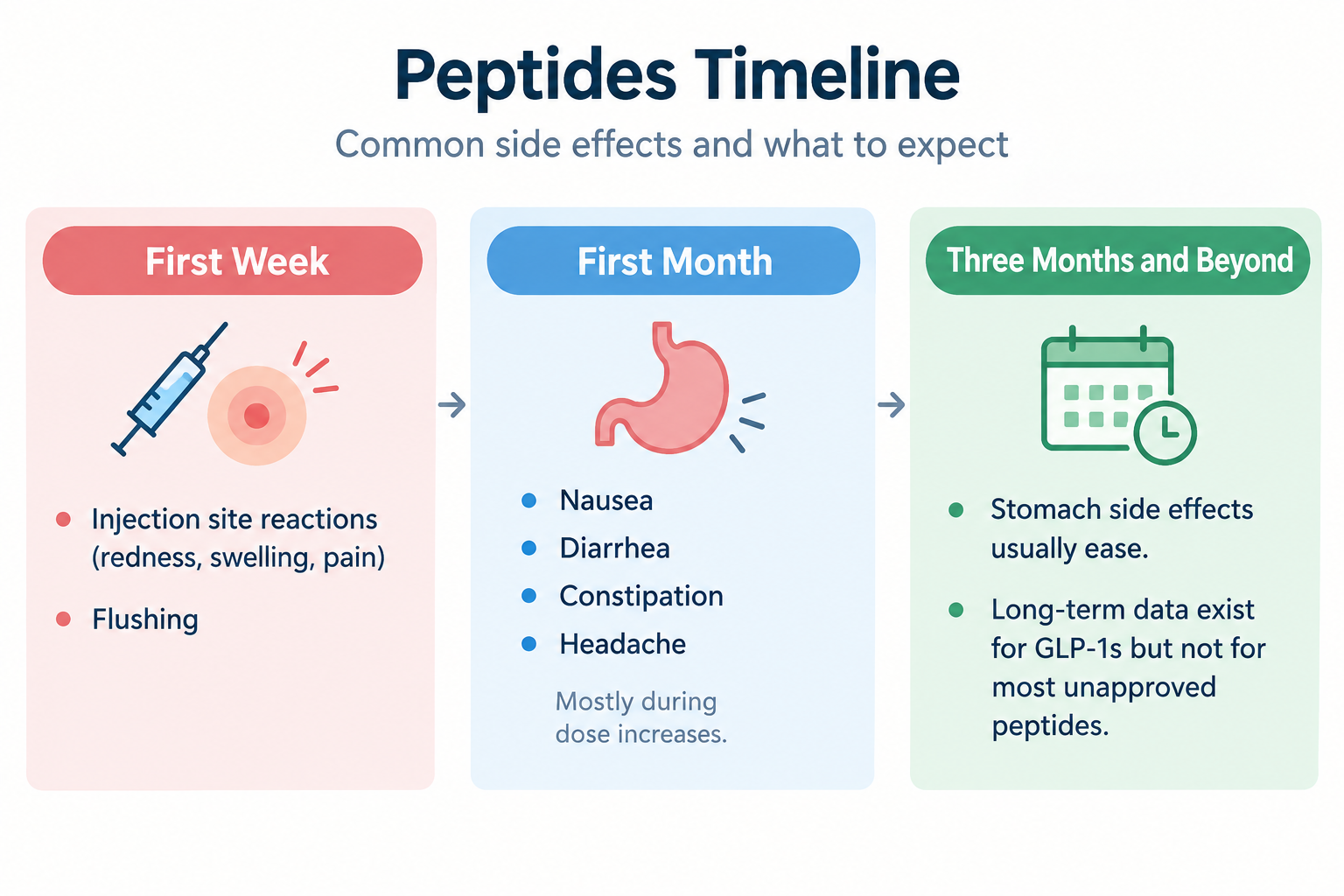
First weeks: Injection site reactions, flushing, nausea, and headache are most common. Stomach side effects on GLP-1s peak during dose increases.
First months: On Zepbound®, most people who stopped because of side effects did so in the first few months. For most people who continue, nausea and diarrhea decrease over time.
Months to years: The Wegovy® heart trial followed 17,604 adults for a median of about 3 years, so its long-term side effects are well studied. Most unapproved peptides have no long-term human data at all.
Pieter Cohen, MD, of Harvard Medical School said, "As a clinician, I do not recommend injecting yourself with peptides" (Harvard Health). He was speaking about wellness peptides that people inject themselves.
Some effects also last after you stop. Semaglutide stays in your body for about five weeks after your last dose, according to the Ozempic® label, so side effects can continue while semaglutide stays in your system.
Peptide Side Effects in Men vs. Women
Most peptide labels do not report side effects separately by sex. Where they do, the main differences involve hair loss, pregnancy, and birth control.
Side Effects in Women
- Hair loss: On Zepbound®, hair loss affected 7.1% of women and 0.5% of men. On Wegovy® 2.4 mg, it affected 4% of women and 0.9% of men.
- Birth control: Zepbound® can make birth control pills less effective. The label says to switch to a non-oral method, or add a barrier method, for 4 weeks after you start and after each dose increase.
- Pregnancy: Stop Wegovy® at least 2 months before a planned pregnancy, and stop Zepbound® when a pregnancy is recognized. Tesamorelin should not be used during pregnancy, and sermorelin is not recommended unless a clinician advises it.
- Bone fractures: More hip and pelvis fractures were reported in women on Wegovy® than on placebo.
- Bremelanotide: Vyleesi® is approved only for premenopausal women, and 40% had nausea in trials.
If you notice thinning, ask your clinician whether semaglutide causes hair loss in your case or whether another cause is more likely. Women with polycystic ovary syndrome (PCOS) who use semaglutide for PCOS face the same label warnings.
Side Effects in Men
- Hair loss: Hair loss on GLP-1s was much less common in men, at 0.5% on Zepbound® and 0.9% on Wegovy® 2.4 mg.
- IGF-1 levels: Growth hormone peptides can raise IGF-1 above the normal range. In tesamorelin trials, 36% of people had very high IGF-1 by week 26, so the label tells clinicians to monitor it.
- Joint pain and swelling: These were more common on tesamorelin than placebo, and carpal tunnel syndrome affected 1%.
- Tanning peptides: The FDA cites published case reports of melanoma and priapism, a painful erection that will not go away, with melanotan II.
Men using growth hormone peptides for muscle often compare sermorelin vs. HGH, which have different side effects. Your clinician sets the sermorelin dosage for muscle growth based on your health history.
Who Should Avoid Peptides?
Some people should not use certain peptides at all, and others need a clinician to adjust their medicines first. Check yourself against both lists below.
Health Conditions and Life Stages
- A personal or family history of medullary thyroid carcinoma (MTC) or MEN 2, for GLP-1 peptides
- A past serious allergic reaction to the peptide or its ingredients
- Pregnancy, planning a pregnancy, or breastfeeding
- Active cancer, for sermorelin and tesamorelin
- Pituitary problems from surgery, tumors, radiation, or head injury, for tesamorelin
- Severe gastroparesis, for Ozempic®
- Uncontrolled high blood pressure or heart disease, for bremelanotide
- Uncontrolled diabetes or advanced kidney or liver disease, unless a clinician supervises closely
Medications and Substances to Avoid Mixing
- Insulin or sulfonylureas such as glipizide, glimepiride, and glyburide, which raise the risk of low blood sugar with GLP-1s
- Oral medicines, because GLP-1s slow stomach emptying and can change how other pills are absorbed
- Birth control pills, which tirzepatide can make less effective
- Warfarin and other drugs with a narrow safe range, which need closer monitoring on GLP-1s
- Alcohol, which our safety information advises avoiding on GLP-1 treatment
- Oral naltrexone, which bremelanotide can make less effective
- Glucocorticoids, aspirin, indomethacin, and atropine-type drugs, which may change how your body responds to sermorelin, according to the Geref® product information
Some combinations are common and can be managed with a clinician's help. These include metformin and Ozempic® together, phentermine and semaglutide together, and sermorelin and semaglutide together.
Before you start any peptide, review every medicine and supplement you take with a licensed clinician.
How to Lower Your Risk of Peptide Side Effects
The best way to lower your risk is to start with a licensed clinician and a licensed pharmacy. These five steps follow the FDA's advice and the instructions on approved peptide labels.
Step 1: Get a Licensed Clinician to Review Your Health First
A clinician checks your health history, current medicines, and goals before prescribing a peptide. This step catches the conditions and drug combinations listed in the previous section.
Doctors say this matters because evidence on many peptides is thin. "We're not sure about dosing and frequency," said family and sports medicine physician Anthony C. Tam, MD, in an AMA article.
Step 2: Use a Licensed Pharmacy That Publishes Its Testing
A licensed pharmacy prepares your peptide from a prescription and tests it before it ships. Research-grade products skip this step, so their contents and purity are unknown.
The FDA has also warned about compounded semaglutide salt forms, such as semaglutide sodium and semaglutide acetate. The FDA says these are different active ingredients from those in approved drugs, according to its guidance.
At Ivy Rx, a state-licensed pharmacy prepares each order, and independent labs test our medications for potency, sterility, endotoxins, and pH. You can see the results on each product page. Whichever telehealth service you use, check that its compounding pharmacy is licensed in your state.

Step 3: Start Low and Increase Your Dose Slowly
Most stomach side effects happen during dose increases, so a slow, stepped schedule gives your body time to adjust. Follow the schedule your clinician sets, and ask before you change it.
For compounded vials, ask exactly how to measure each dose. The FDA has received reports of dosing errors with compounded GLP-1s, some of which needed hospital care, according to its guidance.
Some clinicians use a lower-dose path, such as microdosing GLP-1, which is a different approach but not a proven way to avoid side effects. A typical tirzepatide dosage chart raises the dose in steps at least four weeks apart.
Step 4: Store and Handle Your Medication Correctly
Heat and old vials can make a peptide less safe. The FDA advises against using any injectable GLP-1 that arrives warm or without enough refrigeration.
The FDA also says to throw away a vial within 28 days of first use, even if medication remains. Always use a new needle, and never share a pen or vial with another person.
Step 5: Track Symptoms and Stay in Touch With Your Care Team
Write down any side effects, when they started, and how bad they were so your clinician can see patterns. Tell every healthcare provider that you take a GLP-1 before any surgery or procedure that uses anesthesia.
With Ivy Rx, you can message your care team through our patient portal and reach live support in our free mobile app. If a side effect becomes severe, contact your clinician or get in-person care.
Start Peptide Therapy With Clinician Oversight From Ivy Rx
Peptide side effects are easier to prevent and manage when a licensed clinician prescribes your treatment and a licensed pharmacy prepares it. You also get a clear dosing schedule and someone to contact if a side effect appears.
Peptides are not right for everyone. If you have a history of thyroid cancer or active cancer, or if you are pregnant, talk with your own doctor before you consider any peptide.
If you are ready to start, our five-minute online assessment helps a licensed clinician decide whether a treatment fits your health history. Our treatments are made in the USA, and our Rate Lock Guarantee keeps your price the same at every prescribed dose titration. Find your treatment to begin.
FAQs
Do Peptide Side Effects Go Away?
Usually. The Zepbound® label says most nausea, vomiting, and diarrhea happened during dose increases and decreased over time. Serious side effects such as pancreatitis or gallbladder problems need medical care.
Can Peptides Change Your Lab Results?
Yes. In Ozempic® trials, the pancreatic enzymes amylase and lipase rose by 13% and 22% on average. Tesamorelin can raise blood sugar and IGF-1, so your clinician may order blood tests during treatment.
Do You Need to Stop Peptides Before Surgery?
Not always, but you must tell your surgical team. GLP-1s slow stomach emptying, and rare cases of food entering the lungs during anesthesia have been reported. Your care team will decide whether to change your doses.


Ivy RX patients
Members of Ivy RX branded medications were paid for their testimonials.
- U.S. Food and Drug Administration. Wegovy® (semaglutide) injection and tablets prescribing information, revised June 2026. https://www.accessdata.fda.gov/drugsatfda_docs/label/2026/218316s007lbl.pdf
- Eli Lilly and Company. Zepbound® (tirzepatide) prescribing information, revised August 2026. https://uspl.lilly.com/zepbound/zepbound.html
- U.S. Food and Drug Administration. Ozempic® (semaglutide) injection prescribing information and Medication Guide, revised May 2026. https://www.accessdata.fda.gov/drugsatfda_docs/label/2026/209637s038lbl.pdf
- Novo Nordisk. Rybelsus® (semaglutide) tablets prescribing information, revised January 2026. https://www.novo-pi.com/rybelsus.pdf
- U.S. Food and Drug Administration. Egrifta WR™ (tesamorelin) prescribing information, revised March 2025. https://www.accessdata.fda.gov/drugsatfda_docs/label/2025/022505s020lbl.pdf
- U.S. Food and Drug Administration, FDALabel. Vyleesi® (bremelanotide) prescribing information, effective January 10, 2025. https://nctr-crs.fda.gov/fdalabel/services/spl/set-ids/8c9607a2-5b57-4a59-b159-cf196deebdd9/spl-doc
- U.S. Food and Drug Administration. Noctiva™ (desmopressin acetate) nasal spray prescribing information, March 2017. https://www.accessdata.fda.gov/drugsatfda_docs/label/2017/201656s000lbl.pdf
- Health Products Regulatory Authority (Ireland). Geref® 50 (sermorelin acetate) summary of product characteristics, revised May 2004. https://assets.hpra.ie/products/Human/16600/LicenseSPC_PA0285-006-001_13072006155719.pdf
- Taylor M. Peptides: What they are, potential benefits, and safety concerns. Harvard Health Publishing. July 7, 2026. https://www.health.harvard.edu/medications-and-treatments/peptides-what-they-are-potential-benefits-and-safety-concerns
- Berg S. What doctors want patients to know about injectable peptides. American Medical Association. April 29, 2026. https://www.ama-assn.org/public-health/prevention-wellness/what-doctors-want-patients-know-about-injectable-peptides
- U.S. Food and Drug Administration. Certain bulk drug substances for use in compounding that may present significant safety risks, content current as of April 22, 2026. https://www.fda.gov/drugs/human-drug-compounding/certain-bulk-drug-substances-use-compounding-may-present-significant-safety-risks
- U.S. Food and Drug Administration. BPC-157 briefing document, Pharmacy Compounding Advisory Committee, July 2026. https://www.fda.gov/media/193343/download
- U.S. Food and Drug Administration. FDA's concerns with unapproved GLP-1 drugs used for weight loss, content current as of October 1, 2026. https://www.fda.gov/drugs/drug-alerts-and-statements/fdas-concerns-unapproved-glp-1-drugs-used-weight-loss
- U.S. Food and Drug Administration. FDA's concerns with unapproved GLP-1 drugs used for weight loss (salt forms section). https://www.fda.gov/drugs/postmarket-drug-safety-information-patients-and-providers/fdas-concerns-unapproved-glp-1-drugs-used-weight-loss
- U.S. Food and Drug Administration. Warning letter to TXP Innovations LLC dba Tex Peptides, August 24, 2026. https://www.fda.gov/inspections-compliance-enforcement-and-criminal-investigations/warning-letters/txp-innovations-llc-dba-tex-peptides-735067-08242026
- U.S. Food and Drug Administration. FDA 101: Dietary Supplements. https://www.fda.gov/consumers/consumer-updates/fda-101-dietary-supplements
- Dewi DAR, et al. Exploring the impact of hydrolyzed collagen oral supplementation on skin rejuvenation: a systematic review and meta-analysis. Cureus. 2023. https://assets.cureus.com/uploads/review_article/pdf/207671/20231209-13813-iejh5o.pdf
- Resende DISP, et al. Usage of synthetic peptides in cosmetics for sensitive skin. Pharmaceuticals. 2021. https://www.mdpi.com/1424-8247/14/8/702
- U.S. Food and Drug Administration. 503A bulk drug substance categories list, updated May 14, 2026. https://www.fda.gov/media/94155/download
- World Anti-Doping Agency. 2026 Prohibited List, effective January 1, 2026. https://www.wada-ama.org/sites/default/files/2025-09/2026list_en_final_clean_september_2025.pdf
Related
Resources

Common Sermorelin Side Effects: Risks & What to Know Before Starting Treatment
Learn about sermorelin side effects, from common mild reactions to rare serious risks. Discover tips to manage side effects safely and when to consult a doctor.

Peptides for Weight Loss Explained Which Ones Actually Work
Peptides for weight loss are short amino acid chains that curb appetite and slow digestion. FDA approved options include Wegovy, Zepbound, and Saxenda.

7 Best Anti-Aging Peptides for Youthful, Firm Skin in 2026
Discover the top anti-aging peptides for reducing wrinkles, boosting collagen, and improving skin texture. Science-backed options reviewed here.